
- India,
- 24-Jul-2026 10:48 AM IST



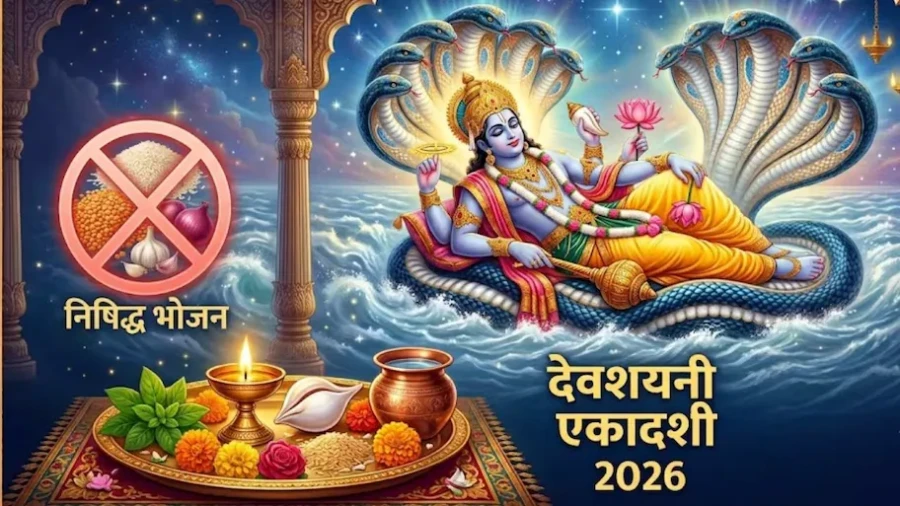
Devshayani Ekadashi is considered one of the most significant days in the Hindu calendar, marking the moment when Lord Vishnu, the preserver of the universe, enters a state of cosmic sleep known as Yoga Nidra. This sacred day falls on the Ekadashi of the Shukla Paksha in the month of Ashadha. According to religious beliefs, Lord Vishnu resides in the netherworld (Patal Lok) during this period to rest, leaving the administration of the universe in a transitional state, while this period of rest lasts for four months, concluding on the Devuthani Ekadashi in the month of Kartik. The interval between these two Ekadashis is famously known as Chaturmas, a time dedicated to penance, austerity, and internal reflection.
Devshayani Ekadashi 2026: Date and Tithi Timings
According to the Drik Panchang, there has been some confusion regarding whether the fast should be observed on July 25 or July 26. The Ekadashi Tithi is scheduled to begin at 9:12 AM on July 24, 2026. The Tithi will continue through the night and conclude at 11:34 AM on July 25, 2026. Following the principle of Udayatithi, which dictates that a festival should be celebrated based on the tithi prevailing at sunrise, Devshayani Ekadashi will be officially observed on Saturday, July 25, 2026. Devotees planning to observe the fast should align their rituals with this date to gain the full spiritual benefits of the occasion.
Parana Timings for Devshayani Ekadashi
The ritual of breaking the fast, known as Parana, is as important as the fast itself. For those observing the Devshayani Ekadashi fast on Saturday, July 25, 2026, the Parana must be performed on the following day, Sunday, July 26, 2026. The auspicious window for breaking the fast is between 5:39 AM and 8:22 AM on July 26. It's traditionally believed that performing Parana within the prescribed time ensures the completion of the vow and brings the desired blessings of Lord Vishnu.
Significance of the Holy Day
Devshayani Ekadashi is also referred to by several other names, including Harishayani Ekadashi, Padma Ekadashi, and Ashadhi Ekadashi. Hindu scriptures emphasize the immense spiritual value of this day, stating that observing this fast with full devotion is equivalent to the merit gained from performing thousands of Yagyas (sacrificial fires). It's a day to seek forgiveness for past sins and to pray for the well-being of one's family, while as Lord Vishnu prepares for his long rest, devotees engage in special prayers, bhajans, and recitations of the Vishnu Sahasranama to stay connected with the divine energy during the upcoming four months of Chaturmas.
Strict Prohibitions: What Not to Do
To maintain the sanctity of Devshayani Ekadashi, several activities are strictly prohibited according to religious texts. Devotees are advised not to wash their hair or clothes on this day. Mopping the floor is also discouraged; instead, simple sweeping is recommended for cleaning. It's considered ideal to perform deep cleaning of the house a day prior to the Ekadashi. On top of that, performing 'Kshaur Karma,' which includes cutting hair, shaving, or clipping nails, is strictly forbidden on this holy day. In terms of diet, the consumption of rice is prohibited for everyone, not just those fasting. On top of that, tamasic foods such as garlic, onions, and non-vegetarian items must be avoided. On a moral level, one must refrain from lying, engaging in gossip, or performing any unethical deeds, as the spiritual consequences are believed to be magnified on this day.
The Commencement of Chaturmas
With the arrival of Devshayani Ekadashi, the four-month period of Chaturmas or Chaumasa begins, while during these 120 days, all major auspicious and worldly ceremonies are put on hold. This includes events such as engagements, weddings, tonsure ceremonies (Mundan), sacred thread ceremonies (Janeu), housewarming parties (Griha Pravesh), and the initiation of new business ventures. The focus during Chaturmas shifts from external celebrations to internal spiritual growth. It's a time reserved for worship, chanting, meditation, and religious discourses, allowing individuals to recharge their spiritual energy while the deity rests.