
- India,
- 31-Jul-2026 08:46 PM IST



The legal battle over the appointment process of Election Commissioners in India has taken a significant turn in the Supreme Court. A bench comprising Justice Dipankar Datta and Justice Satish Chandra Sharma has already conducted 28 hearings on this matter. However, in a recent development, the Central Government has moved a request to transfer the case to a larger Constitutional bench. The government maintains that the issue involves substantial questions of law regarding the interpretation of the Constitution, which necessitates a hearing by at least five judges.
Arguments Presented by the Government
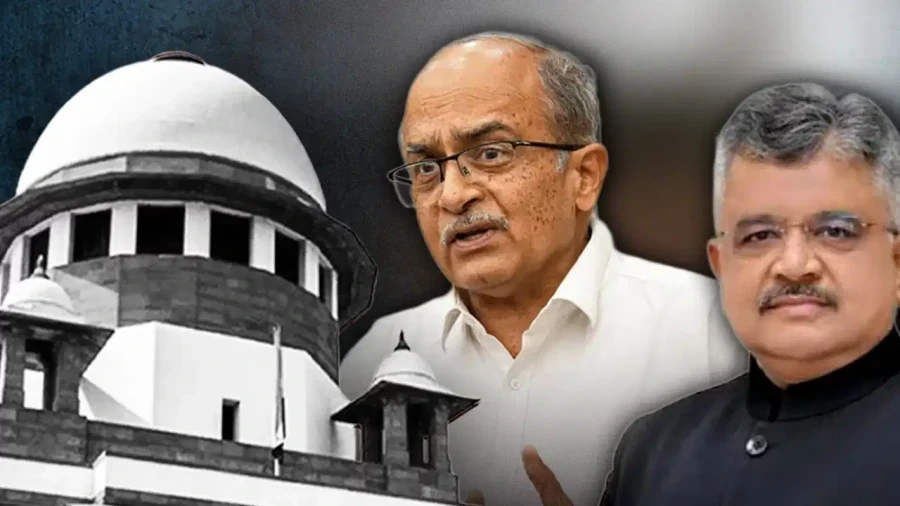
During the proceedings on Thursday, July 30, the government was represented by Attorney General R. Venkataramani and Solicitor General Tushar Mehta. Solicitor General Tushar Mehta emphasized that under Article 145 (3) of the Constitution, any case involving a substantial question of law as to the interpretation of the Constitution must be heard by a bench of at least five judges. He argued that the current matter falls squarely within this category, while mehta further pointed out that under Article 324 (2), Parliament holds the primary authority to create laws governing the appointment of Election Commissioners. He stated that Article 327 and Article 324 are complementary to each other and that the legislative domain should be respected.
Defending the executive's role, Tushar Mehta argued that the integrity of the Prime Minister shouldn't be questioned in the selection process. He stated that if the Prime Minister selects someone and that individual commits an error, it shouldn't lead to doubts about the sanctity of the office. He reminded the court that the Prime Minister is the head of the executive and is also accountable to the legislature. In a notable comparison, Mehta mentioned that the judiciary follows a system where judges appoint judges, and the entire country trusts this process. He argued that it can't be claimed that a judge's selection of another judge is inherently flawed, suggesting a similar level of trust should be extended to the executive's selection process.
The Court's Sharp Reaction and Petitioner's Concerns
The arguments presented by the Solicitor General met with a sharp observation from Justice Dipankar Datta. Responding to the comparison between judicial appointments and executive selections, Justice Datta asked the government counsel if they could state how many tainted ministers are currently in the country. This remark highlighted the court's concern regarding the differences in the selection frameworks. On top of that, the government cited the 2023 Anup Baranwal case, which was heard by a five-judge bench. The government argued that since that bench had acknowledged Parliament's right to make laws, any alleged violation of that principle should also be addressed by a bench of equal strength.
On the other side, the petitioners, represented by Senior Advocate Vijay Hansaria and Prashant Bhushan (appearing for ADR), raised serious objections to the government's request. Vijay Hansaria questioned the timing of the demand for a larger bench, noting that it came only after 28 days of hearings had already concluded. He suggested that the government's intentions might be questionable, hinting at a potential delay tactic. The original petition was filed in 2023 by Dr. Jaya Gupta and the Association for Democratic Reforms (ADR), challenging the new law that excludes the Chief Justice of India (CJI) from the selection panel for Election Commissioners.
The 2029 Election Connection and Retirement Timeline
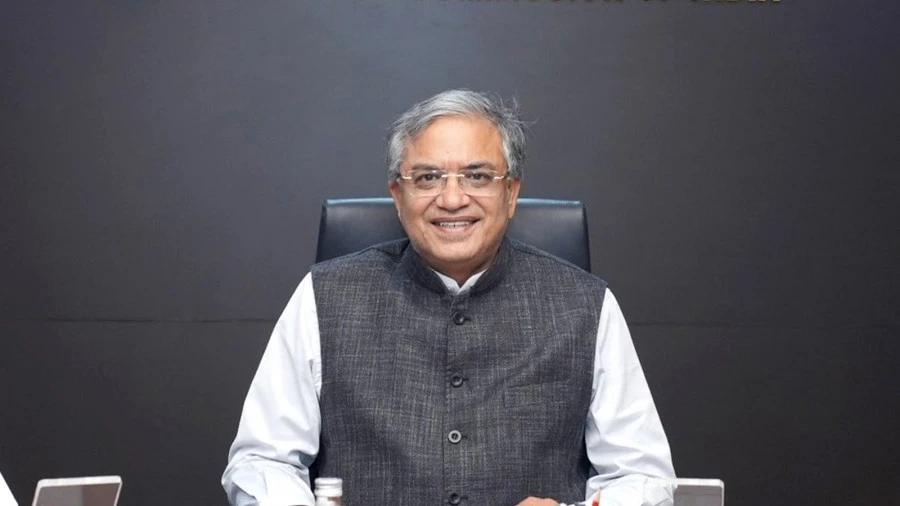
A crucial aspect of this legal tussle is the timeline leading up to the 2029 Lok Sabha elections, which are proposed to be held in March 2029. According to the current schedule, Chief Election Commissioner Gyanesh Kumar is set to retire in January 2029, and Election Commissioner Sukhbir Sandhu is scheduled to retire in July 2028. If the case is transferred to a larger bench, the legal proceedings could potentially take a significant amount of time. This would mean that the current appointment process—where the panel consists of the Prime Minister, a Cabinet Minister nominated by the PM, and the Leader of the Opposition—would remain in effect for the next set of crucial appointments before the general elections.
The petitioners argue that under the current system, the government holds a dominant position in the selection process. Justice Dipankar Datta concluded the session with a profound observation, stating that just as it's said that "justice must not only be done but must also be seen to be done," the appointment process for Election Commissioners must not only be transparent but must also appear to be transparent to the public. The court has directed all parties to submit their written affidavits, after which the Supreme Court will deliver its decision on whether to transfer the case to a larger bench or continue with the current proceedings.