

- India,
- 27-Oct-2025 09:48 AM IST


Chhath Puja, one of the most revered and rigorous Hindu festivals, enters its third day in 2025, marking the sacred occasion of Sandhya Arghya, while devotees across various regions, particularly Bihar, Jharkhand, Uttar Pradesh, and parts of Nepal, are preparing to offer their prayers to the setting sun, a profound ritual symbolizing gratitude and renewal. This four-day festival is a testament to unwavering faith, dedicated to Surya Dev (the Sun God) and Chhathi Maiya (Goddess Usha), seeking blessings for offspring, family prosperity, and good health.
Evening Arghya 2025: Key Timings and Sacred Rituals
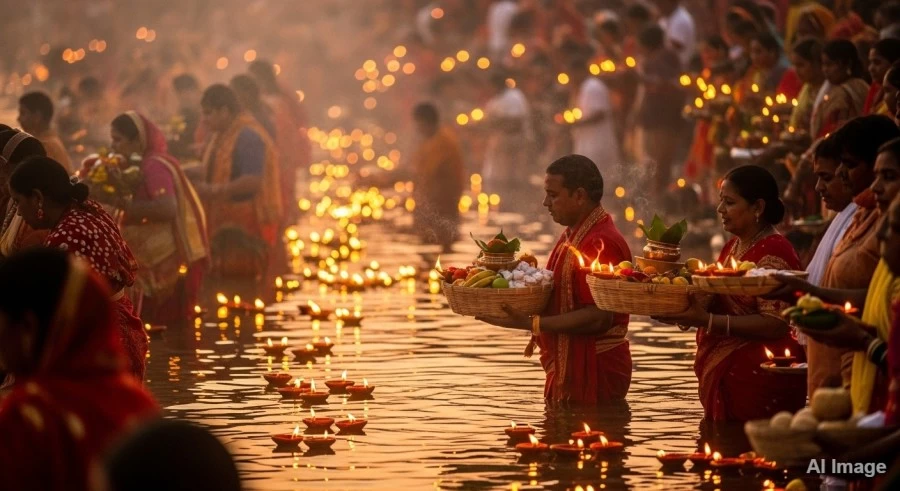
The much-anticipated Sandhya Arghya for Chhath Puja 2025 is scheduled for the evening of October 27, while devotees should note the auspicious window from 5:10 PM to 5:48 PM to offer their prayers to the descending sun. The ritual involves devotees donning clean attire, gathering at riverbanks or ponds with a meticulously prepared bamboo basket (sup) laden with traditional offerings, while these include thekua, various fruits, coconuts, sugarcane, incense sticks, and turmeric. Standing in the water, facing the setting sun, they offer the arghya while chanting sacred mantras like “Om Suryaya Namah” and singing devotional Chhath songs. This act is a heartfelt prayer for family well-being, prosperity, and the blessing of children.
Morning Arghya 2025: The Dawn's Sacred Offering
Following the Sandhya Arghya, the preparations for Usha Arghya begin, which is offered to the rising sun on the fourth and final day of the festival, while for 2025, the Usha Arghya is set for the morning of October 28, with the ideal time being between 6:00 AM and 6:34 AM. This morning ritual mirrors the evening one in its devotion and solemnity, with devotees again gathering at water bodies to greet the sun as it ascends, symbolizing hope, new beginnings, and energy. It marks the culmination of the rigorous Chhath vrat, after which devotees break their 36-hour fast. Chhath Puja isn't merely a festival; it's a deep spiritual journey that emphasizes purity, penance, and gratitude, while it's dedicated to Surya Dev, the source of all life and energy, and Chhathi Maiya, believed to be the sister of the Sun God, who grants boons for offspring and family prosperity. The festival is also known by various names such as Surya Shashti, Chhath, Chhathi, Dala Puja, and Dala Chhath, reflecting its diverse cultural resonance. It underscores the profound connection between humanity and nature, acknowledging the sun as the ultimate sustainer and offering prayers for its continued blessings.
The Profound Significance of Chhath Puja
Strict Observances and Austere Traditions
The Chhath vrat is renowned for its stringent rules and intense devotion, while devotees observe a demanding Nirjala Vrat, abstaining from food and water for approximately 36 hours, a testament to their unwavering faith and dedication. Purity is paramount throughout the festival, extending to the preparation of meals, which must be strictly sattvic, cooked in clay or bronze utensils, often with Ganga jal. Before both the evening and morning arghyas, devotees undertake a purifying bath in sacred rivers or clean. Water bodies, symbolizing the cleansing of body and soul, preparing them for the profound act of worship.
Essential Offerings and Sacred Items
A specific array of items forms an integral part of Chhath Puja, each holding symbolic meaning, while the bamboo basket (sup) holds all the sacred offerings, prominently featuring thekua, a traditional sweet delicacy made from wheat flour and jaggery. Fresh fruits like apples, oranges, and bananas, along with whole coconuts and sugarcane, are vital offerings. Ganga jal is used for purification and for offering to the sun. Clay lamps (diya) lit with pure ghee, along with incense sticks (dhoop and agarbatti), create a sanctified atmosphere, while sindoor (vermilion) and turmeric are significant for married women, and camphor is used for the concluding Aarti, completing the worship.
