
- India,
- 11-Jun-2026 05:27 PM IST



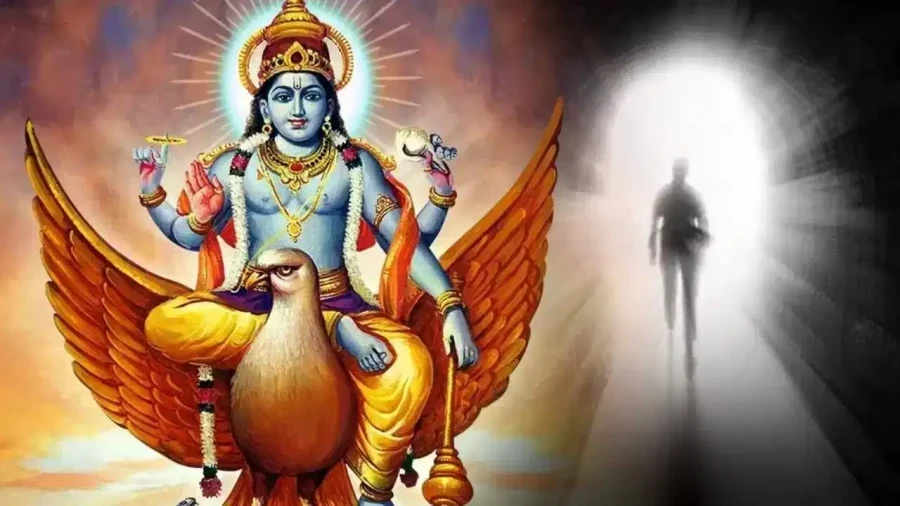
Death is considered the greatest and final truth of life. According to the ancient scriptures, every living being that has taken birth in this world is destined to face death. Among the 18 Mahapuranas of Hinduism, the Garuda Purana holds a significant place as it provides a comprehensive and detailed description of the soul's journey after it leaves the physical body. Traditionally, the recitation of the Garuda Purana is organized in households following the demise of a family member to guide the departed soul and provide solace to the living. Lord Vishnu, also known as Shri Hari, is regarded as the presiding deity of this sacred text.
The Divine Dialogue Between Lord Vishnu and Garuda
The Garuda Purana is Basically a profound conversation between Lord Vishnu and his celestial vehicle, Pakshiraj Garuda. In this dialogue, Lord Vishnu reveals the deep mysteries surrounding birth, death, and the cycle of reincarnation. The text covers a wide array of spiritual topics, including the consequences of sins and virtues, the path to salvation or Sadgati, the laws of Karma, the realities of heaven and hell, and the process of rebirth. It specifically addresses the curiosity regarding how many days it takes for a soul to acquire a new body and the mechanism behind this transition. It's emphasized that a human's actions or Karma during their lifetime are the sole determinants of their future existence.
The Arduous Journey to Yamaloka
According to the descriptions found in the Garuda Purana, the soul embarks on an incredibly long and challenging journey after death. Upon leaving the body, the messengers of Yamraj, known as Yamadutas, take custody of the soul and lead it toward Yamaloka, the abode of the God of Death. It's mentioned that the soul must cover a staggering distance of approximately 86000 yojans during this celestial travel. The nature of this journey varies Notably based on the individual's past deeds. Those who have spent their lives performing righteous acts, following the path of Dharma, and avoiding causing mental or physical distress to any living being are said to reach Yamaloka with relative ease and peace.
The Consequences of Karma and the Path of the Sinful
In contrast to the virtuous, individuals who have spent their lives inflicting pain on others or engaging in sinful activities face a harrowing experience. The Garuda Purana states that the messengers of Yamraj treat such souls with severity, tormenting them as they're forcibly taken to the court of Yamraj. Once there, the soul is presented before the deity of death to account for its earthly actions. The text makes it clear that the treatment of the soul in the afterlife is a direct reflection of its conduct in the material world.
Timeline for Rebirth and the Acquisition of a New Body
The determination of rebirth is strictly governed by the accumulated Karma of the individual. The Garuda Purana explains that a person who has performed exceptionally good deeds may become free from the worldly bonds of birth and death, ultimately achieving Moksha or salvation. However, those whose lives were dominated by sinful acts are consigned to hell. In these lower realms, the soul undergoes various forms of punishment and suffering as retribution for its sins. It's only after enduring these consequences that the soul is eligible for a new birth. According to the mythological scriptures cited in the Purana, the soul typically receives a new physical body within a timeframe ranging from the 3rd day to the 40th day after death. This period is crucial as the soul transitions from its previous existence into a new form based on its karmic destiny.