
- India,
- 21-Jul-2026 02:25 PM IST



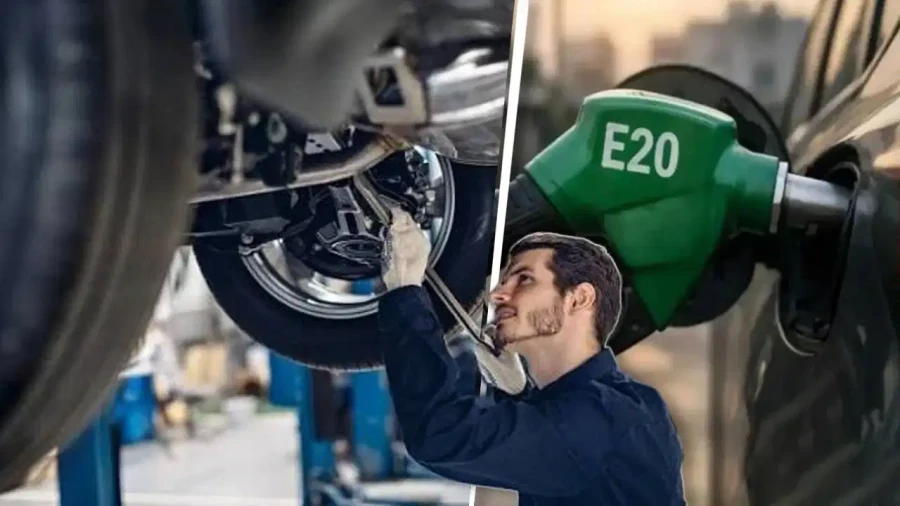
The Central Government has officially addressed concerns regarding the impact of E20 petrol on vehicle engines, stating that there is no evidence to suggest that ethanol-blended fuel causes engine damage or leads to vehicle breakdowns. This significant clarification was provided in the Rajya Sabha by the Minister of State for Petroleum and Natural Gas, Suresh Gopi, during a session on Monday. The statement comes at a time when the nation is transitioning towards higher ethanol blending in petrol to reduce carbon emissions and fuel imports. According to the government, more than 23 crore vehicles across India are currently utilizing ethanol-mixed petrol without any reported technical failures related to the fuel composition.
Massive Vehicle Base Using Ethanol Blends
The scale of ethanol-blended petrol usage in India is extensive. The government revealed that out of the 23 crore vehicles using this fuel, more than 20 crore are two-wheelers, while over 3 crore are petrol-powered cars. A notable aspect of this data is that a large number of these vehicles are older models that weren't originally certified for E20 petrol compatibility. Despite this lack of formal certification for older engines, the government emphasized that no specific cases of engine failure or vehicles stopping mid-way due to E20 petrol have been documented. This suggests a higher level of tolerance in existing engine technologies than previously feared by some consumers.
A Systematic and Scientific Implementation
The transition to E20 petrol wasn't an overnight decision but a result of a systematic and phased implementation strategy spanning over a decade. 53 percent. This was gradually increased based on continuous scientific testing and expert recommendations. The roadmap aims to reach a 20 percent blending target by the year 2025-26. This gradual progression allowed for thorough monitoring of vehicle performance and environmental impact at every stage of the increase.
Rigorous Testing and Multi-Agency Validation
Before every incremental increase in ethanol content, the government ensured that the fuel underwent rigorous testing protocols, while these included laboratory tests, real-world road trials, and long-duration endurance tests to observe the long-term effects on vehicle components. The validation process involved a collaborative effort from several prestigious organizations and stakeholders, including NITI Aayog, the Automotive Research Association of India (ARAI), the Society of Indian Automobile Manufacturers (SIAM), the Indian Institute of Petroleum (IIP), various oil marketing companies, and leading vehicle manufacturers. The testing parameters were comprehensive, covering engine durability, the integrity of the fuel system, potential for corrosion, fuel efficiency (mileage), emission levels, and overall vehicle performance.
Manufacturer Data and Service Records
To support its claims, the government cited data from major automobile manufacturers. 84 crore vehicles during the financial year 2025-26.5 crore were older vehicles. The company confirmed that no instances of engine damage attributable to E20 petrol were found during these services. Similarly, a leading two-wheeler manufacturer stated that they've not observed any additional defects or malfunctions in vehicles using E20 petrol compared to those using previous fuel blends. These real-world service records provide a strong foundation for the government's stance on fuel safety.
Addressing Mileage and Performance Concerns
While the government maintained that engines are safe, it did acknowledge a minor impact on fuel efficiency for certain vehicles. It was noted that some older vehicles, which were specifically designed for E10 petrol (10 percent ethanol), might experience a reduction in mileage ranging from 3 percent to 5 percent. However, the government highlighted several technical advantages of E20 petrol that compensate for this. E20 petrol possesses a higher octane rating, which helps in reducing engine knocking. This leads to a cleaner combustion process and allows the engine to operate more smoothly, potentially extending the life of certain engine components through better burning of the fuel.
Future Outlook and Policy Stability
Regarding the future of ethanol blending, the government clarified that there are currently no plans to increase the ethanol content beyond the 20 percent limit. Any future consideration for E30 or higher blends would only occur after extensive scientific studies, technical evaluations, and detailed consultations with all relevant stakeholders, including automobile manufacturers. Also, the government stated that there is no plan to introduce separate fuel pumps for non-ethanol or low-ethanol petrol, while the primary objective remains the promotion of cleaner, environmentally friendly fuels that align with India's energy security and sustainability goals.