
- India,
- 19-Jun-2026 02:06 PM IST



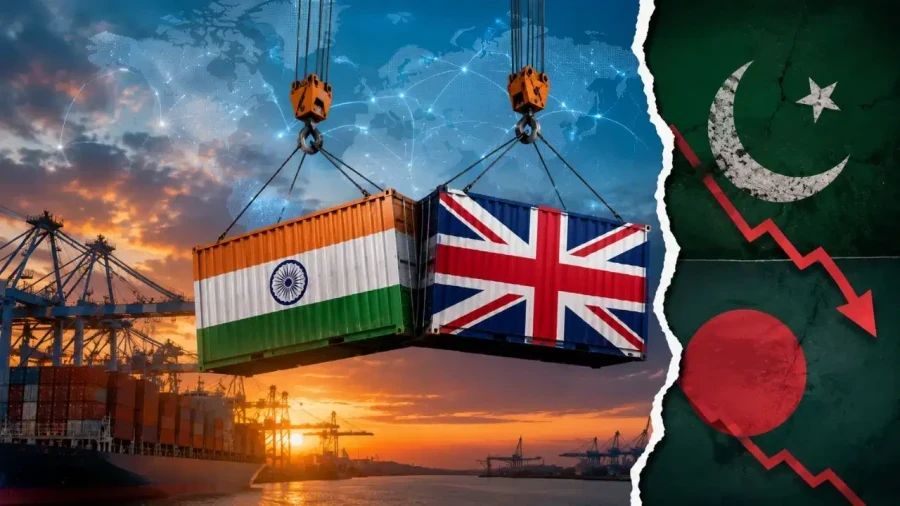
The landscape of international trade is set for a major transformation as the highly anticipated Free Trade Agreement (FTA) between India and the United Kingdom (UK) is scheduled to become operational on the 15th of next month. This historic deal is expected to provide a massive boost to Indian exporters, allowing 'Made in India' products to dominate British markets with renewed vigor, while the agreement isn't just a bilateral trade pact but a significant indicator of India's rising economic stature on the global stage. By eliminating or drastically reducing import duties, the FTA will make Indian goods more competitive, offering a strategic advantage over other exporting nations.
Impact on Regional Trade Dynamics
The implementation of this agreement is projected to have a direct and significant impact on the export economies of India's neighbors, specifically Pakistan and Bangladesh. As Indian products become cheaper in the UK due to tariff concessions, British buyers are expected to shift their preference toward Indian suppliers. Experts suggest that Bangladesh could see a 6 percent reduction in its total exports to the UK, while Pakistan's exports might face a 2 percent hit. This shift occurs because India competes directly with these nations in several key product categories. 07 billion dollars and Pakistan's even lower trade figures. The FTA is set to widen this gap further.
Textile Sector and Bangladesh's Market Share
The textile and garment industry is one of the most critical sectors where the impact will be felt most acutely. Bangladesh has traditionally held a strong position in the UK's ready-made garment market. However, the new concessions granted to Indian textile exporters are expected to challenge this dominance. 3 million dollars of that risk concentrated solely within the textile sector. Indian textile firms are now well-positioned to offer high-quality products at more competitive prices, potentially capturing a larger share of the British fashion and apparel market.
Rice Exports and Pakistan's Challenges
In the global rice market, India has consistently maintained a dominant position, and the FTA will further strengthen its foothold in the UK. 8 million dollars to the UK. 3 million dollars. 5 million dollars, Notably higher than both Thailand and Pakistan. With the reduction in taxes under the FTA, Indian rice will become even more affordable for British consumers. 5 million dollars of its business expected to be directly affected.
Growth in Pharma and Food Sectors
Beyond textiles and rice, the benefits of the FTA extend to the processed food and pharmaceutical industries. India is already recognized globally as a leader in pharmaceutical manufacturing. In the drug formulation category alone, India's exports have exceeded 880 million dollars. The reduction in tariffs will allow Indian pharmaceutical companies to expand their reach within the UK's healthcare system. Plus, the processed food sector is also expected to see significant growth. Industry experts believe that this agreement won't only increase bilateral trade between India and the UK but will also fundamentally alter the export structure of the Asian region, providing India with a massive consumer base in Europe.