
- India,
- 28-Jul-2026 08:54 AM IST
- (Updated 28-Jul-2026 08:54 AM IST)



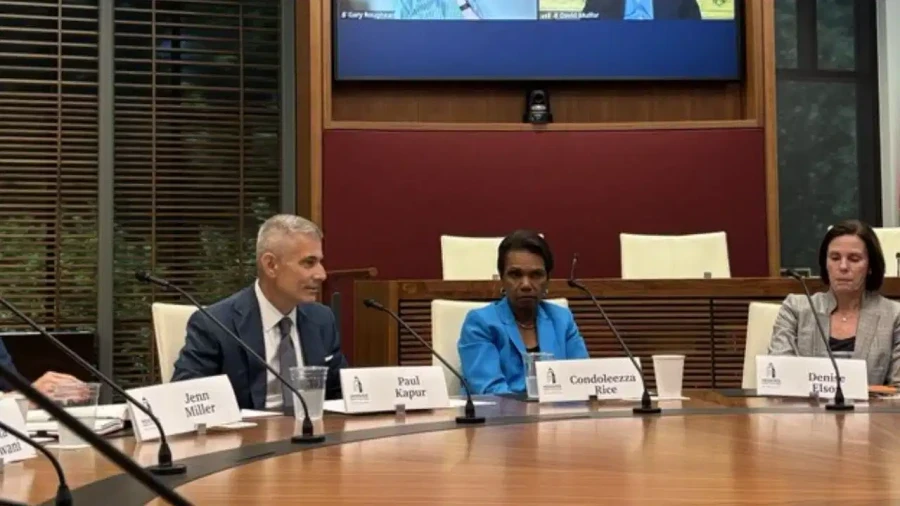
US Deputy Assistant Secretary S. Paul Kapur has emphasized that the United States and India are Importantly increasing their cooperation across critical sectors including defense, nuclear energy, and Artificial Intelligence (AI). This strategic alignment is designed to fortify the economies of both nations while simultaneously generating substantial employment opportunities within India. The remarks were made during a high-level roundtable conference focused on India, hosted at the prestigious Hoover Institution.
High Level Engagement at Hoover Institution
The roundtable conference saw the participation of several distinguished figures, highlighting the importance of the bilateral relationship. Among the attendees were former US Secretary of State Condoleezza Rice and David C, while mulford, who previously served as the US Ambassador to India. The presence of such veteran diplomats underscores the deep-rooted and bipartisan support for the India-US partnership in Washington. S. Paul Kapur noted that the strengthening of ties during President Trump's tenure has directly contributed to the growth of jobs in India. This relationship is also enhancing the supply chains for goods between the two nations, which provides significant benefits not only to India and the United States but also to the entire region.
Expanding Cooperation in Defense Nuclear and AI
The senior American official stated that both nations are actively working to expand their collaboration in defense, nuclear energy, and the development of trusted Artificial Intelligence and other emerging technologies. The primary objective behind these initiatives is to build a more strong economy for both countries. It's noteworthy that last year, the two nations entered into a major defense agreement. Under this comprehensive pact, the armed forces of both countries are set to work together across multiple domains, including land, sea, air, space, and cyberspace. This multi-dimensional cooperation reflects the evolving nature of modern security challenges and the shared commitment to addressing them.
Historical Context of India US Defense Procurement
Since the year 2002, India has procured several advanced and modern weapon systems from the United States to strengthen its military capabilities. The list of acquisitions includes high-performance Apache and Chinook helicopters, which have Notably enhanced the Indian Air Force's operational reach. Also, the procurement includes C-17 and C-130J transport aircraft, which are vital for strategic airlift and disaster relief operations. The Indian Navy has also benefited from the acquisition of P-8I maritime patrol aircraft, while the Indian Army has integrated the M777 Howitzer artillery guns into its arsenal. These acquisitions mark a significant shift in India's defense procurement strategy over the last two decades.
Private Sector Collaboration and Policy Reforms
In a move to further deepen industrial ties, the Indian government has recently introduced relaxations in certain regulations. Following these policy changes, a team of US officials visited India to facilitate and initiate collaboration with Indian private companies. This initiative aims to integrate the private sectors of both nations into the broader defense and technology ecosystem. By working together, American and Indian private entities can co-develop and co-produce advanced technologies, thereby strengthening the overall economic and strategic framework of the bilateral relationship.