

- India,
- 07-Apr-2026 10:26 PM IST


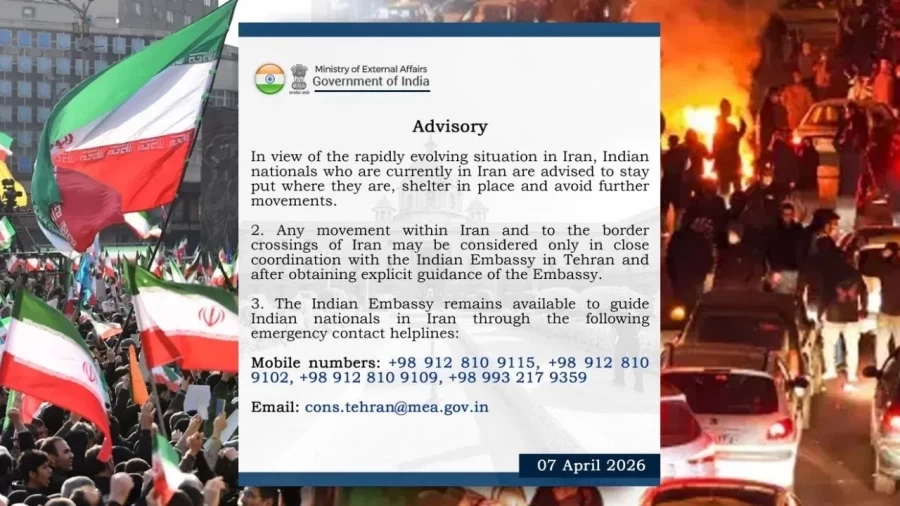
In response to the rapidly deteriorating security situation in Iran, the Government of India has issued a comprehensive safety advisory for its nationals residing in the country. The Ministry of External Affairs (MEA) has directed Indian citizens currently in Iran to remain indoors for the next 48 hours and avoid any non-essential travel. The advisory emphasizes that individuals should take shelter in safe locations and establish immediate contact with the Indian Embassy in Tehran for any assistance.
MEA Safety Directives for Indians
According to official statements from the MEA, the security landscape in Iran is evolving swiftly following recent military developments. Indian nationals have been advised to stay put at their current locations and strictly adhere to the safety protocols issued by local authorities. The Indian Embassy has activated emergency helplines and requested all citizens to register their presence to ensure timely communication and support during this period of heightened alert.
US and Israeli Military Strikes
Reports indicate that the United States and Israel have initiated targeted military operations against Iranian strategic assets. The strikes have reportedly focused on Kharg Island and the national rail network, leading to significant infrastructure damage. Following these operations, several Iranian cities have experienced widespread power outages and blackouts. These actions were reportedly taken ahead of a deadline previously set by the US administration regarding regional maritime access.
Statements from US Leadership
US President Donald Trump addressed the situation, describing the current events as a pivotal moment in history. He indicated that the military actions were a response to ongoing regional challenges. Concurrently, Vice President-elect JD Vance characterized Iran's actions as "economic terrorism," stating that the US administration aims to dismantle networks that threaten global economic stability. The US had previously warned of severe consequences if the Strait of Hormuz remained closed to international traffic.
Iranian Retaliation and Regional Impact
Following the strikes on its territory, Iran has launched retaliatory attacks against US and allied interests in the Middle East. According to reports, Iranian forces targeted oil and gas facilities belonging to the US and its regional partners. Also, aerial strikes were directed at Israeli military installations, while this exchange of fire has escalated the conflict into a broader regional crisis, impacting global energy security and maritime trade routes in the Persian Gulf.
The Strait of Hormuz Deadlock
The strategic Strait of Hormuz remains the focal point of the ongoing confrontation. The US administration had issued a deadline for Tuesday at 8:00 PM (US time) for Iran to ensure the passage remained open. The failure to reach a diplomatic resolution has led to the current military escalation. As the situation remains volatile, the Indian government continues to monitor the safety of its diaspora and the potential impact on regional stability and energy supplies.
