

- India,
- 12-Apr-2026 11:23 PM IST


Peace negotiations between the United States and Iran in Islamabad, Pakistan, have officially collapsed, raising significant concerns over the stability of global trade routes. US Vice President JD Vance confirmed on Sunday that the two nations failed to reach an agreement. The primary points of contention remain Iran's nuclear program and the strategic control of the Strait of Hormuz. Immediately following the diplomatic failure, Iran announced a series of stringent maritime restrictions that have sent shockwaves through international markets.
Iran Imposes Heavy Levies on Strait of Hormuz Traffic
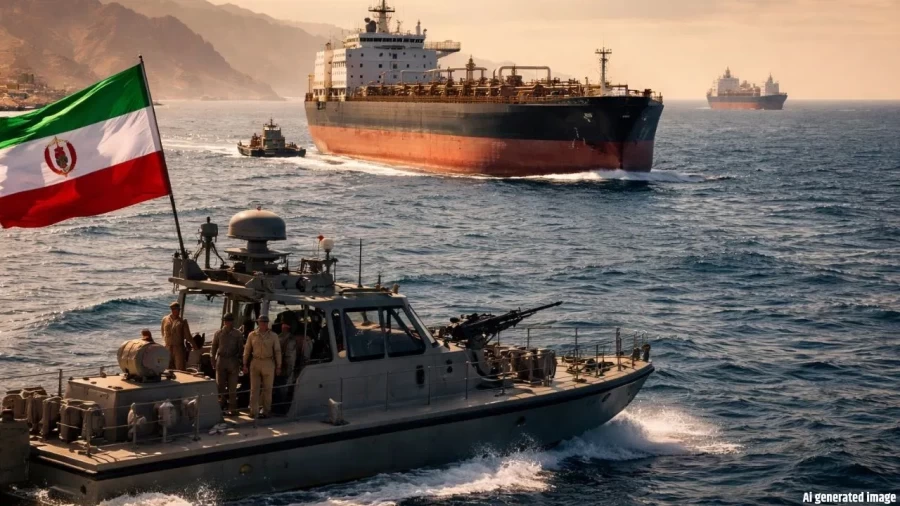
In the wake of the failed talks, Iran has moved to tighten its grip on the Strait of Hormuz, one of the world's most vital corridors for oil and gas transit. Haji Babai, the Deputy Speaker of the Iranian Parliament, stated that the strait is now under full Iranian control, while under the new regulations, Iran will permit only 10 commercial vessels to pass through the waterway per day. Also, a mandatory fee of $2 million (approximately ₹19 crore) has been imposed on every vessel. This combination of limited traffic and high transit fees is expected to drastically increase global freight costs.
Breakdown of Diplomatic Negotiations in Islamabad
The diplomatic deadlock is attributed to a profound lack of trust between the negotiating parties, while mohammad Bagher Ghalibaf, Speaker of the Iranian Parliament, issued a statement following the collapse of the talks, asserting that the US delegation failed to secure Iran's confidence. According to Ghalibaf, while Iran entered the negotiations with positive intent, historical grievances and recent developments made it impossible to trust the American side. This deficit in mutual trust ultimately led to the failure of the proposed ceasefire and peace framework.
Threats to Global Energy and Commodity Supply Chains
Iran's unilateral decision has drawn sharp criticism from the global business community and neighboring Arab nations. Sultan Al Jaber, head of the UAE's state-owned oil company ADNOC, rejected Iran's claims of exclusive control over the strait. He emphasized that the Strait of Hormuz is an international waterway and can't be monopolized or closed at the will of a single nation. Al Jaber warned that any disruption to this maritime route would have catastrophic consequences for the global economy, affecting not only energy supplies but also the delivery of food and life-saving medical goods.
International Backlash and Economic Implications
The imposition of a $2 million toll is seen by experts as a significant threat to international trade stability. A substantial portion of the world's total oil consumption passes through this narrow passage daily. Officials from various international trade bodies have expressed concern that these measures could trigger a spike in global inflation. The UAE and other regional stakeholders have called upon the international community to intervene, stating that the global economy isn't in a position to absorb such a massive logistical shock.
