

- India,
- 12-Apr-2026 07:27 AM IST


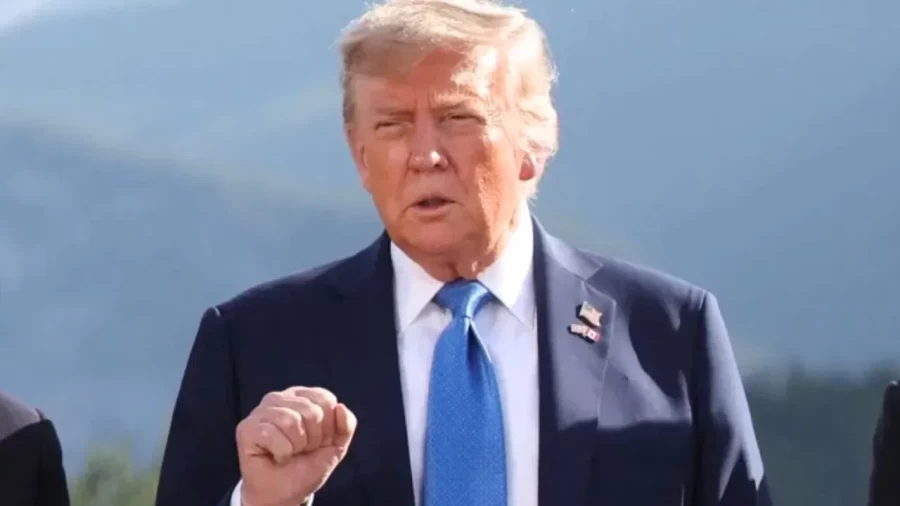
In a significant development amid the ongoing diplomatic efforts in Islamabad, US President Donald Trump has expressed a stance of strategic indifference toward the final outcome of negotiations with Iran. Following a fragile two-week ceasefire, delegations from both nations met face-to-face in Pakistan to discuss regional stability. However, President Trump emphasized that the United States holds a position of strength, asserting that military objectives have already been met. His remarks come at a critical juncture as the international community watches the potential for a long-term resolution in the Middle East.
Trump Asserts Military Dominance Over Iran
Speaking to reporters regarding the Islamabad summit, President Trump stated that while the delegations have been engaged in hours of discussions, the result is secondary to the current military reality. According to the President, the US has effectively neutralized Iran's conventional military capabilities. He claimed that Iran currently lacks a functional navy, radar systems, and air force to pose a significant threat. Trump reiterated that whether a formal agreement is signed or not, the United States views the situation as a victory. He noted that the US active presence in the Strait of Hormuz remains uncontested and that the strategic goals of the administration have been largely achieved without NATO assistance.
Warning to China on Military Support
President Trump also addressed reports concerning China's potential involvement in the conflict, while he issued a direct warning to Beijing, stating that any attempt by China to ship weapons to Iran would result in "big problems" for the Chinese government. This statement underscores the US administration's commitment to maintaining the current arms embargo and preventing any external power from replenishing Tehran's military arsenal. The warning adds a layer of complexity to the US-China relationship, which is already strained by trade and geopolitical competition.
Naval Operations in the Strait of Hormuz
The US military has confirmed that two destroyers have transited the Iranian-occupied Strait of Hormuz for the first time since the commencement of hostilities. This move is part of a broader operation to clear sea mines and re-establish safe passage for global shipping. Admiral Brad Cooper, commander of the US Central Command, announced that a new maritime route is being established and will soon be shared with the shipping industry. The operation is expected to involve additional assets, including underwater drones, to ensure the waterway is safe for the 100-plus ships that typically transit the area daily. While US officials report progress, Iranian state media has offered conflicting accounts regarding the military presence in the region.
Diplomatic Standoff in Islamabad
The negotiations in Pakistan are being led by US Vice President JD Vance and Iranian Parliament Speaker Mohammad Bagher Ghalibaf. The talks are described as intense, with Vance warning Iran against any attempts to deceive the US delegation. Ghalibaf, a former commander of the Revolutionary Guard, has maintained a firm stance on Iranian sovereignty. Iran's participation in the three-party talks was reportedly contingent on several preconditions, including a reduction in Israeli strikes on southern Lebanon. The Iranian delegation has also demanded compensation for damages incurred during the conflict and the release of frozen assets held by the United States.
Economic Impact and Humanitarian Toll
The conflict has had a devastating impact on the region, with casualties reaching significant numbers. Reports indicate at least 3000 deaths in Iran, 2020 in Lebanon, and 23 in Israel, along with casualties in neighboring Gulf states. The closure of the Strait of Hormuz has disrupted nearly 20% of the world's oil trade, causing energy prices to surge globally. The economic pressure has brought indirect participants to the table, with officials from China, Egypt, Saudi Arabia, and Qatar present in Islamabad to facilitate the dialogue. The humanitarian crisis is further exacerbated by permanent damage to infrastructure across several Middle Eastern nations.
Conflicting Proposals and Strategic Demands
The two sides have presented vastly different frameworks for peace. Iran's 10-point proposal includes guarantees for the permanent cessation of hostilities, Iranian control over the Strait of Hormuz, and an end to operations against its regional allies, specifically Hezbollah. In contrast, the US 15-point proposal focuses on strict limitations on Iran's nuclear program and the unconditional reopening of the Strait of Hormuz to international traffic. Iranian Foreign Minister Abbas Araghchi expressed deep mistrust in the process, stating that Tehran remains prepared for retaliatory action should the ceasefire be violated. The diplomatic path forward remains uncertain as both nations hold firm to their core strategic demands.
