
- India,
- 12-Oct-2026 02:06 PM IST



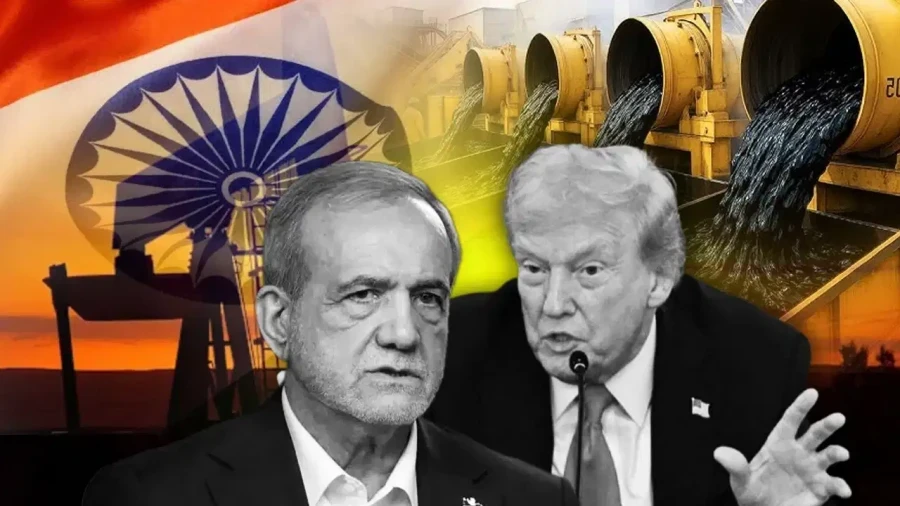
Iran has officially rejected the response provided by the United States regarding the reopening of the strategic Strait of Hormuz, labeling the American stance as insufficient. Tehran has maintained a firm position, stating that until all 7 conditions laid out by the Iranian administration are met in their entirety, the vital maritime route will remain closed to the United States. This development comes amid heightened tensions and a complex diplomatic standoff where some American concessions were acknowledged but deemed inadequate to resolve the core disputes.
The Standoff Over Seven Conditions
The Secretary of Iran's Supreme National Security Council, Mohsen Rezaei, addressed the situation on Sunday, making it clear that the American response didn't meet the necessary threshold for a breakthrough. According to reports from Iranian state media, Rezaei emphasized that the United States must clarify its position on the remaining conditions that have not yet been addressed, while he stated that Iran doesn't intend to provide any new response to the United States at this stage, placing the burden of further action squarely on Washington. The Iranian leadership insists that the reopening of the Strait of Hormuz is contingent upon the full satisfaction of the 7 conditions previously communicated to the US authorities.
Mediation and the Islamabad Agreement
The diplomatic exchange between the two nations has been facilitated through Qatar, which is acting as a key mediator in the process. The United States utilized Qatari channels to deliver its response to Tehran. Central to these discussions is the desire for both nations to return to an improved version of the Islamabad Agreement, which was reached in June. That agreement was instrumental in temporarily halting hostilities and covered critical issues including the status of the Strait of Hormuz and Iran's nuclear program. However, a significant hurdle remains in the implementation of these terms. Reports from last week, citing an official speaking to Reuters, indicated that the primary point of contention isn't necessarily the nature of the conditions themselves, but rather the sequence in which they should be fulfilled. Both sides appear to be in a deadlock over which party should take the first step in honoring the agreed-upon terms.
Nuclear Program and Inspection Denials
In addition to the maritime dispute, Iran has clarified its stance on its nuclear program, asserting that it isn't currently engaged in negotiations with the United States on this specific matter. Esmaeil Baghaei, the spokesperson for the Iranian Foreign Ministry, noted that the proposals coming from the United States largely consist of old demands, many of which pertain to the nuclear program. Baghaei also took the opportunity to refute reports suggesting that Iran was prepared to allow inspections by the United Nations nuclear watchdog agency in exchange for the lifting of economic sanctions. He dismissed these claims as incorrect, stating that Iran's immediate priority is the restoration of security within the Strait of Hormuz. While the United States continues to seek restrictions on Iran's nuclear activities, Tehran remains unwilling to concede to certain American demands at this time.
Global Economic Implications
The continued closure of the Strait of Hormuz carries significant risks for the global economy, while prior to the military strikes conducted by the United States and Israel against Iran in late February, approximately 20 percent of the world's total supply of oil and liquefied natural gas (LNG) passed through this narrow waterway. The ongoing blockage poses a persistent threat to the stability of global energy supplies. The Speaker of the Iranian Parliament, Mohammad Bagher Ghalibaf, reiterated this firm stance on October 4, declaring that the Strait of Hormuz would remain closed to the United States until all 7 conditions based on the June Islamabad Agreement are fully satisfied. Ghalibaf warned that the United States can't expect to prolong negotiations through unilateral demands. As it stands, no comprehensive agreement has been reached, leaving the strategic passage restricted and the diplomatic situation in a state of uncertainty.