

- India,
- 11-Mar-2026 09:37 AM IST


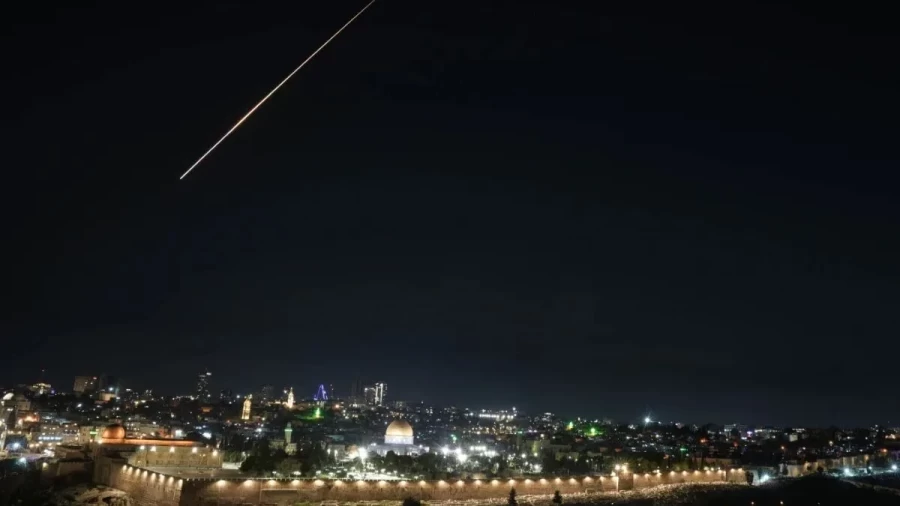
The ongoing conflict in the Middle East has entered its 12th day, with the scale of military operations expanding Importantly across the region. Iran has officially released video footage documenting its retaliatory missile strikes against Israel. The footage depicts multiple missiles being launched in rapid succession from various locations, while shortly after the launches, loud explosions were reported in targeted areas. According to Iranian officials, these strikes are a direct response to recent Israeli military actions. However, the exact impact and precision of these missiles remain subject to independent verification.
Iranian Claims of Destroying Intelligence and Communication Centers
The Islamic Revolutionary Guard Corps (IRGC) of Iran has claimed that its missile and drone strikes successfully targeted and destroyed a critical Israeli communication and intelligence hub. According to reports from Iranian state media, this satellite communication center is located in the Haila area, south of Tel Aviv, while the IRGC statement indicated that the control room of the facility was completely neutralized during the drone-led operation. Iran asserts that this center played a pivotal role in the strategic operations of the Israeli defense forces.
Israeli and US Strikes on Iranian Oil Infrastructure
In response to the Iranian offensive, Israeli and US forces have intensified their strikes on strategic assets within Iran, while reports indicate that a major oil depot in Tehran was targeted, resulting in a massive fire that sent plumes of black smoke visible from several kilometers away. This follows previous strikes on Iranian energy infrastructure aimed at degrading the nation's economic and logistical military capabilities. According to defense officials, these operations are designed to limit Iran's ability to sustain prolonged military engagements.
Escalation in Lebanon and Operations Against Hezbollah
The conflict has also intensified on the Lebanese front. The Israeli Air Force has conducted targeted bombings in Beirut, specifically hitting the offices of Al-Qard al-Hassan, which is identified as the financial wing of Hezbollah. These strikes occurred in the southern suburbs of Beirut, a known stronghold of the group. The Israeli military stated that these actions are part of a broader strategy to dismantle Hezbollah's financial networks. In retaliation, Hezbollah launched rockets into northern Israel, targeting military positions and causing further displacement in border towns.
Satellite Imagery Reveals Activity at Khatami Airbase
Recent satellite imagery has provided a detailed look at the Khatami Airbase in Isfahan, Iran, while the images clearly show several F-14 Tomcat fighter jets stationed at the facility. Historically, Iran acquired approximately 75 F-14 jets from the United States in the 1970s, prior to the 1979 Islamic Revolution. Currently, Iran remains the only country in the world still operating these aging but capable aircraft. Israeli intelligence is reportedly monitoring these airbases closely, as they house significant portions of Iran's aerial combat fleet.
Underground Excavations at Isfahan Nuclear Facility
Amidst the heavy fighting, new satellite data has revealed significant excavation activities at the Isfahan nuclear site, while the images show the construction of extensive tunnel networks and underground facilities. According to technical experts, these excavations are likely intended to fortify the nuclear site against potential airstrikes by moving sensitive operations deep underground. This site had previously been the target of an attack last year, and the current activity suggests a concerted effort by Iran to rebuild and secure its nuclear infrastructure against future kinetic threats.
🚩The communications center of SES company in Israel, which provides communication and satellite services, was destroyed by missile. pic.twitter.com/YoZGkiFyEq
— Iran Military Media (@IRMilitaryMedia) March 10, 2026
Moment of explosion of an Iranian missile in the city of Tel Aviv https://t.co/it5joxrQtd pic.twitter.com/izyfkC4vxF
— Iran Military Monitor ☫ (@IRIran_Military) March 11, 2026
⚡️BREAKING: IRGC MISSILE WAVE WILL LAST 3 HOURS.
— Suppressed News. (@SuppressedNws1) March 10, 2026
Iran’s IRGC says the 37th wave of Operation “Payambar-e Azadi 4” will last at least 3 hours, using Khaibar Shekan, Ghadr multi-warhead missiles (1-ton payload), and Khorramshahr missiles.
Targets: US base in Erbil, US Fifth… pic.twitter.com/fwBg2dTFs2
