
- India,
- 13-Aug-2026 07:31 AM IST



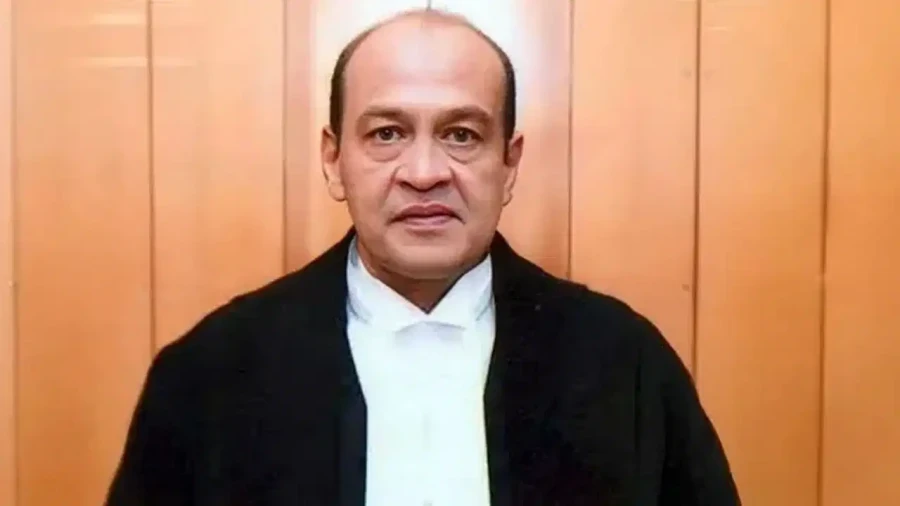
The legal landscape surrounding Justice Yashwant Verma of the Allahabad High Court has become a subject of intense debate among legal experts following the findings of a high-level inquiry committee. The committee, constituted by the Speaker of the Lok Sabha, has found the judge guilty in connection with allegations involving the recovery of cash from his official residence last year. This development has sparked a series of discussions regarding the potential for a First Information Report (FIR) or the continuation of impeachment proceedings against him.
Findings of the Inquiry Committee
The inquiry committee recently submitted its comprehensive report to the Speaker of the Lok Sabha. The core of the investigation centered on the discovery of cash in the store room of the official residence of Justice Verma, who was then serving as a judge of the Delhi High Court. According to the report, Justice Verma failed to provide a satisfactory explanation regarding the presence, source, or ownership of the cash found on the premises, while this failure to account for the funds led the committee to conclude that the allegations against him were substantiated.
Expert Opinions on Impeachment and Resignation
Senior advocate and constitutional expert Rakesh Dwivedi shared his insights on the matter, noting that the Supreme Court's previous dismissal of petitions to file an FIR against Justice Verma wouldn't hinder new actions. Dwivedi pointed out that since the report has been presented in Parliament and Justice Verma has already resigned, he can no longer be removed from office through the traditional route, while in his view, the impeachment motion has become infructuous or ineffective. However, he emphasized that an FIR can certainly be registered based on the findings of the committee's report.
On the other hand, Vikas Singh, a senior advocate and President of the Supreme Court Bar Association, offered a slightly different perspective. He suggested that impeachment proceedings could still be pursued if the resignation has not yet been formally accepted. Singh highlighted a critical distinction: if a judge resigns, they remain entitled to pension benefits, whereas removal through impeachment results in the loss of such benefits. On top of that, Singh expressed confidence that if the inquiry committee has recommended an FIR, it will likely be registered.
Jurisdictional Boundaries and Judicial Protection
Constitutional expert and senior advocate Rajeev Dhavan argued that the question of impeachment is no longer relevant once a judge has resigned from their post. He stated that, in his view, the jurisdiction of Parliament over the individual ends with the resignation. Regarding the possibility of an FIR, Dhavan noted that parliamentary proceedings don't act as a barrier. He explained that while Justice Verma was a sitting judge, the permission of the Chief Justice of India was mandatory for filing an FIR due to judicial protection. Now that he has resigned, that protection has ceased to exist, and Dhavan called for a proper investigation through criminal proceedings.
Dissenting Views and Calls for Investigation
Not all legal experts agree on the immediate path forward. Senior advocate Gopal Sankaranarayanan expressed skepticism about filing an FIR solely based on the committee's report. He remarked that the committee appeared to have placed the entire burden of proof on Justice Verma to explain the origin of the money. Sankaranarayanan raised a broader point, suggesting that if everyone living in the large bungalows of Lutyens Delhi were required to account for every item found on their premises, it could lead to hundreds of FIRs.
Conversely, Anil Tiwari, a senior advocate and former president of the Allahabad High Court Bar Association, maintained that an FIR can and should be registered. He argued that while judicial protection allows judges to exercise their powers independently, it doesn't grant them the liberty to keep large amounts of cash at home. Tiwari suggested that the government and the Law Ministry should take the initiative to move forward with the FIR, while supporting this view, advocate Anil Soni stated that since Justice Verma is no longer a judge, a thorough investigation into the matter is necessary through the registration of an FIR.