
- India,
- 21-Jul-2026 08:37 PM IST



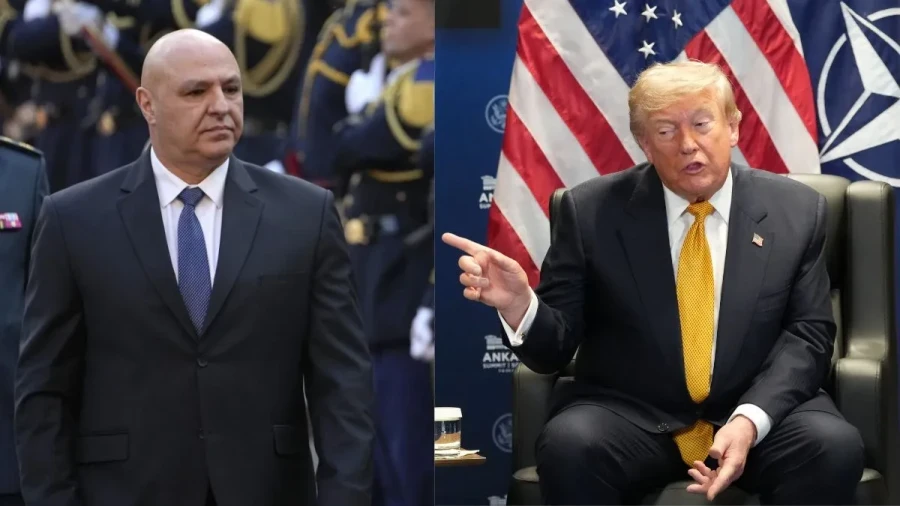
Lebanese President Joseph Aoun has arrived in the United States for a high-profile meeting with President Donald Trump. This meeting comes at a critical juncture as Lebanon continues to face persistent attacks from Israel. The discussion between the two leaders is expected to focus on the escalating tensions and the path toward a sustainable resolution in the region. The arrival of the Lebanese President in Washington signifies a major diplomatic effort to address the ongoing conflict and seek international support for a peaceful transition.
Diplomatic Mission for Long-Term Peace
President Joseph Aoun is scheduled to meet Donald Trump in Washington on Tuesday, marking the final leg of his four-day visit to the United States. The primary objective of this diplomatic mission is to secure long-term peace in war-torn Lebanon following months of intense conflict between Israel and the Iran-backed militant group Hezbollah. The meeting is seen as a pivotal moment for Lebanon's future stability, as the country seeks to emerge from the shadow of continuous military engagements and internal strife.
This significant encounter takes place while direct negotiations between Lebanon and Israel are ongoing, mediated by Washington. Lebanon remains hopeful that these talks will lead to the withdrawal of Israeli forces from large areas of southern Lebanon currently under their occupation, while Plus, the negotiations aim to assist the Lebanese Army in gaining full control over regions previously dominated by Hezbollah militants, ensuring that the state's official military forces are the sole authority in those sensitive border areas.
The Framework Agreement and Historical Context
On June 26, Lebanon and Israel announced a Framework Agreement. This plan outlines the withdrawal of the Israeli military from southern Lebanon and the disarming of Hezbollah, which has maintained a strong influence in the region for decades. The agreement also mentions steps to be taken toward a future peace treaty between the two nations. Historically, these two countries have never had formal diplomatic relations and have remained in a nominal state of war for nearly 80 years since the establishment of Israel. The current negotiations represent a rare opportunity to break this long-standing cycle of hostility.
Implementation of Pilot Zones
Following two days of US-mediated talks in Rome, Israel and Lebanon have taken a major step toward implementing pilot zones in South Lebanon. Under this arrangement, Israeli forces will withdraw from these designated zones, and control will be handed over to the Lebanese Army. According to the US State Department, the negotiations were successful, and both parties have agreed on the framework and guidelines for the pilot zone process. This step is considered a practical test of the broader peace framework and the capability of the Lebanese Army to maintain security.
The US State Department announced on Monday that operations have commenced in three villages under the pilot zone initiative: Froun, Srifa, and Jawtar al-Gharbiyeh. Although these three villages aren't currently under Israeli military control, the start of operations there marks a significant development in the implementation of the agreed-upon security measures, while as of now, there has been no immediate statement from the military or political leadership of either Lebanon or Israel regarding this specific announcement, leaving the international community to observe the progress of these initial steps toward regional de-escalation.