

- India,
- 09-Jan-2026 06:33 PM IST


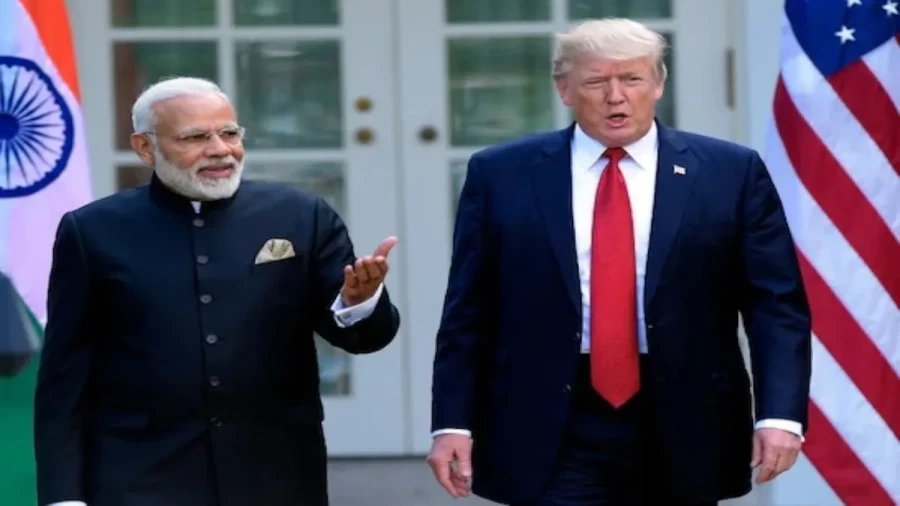
A startling claim by US Commerce Secretary Howard Lutnick has ignited a fresh controversy surrounding the pending trade agreement between India and the United States. Lutnick asserted that the trade deal with India didn't stall due to any policy dispute, but rather because Prime Minister Narendra Modi didn't directly call then-President Donald Trump. According to Lutnick, Trump desired Modi to personally engage with him to finalize the deal, and when this didn't happen, Trump took it as a blow to his 'ego,' leading to the deal's halt. This statement underscores the complexities of trade relations between the two nations and the significant impact that personal leadership dynamics can have on international agreements.
India's Strong Rebuttal and Factual Clarification
The Ministry of External Affairs (MEA) of India has vehemently rejected the claims made by US Commerce Secretary Howard Lutnick. MEA Spokesperson Randhir Jaiswal explicitly stated that Lutnick's assertion is factually incorrect. Jaiswal emphasized that Prime Minister Modi and then-President Trump had engaged. In a total of eight phone conversations in the year 2025. This information directly contradicts Lutnick's narrative that Modi failed to call Trump. India's response highlights that high-level diplomatic contact was consistently maintained, suggesting that the stalling of the deal wasn't due to a lack of personal communication between the leaders, but rather other underlying factors that remain part of ongoing negotiations.
The Protracted Process of the Bilateral Trade Agreement
Randhir Jaiswal further elaborated that India and the United States have been actively working on a bilateral trade agreement since February 13, 2025. Numerous rounds of negotiations have taken place between the two countries to finalize this agreement. Jaiswal also noted that on several occasions, both sides came very close to concluding the deal, but it couldn't be finalized for various reasons. The Indian Ministry of External Affairs stresses that India remains committed to moving forward with a mutually beneficial trade deal. Negotiations are currently ongoing, which indicates that dialogue at the leadership level continues, as evidenced. By the eight conversations between Modi and Trump, demonstrating a sustained effort to bridge the gaps.
Alleged 'Discomfort' in Finalizing the Deal
Speaking on a podcast, Lutnick further detailed his perspective. He explained that the trade deal with India was almost. Entirely complete, and India was given 'three Fridays' to finalize it. According to Lutnick, the entire deal was set, and Trump himself wanted to close it, while for this, all that was required was for Prime Minister Modi to make a call to Trump. However, Lutnick claimed that the Indian side felt 'uncomfortable' doing so, and ultimately, Modi didn't make the call. This alleged 'discomfort' became the reason for the deal's stagnation, according to Lutnick's interpretation. Of the events, pointing to a potential breakdown in the final stages of high-stakes diplomacy.
Other Nations Benefited from India's Delay
The US Commerce Secretary also highlighted that the alleged delay by India in finalizing the deal benefited other Asian countries. He revealed that the US had initially planned to conclude a deal with India first. However, when Modi reportedly didn't call Trump, the US proceeded to. Secure trade agreements with countries such as Indonesia, the Philippines, and Vietnam. Lutnick also cited the example of the United Kingdom, where Prime Minister Keir Starmer personally called Trump before the deadline expired, and the deal was announced the very next day. This comparison serves as a significant lesson for India on how high-level personal diplomacy can accelerate trade agreements and the potential costs of perceived hesitation.
Old Offers Off the Table: US Takes a Firm Stance
Of significant concern for India is the indication from the US side that it has now withdrawn its previous proposals. Lutnick explicitly stated, 'The US has now backed out of that trade deal that we had previously agreed to, while we aren't thinking about that old offer anymore. ' This statement represents a major setback for India, as it implies that if negotiations resume now, India may face new and potentially more stringent conditions. This situation could place additional pressure on India and complicate future discussions, requiring a complete re-evaluation of its. Negotiating strategy and objectives in light of the changed circumstances and the firm stance taken by the United States.
Reasons Behind Not Attending Trump's Calls
According to reports, in July of the previous year, then-President Trump had called Prime Minister Modi 'four times,' but the Prime Minister reportedly declined to speak with him. The Indian government was apprehensive that Trump might exaggerate the outcomes of. The conversation, potentially weakening India's negotiating position or creating undesirable public perceptions. Also, Modi had outright rejected Trump's attempts to mediate in the India-Pakistan conflict, which reportedly angered Trump. These incidents suggest underlying tensions and a degree of mistrust in the relationship between the two leaders, which could have undoubtedly influenced the progress of trade negotiations and broader diplomatic engagements.
The 'Ego' Battle and the Burden of 50% Tariffs
Experts believe that India has borne the brunt of Trump's 'ego' being hurt. Following India's decision to purchase oil from Russia, the Trump administration initially imposed a 25% tariff on India, which was subsequently increased to 50%. This represents a significant economic burden that negatively impacts India's trade and economic stability. However, relations saw some thawing after Trump's call to Prime Minister Modi on his birthday on September 17. Both leaders also spoke during Diwali and in December, yet despite these interactions, the bilateral trade agreement remains in limbo, demonstrating that even with personal rapport, reaching consensus on policy issues can be exceptionally challenging and fraught with complexities.
Detailed Analysis of Tariffs and India's Objection
The total tariff imposed by the US on India stands at 50%. Of this, 25% is termed by the US as a 'reciprocal tariff,' implying it's in response to tariffs imposed by India. The remaining 25% tariff has been levied due to India's purchase of Russian oil. The US argues that India's acquisition of Russian oil helps Russia sustain its war efforts in Ukraine. However, India has labeled this penalty as 'wrong' and has demanded its immediate removal. India justifies its purchase of Russian oil by citing its energy security requirements, viewing this tariff as unilateral and unjust, and a punitive measure that disregards its sovereign economic decisions and national interests.
India's Growing Trade Deficit with the US
India's trade deficit with the United States has been consistently increasing, which is a matter of concern for the American side. In terms of goods, India's trade deficit with the US was $41. 18 billion in 2024-25, while this figure was $35. 32 billion in 2023-24, $27, while 7 billion in 2022-23, $32. 85 billion in 2021-22, and $22. 73 billion in 2020-21. This continuously widening deficit is a major point of concern for the. US and could be a reason for its firm stance in trade agreements. The US seeks greater market access in India and a reduction in barriers for American products to mitigate this trade imbalance, making the trade deficit a critical and recurring issue in ongoing bilateral trade negotiations.
