
- India,
- 06-Aug-2026 07:54 PM IST



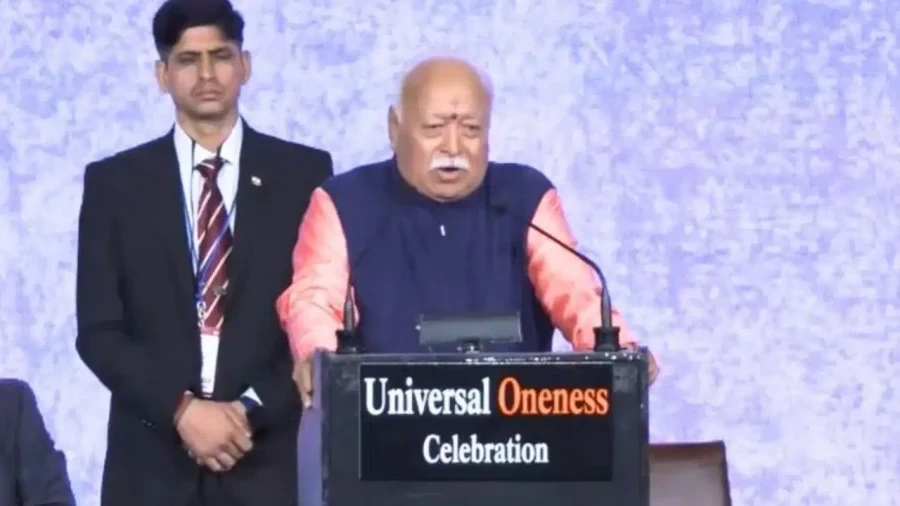
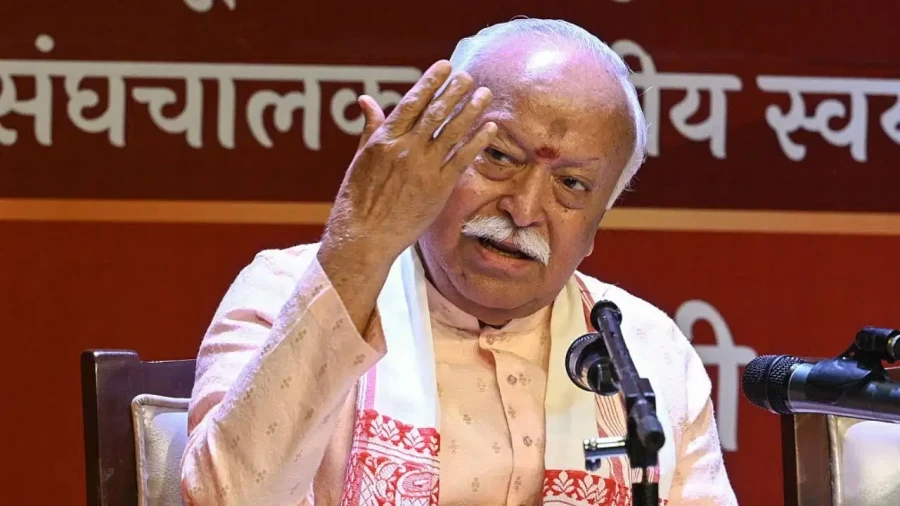
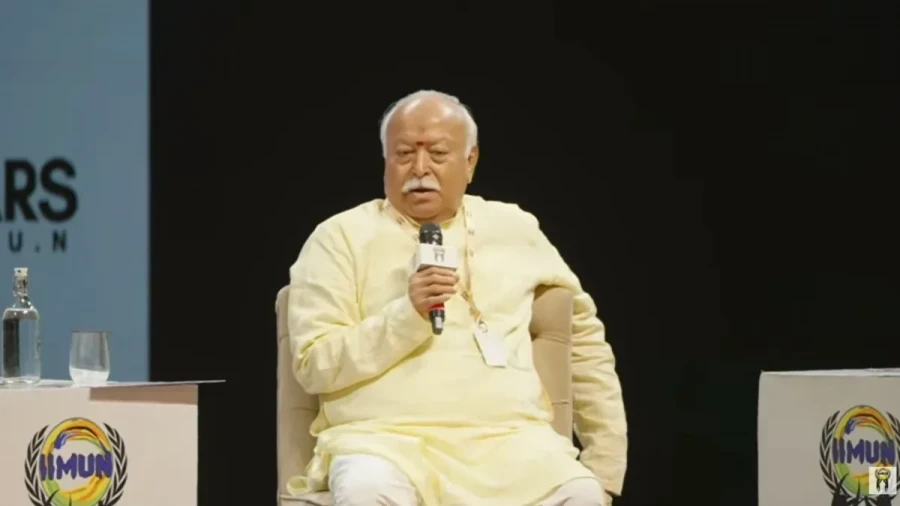
Rashtriya Swayamsevak Sangh (RSS) Sarsanghchalak Dr. N. program held at the Nita Mukesh Ambani Cultural Centre in Mumbai, while the event saw the participation of approximately 2000 high school students in the age group of 15 to 19 years, hailing from more than 100 cities across the country. During this interaction, Dr. Bhagwat expressed his profound trust in the younger generation, describing them as the most honest and logical cohorts today.
Trust in Gen Z and the Importance of Dialogue
Addressing questions about whether the government should have initiated talks earlier regarding certain issues, Dr, while bhagwat stated that dialogue should have been established with Gen Z. He emphasized that protests are also a form of communication. He remarked that if voices aren't being heard, people might resort to protests. He firmly defended the youth, stating that it's incorrect to label Gen Z as anti-national. He described Gen Z and Gen Alpha as the most honest generations, asserting that he trusts them blindly. He noted that while he might not have full information about why or how a lathi charge occurred, his faith in the youth remains unshaken. He acknowledged that there was a lack of communication during previous Gen Z protests and stressed that since they're the next generation and our own people, they deserve to be heard.
Need for Logical Answers and Educational Reform
Dr. Bhagwat highlighted that the dissatisfaction among Gen Z is genuine and that India's education system requires reform. He pointed out that Gen Z and Gen Alpha seek logical answers and aren't satisfied with the traditional approach where the words of elders are accepted without question. He stated that it isn't the case that Gen Z shouldn't protest; rather, when they speak, the elders must listen. He reiterated that they're our own people and the future of the nation, necessitating a relationship based on belongingness and trust.
Constitutional Values and Democratic Traditions
The RSS chief spoke about the Indian tradition of 'Shastra,' which involves not just debate and counter-debate, but the tradition of 'Purvapaksha' (the opponent's view) and 'Uttarpaksha' (the proponent's response). He explained that every individual has their own perspective, and it's through the emergence of diverse and even opposing views that a comprehensive understanding of a subject is formed. He urged the youth to follow the Constitution and suggested reading the speeches of Dr. Babasaheb Ambedkar, which provide clear indications on how to present one's views through democratic means. He emphasized that those raising their voices, such as people in Delhi, aren't doing so merely for the sake of opposition but because of genuine pain or concern.
Social Media Responsibility and Deepfakes
On the topic of social media, Dr, while bhagwat mentioned that while rules and discipline are necessary, they only succeed when there is a change in people's perspective and behavior. He noted that many laws exist, but their impact depends on social acceptance. He addressed the role of influencers, stating that those followed by millions have an increased responsibility to consider the impact of their behavior and messages on society. Also, he warned about the dangers of advanced technology like deepfakes, where images, voices, and faces can be manipulated to create fake videos. He advised the youth not to believe every piece of information on social media immediately and to verify it through reliable and authentic sources.
Views on LGBTQIA+ and Marriage
Regarding the LGBTQIA+ community, Dr. Bhagwat stated that they're a part of society and have always had a place in Indian tradition. However, he emphasized that in Indian tradition, marriage isn't just a convenience for two people to live together but the foundation of the family institution. He described the family as the basic unit of society where the next generation is nurtured with values. He suggested that before making changes to established systems, society needs to be prepared, as laws are formed based on social acceptance. He advocated for respectful treatment of same-sex partners and suggested that a separate legal system or arrangement could be considered for them, emphasizing the need for a broad social discussion.
Addressing Unemployment and Dignity of Labor
On the issue of unemployment, Dr. Bhagwat called for a change in mindset, stating that employment doesn't mean only jobs but also includes entrepreneurship and skill-based work, while he lamented the lack of 'Shram ki Pratishtha' (dignity of labor) in society, where manual labor is often not given the respect it deserves. He gave an example where a person with 400000 rupees in cash might receive more respect than a farmer with 400000 rupees worth of wheat or rice, despite the fact that grain, not money, fills the stomach. He criticized the tendency of everyone chasing government jobs near their homes, leading to a situation where many sectors have work but no workers. He shared an inspiring story of a student who left studies after 8th grade, worked in a hotel, and eventually started a successful pan stall and pandal business, creating assets worth 1900000 rupees. He concluded that unemployment can be Notably reduced if society stops viewing work through the lens of high and low status and respects everyone who earns an honest living through labor.