

- India,
- 02-Oct-2025 08:40 AM IST


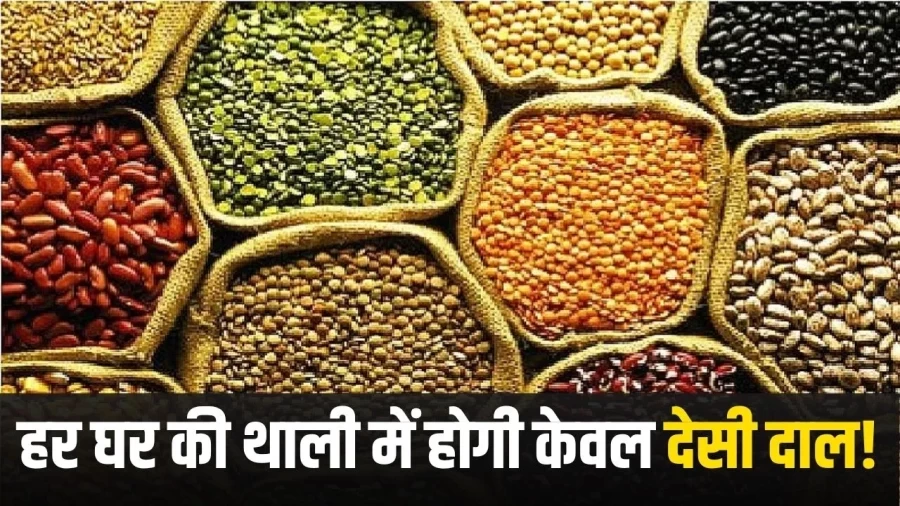
Modi 3.0 Government: The central government has set an ambitious goal: to make India completely self-sufficient in pulses. To this end, the Cabinet has approved a new scheme called the "Mission for Self-Reliance in Pulses." This scheme will cost ₹11,440 crore and will be implemented from 2025-26 to 2030-31. The government's clear goal is to meet India's pulse consumption entirely through indigenous production by 2030. Currently, India is the world's largest pulse consumer, yet it still imports 15 to 20 percent of its pulses. This scheme is being launched to eliminate this import dependence and expense.
Goal to Increase Pulse Production to 35 million tons
Under this mission, a concrete strategy has been developed to promote pulse cultivation. The government aims to cultivate pulses on 31 million hectares of land by 2030 and increase production to 35 million tons. To achieve this, farmers will be provided with improved and robust varieties of seeds. Approximately 12.6 million quintals of certified seeds and 8.8 million free seed kits will be distributed. These seeds will be sown specifically on land previously uncultivated for pulses, such as fallow paddy fields or other vacant land. To ensure seed quality and availability, monitoring will be done through a digital portal called SATHI. Seed production will be jointly managed by central and state agencies.
The government will purchase the entire crop from farmers.
Farmers often fear that they will suffer losses if market prices for their crops fall. This scheme addresses this concern. The government has guaranteed 100 percent procurement of tur (pigeon pea), urad (black gram), and masoor (red lentil) for the next four years. Government agencies like NAFED and NCCF will purchase the entire crop at the Minimum Support Price (MSP). However, this purchase will only be made from farmers who pre-register and enter into an agreement with the government agency. This will reassure farmers that their hard work will not go to waste. Additionally, the government will monitor pulse prices in the global market to prevent losses for domestic farmers.
Processing centers to be built in villages
To prevent post-harvest losses and reduced quality of pulses, the government will establish 1,000 processing units. These units will clean, sort, and pack pulses. The government will provide assistance of up to 25 lakh rupees for each unit. These units will be located in villages, increasing local employment opportunities and eliminating the need for farmers to travel far to sell their produce. The government aims to expand pulse cultivation to various parts of the country to reduce the impact of weather or natural disasters.
Increase in farmers' income
This mission is not limited to pulse production alone. It will increase farmers' incomes, as they will receive fair prices for their produce. Furthermore, pulse cultivation will improve soil fertility, as this crop provides nutrients to the soil. Furthermore, indigenous pulse production will reduce dependence on imports, saving the country's foreign exchange. The government believes this plan will revolutionize Indian agriculture. It's a long-term approach, with results clearly visible in the coming years.
