
- India,
- 24-Sep-2026 05:54 PM IST



Pakistan has once again escalated cross-border tensions by conducting a series of airstrikes within the sovereign territory of Afghanistan. On early Thursday morning, Pakistani fighter jets targeted multiple locations across three key provinces, leading to significant casualties and a sharp diplomatic fallout between the two neighboring nations, while according to reports from the Afghan Taliban government, the strikes were concentrated in the provinces of Kandahar, Khost, and Paktia, where a total of 10 specific locations were hit by the aerial bombardment. The Afghan authorities have confirmed that these strikes resulted in the deaths of 4 civilians, sparking outrage in Kabul and leading to a stern warning of military retaliation.
Details of the Aerial Assault and Casualties
The Pakistani military aircraft reportedly entered Afghan airspace during the early hours of Thursday to carry out the operation, while the 10 targets identified by Pakistan were spread across the rugged terrains of Kandahar, Khost, and Paktia. While Pakistan has maintained that its operations are aimed at security threats, the Afghan government has presented a different picture. Zabihullah Mujahid, the official spokesperson for the Afghan Taliban government, described the action as a blatant act of aggression. He confirmed that the victims of these strikes were 4 innocent civilians who lost their lives during the bombardment. Mujahid emphasized that such unilateral military actions are unacceptable and constitute a direct violation of Afghanistan's territorial integrity. The Afghan government has officially warned that it will provide an appropriate response to Pakistan's actions, suggesting that the situation on the border could deteriorate further.
Pakistan's Justification and Counter-Claims
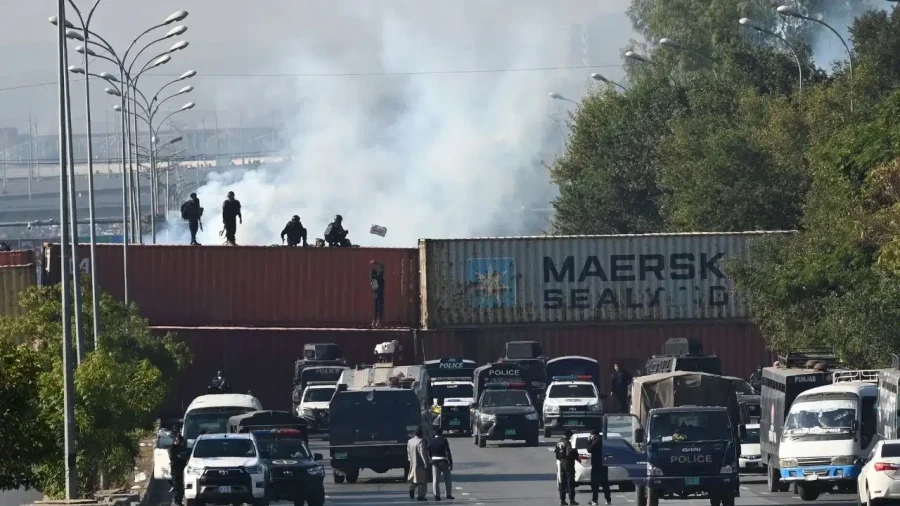
The Pakistani side has justified its military intervention by citing recent provocations from the Afghan side. According to Pakistani officials, the airstrikes were a necessary response to an incident that occurred just a day prior, while pakistan claims that Afghan Taliban forces launched an attack on its border security posts using 8 drones. Also, Pakistan alleged that Afghan border forces utilized mortars and heavy weaponry to fire upon Pakistani border posts. These incidents, according to Islamabad, necessitated a firm military response to protect its personnel and territory. However, the government in Kabul has categorically rejected these allegations. Afghan officials have dismissed the claims of drone attacks as baseless, asserting that Pakistan is manufacturing these excuses to justify its illegal military operations within Afghan borders.
A Pattern of Increasing Hostilities
This latest incident marks the second major aerial operation conducted by Pakistan against Afghanistan in a very short span of time. Only a few days ago, on Monday, Pakistan carried out similar strikes in eastern Afghanistan. During that operation, Pakistan claimed to be targeting militants, but Afghan officials reported that the strikes resulted in the deaths of 3 civilians and left 4 others injured. The United Nations mission in Afghanistan also stepped in to investigate the Monday strikes and subsequently confirmed the reports of civilian casualties. The frequency of these attacks has raised serious concerns about the stability of the region and the safety of the civilian population living near the Durand Line.
Calls for Diplomacy and International Mediation
In the wake of these rising tensions, there have been calls for restraint and a return to diplomatic channels. The Afghan government has maintained that issues related to border disputes and security should be resolved through dialogue and diplomatic means rather than through military strikes. Former Afghan President Hamid Karzai has also voiced his concerns, urging Pakistan to adopt the path of a good neighbor. Karzai emphasized that the relationship between the two countries should be moved forward in a peaceful and civilized manner, while amidst this volatile situation, several international players are attempting to mediate between Islamabad and Kabul. Countries such as China, Turkey, Qatar, and Saudi Arabia are reportedly involved in mediation efforts to prevent the conflict from escalating into a full-scale confrontation, while despite these efforts, the continuous cross-border strikes have created an atmosphere of deep mistrust and fear of further violence in the region.