
- India,
- 30-Sep-2026 01:27 PM IST



In the midst of escalating tensions and geopolitical shifts in West Asia, Pakistan has formally announced its commitment to provide all possible military assistance to Saudi Arabia under a newly formed defense pact known as the Mecca Joint Defence Agreement. This announcement has sparked significant debate regarding Pakistan's potential involvement in a direct conflict with Iran. However, official statements from Islamabad suggest a highly calculated and balanced approach, indicating that while the country is ready to defend Saudi sovereignty, it has no intention of engaging in a direct war with its neighbor, Iran.
The Mecca Joint Defence Agreement and Tripartite Security
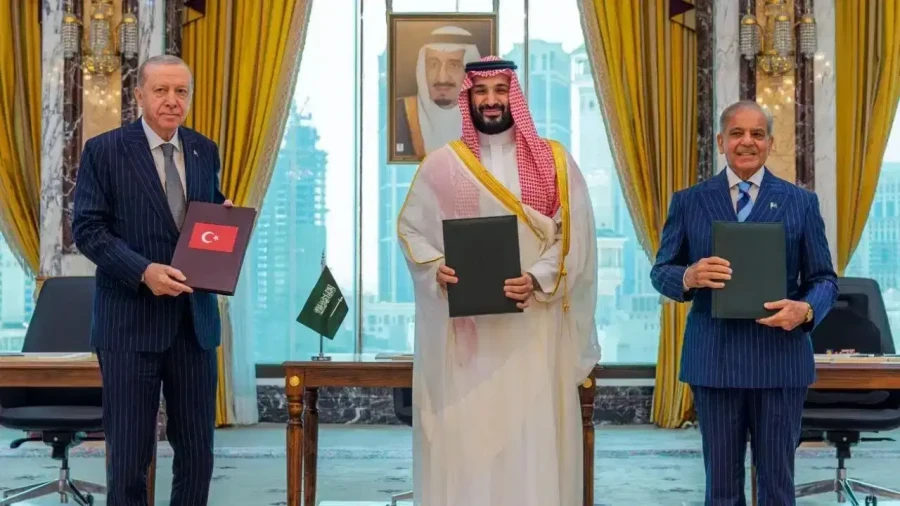
The foundation of this new military commitment lies in the Mecca Joint Defence Agreement, which was established on August 7 in the holy city of Mecca. This tripartite security pact involves Pakistan, Saudi Arabia, and Turkey, creating a significant regional alliance. The agreement is built on the principle of collective security, where an attack on any one of the three member nations is considered an attack on all. Despite the weight of this commitment, all three nations have repeatedly emphasized that the alliance is strictly defensive in nature. Its primary objective is to safeguard the territorial integrity of the member states rather than launching aggressive operations against other countries. To ensure effective strategic coordination and implementation of this framework, a dedicated secretariat is currently being established within Saudi Arabia.
Defense Minister Khawaja Asif's Stance in Rome
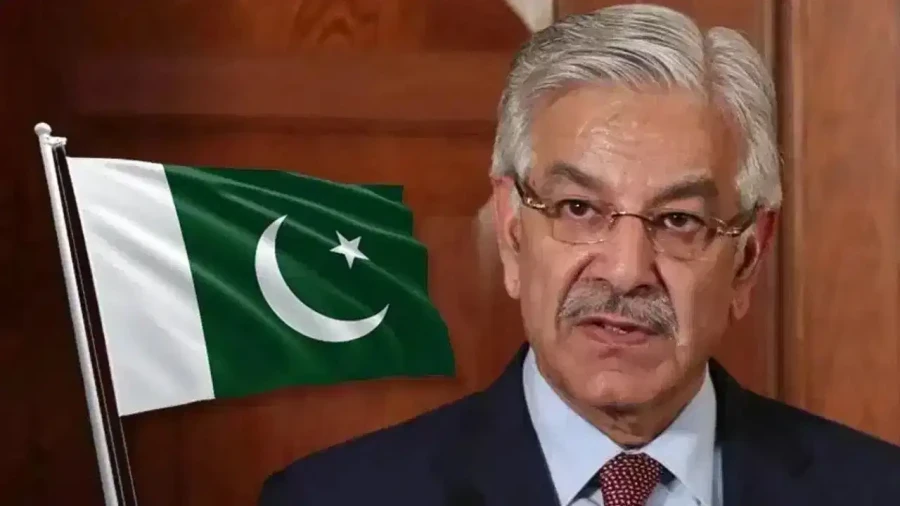
Pakistan's Defense Minister, Khawaja Muhammad Asif, recently clarified the nation's position during his visit to Rome, while he stated unequivocally that if Saudi Arabia faces any external aggression, Pakistan will deploy all its available military resources to ensure the kingdom's protection. Asif highlighted the increasing frequency of missile and drone attacks carried out by Iran-backed Houthi rebels against Saudi targets, declaring that any enemy of Saudi Arabia is considered an enemy of Pakistan. However, when questioned about the direct involvement of the Pakistani military in aerial strikes or ground operations against Houthi positions in Yemen, the minister maintained a level of ambiguity. He stated that Pakistan is committed to providing defensive capabilities under the agreement, leaving the specifics of direct combat participation in regional conflicts undefined.
The Growing Threat of Houthi Rebels
The urgency behind the activation of this tripartite military agreement is driven by the increasing aggression of Houthi rebels. Defense Minister Asif pointed out that the rebels have seized control of the strategic port city of Mokha on Yemen's Red Sea coast, along with several key islands. This expansion has placed the Bab-al-Mandeb Strait under significant threat. This maritime passage is a critical artery for global commerce, with approximately 12 percent of world trade passing through it. The Houthis, in collaboration with allied militias in Iraq, have targeted Saudi oil installations and tankers, attempting to disrupt the use of this vital waterway. These developments have raised serious strategic concerns for Riyadh and its allies, necessitating a more strong defense framework.
Balancing Relations with Iran
Despite the strong military rhetoric in support of Saudi Arabia, Pakistan is exercising extreme caution to avoid a direct confrontation with Iran. There are several strategic reasons for this balanced approach. Firstly, the Mecca Agreement is framed as a defensive alliance focused on protecting Riyadh's borders rather than initiating offensive maneuvers. Secondly, Pakistan's military support appears to be specifically tailored to counter drone and missile threats from proxy groups like the Houthis, rather than targeting the Iranian state directly. Also, Pakistan and Iran share a long history of diplomatic and neighborly relations. Islamabad aims to reassure Saudi Arabia of its security while keeping diplomatic channels with Tehran wide open to avoid being dragged into a larger West Asian war.
Diplomatic Efforts and Mediation Roles
Pakistan has also been active on the diplomatic front, seeking to resolve regional conflicts through dialogue, while defense Minister Asif noted that Islamabad has been advocating for negotiations to end the broader conflict involving Iran and supports the resumption of the nuclear deal with Tehran. Earlier this year, Pakistan attempted to position itself as a mediator, working with other regional nations to de-escalate tensions. In April, Pakistan hosted direct talks between representatives of Iran and the United States in Islamabad. These efforts led to an interim agreement in June, where both sides pledged to reach a final settlement within 60 days. However, that deadline expired as hostilities resumed. More recently, top diplomats from Pakistan, Turkey, and Saudi Arabia met on the sidelines of the UN General Assembly to discuss the implementation of the new defense pact and coordinate responses to attacks on Saudi soil.
A Test for the New Alliance
The ongoing conflict between Saudi Arabia and the Houthi rebels serves as an initial test for the newly formed alliance. While the full draft of the agreement has not yet been made public and the operational command structures are still being developed, the commitment remains firm. Minister Asif observed that this alliance reflects a growing belief among its members that existing security arrangements have failed to protect Gulf nations as Iran-linked conflicts spread across the region, while he cautioned that once a conflict begins, the outcomes and directions are often beyond control, reinforcing the need for a strong defensive posture combined with persistent diplomatic engagement.