
- India,
- 30-Jul-2026 05:06 PM IST



The discussion surrounding the use of pellet guns has gained significant momentum following intense debates in the Parliament during the session on the Anti-Paper Leak Bill. Opposition leaders raised serious concerns, claiming that protesting students were subjected to pellet gun attacks. The Lok Sabha witnessed a major uproar last Wednesday when Rahul Gandhi, the Leader of the Opposition, accused the government of using pellet guns against students protesting in Delhi over the NEET exam paper leak. This political confrontation has brought the technicalities and regulations governing pellet guns into the spotlight, making it essential to understand what these weapons are and why their use is so controversial.
What is a Pellet Gun?
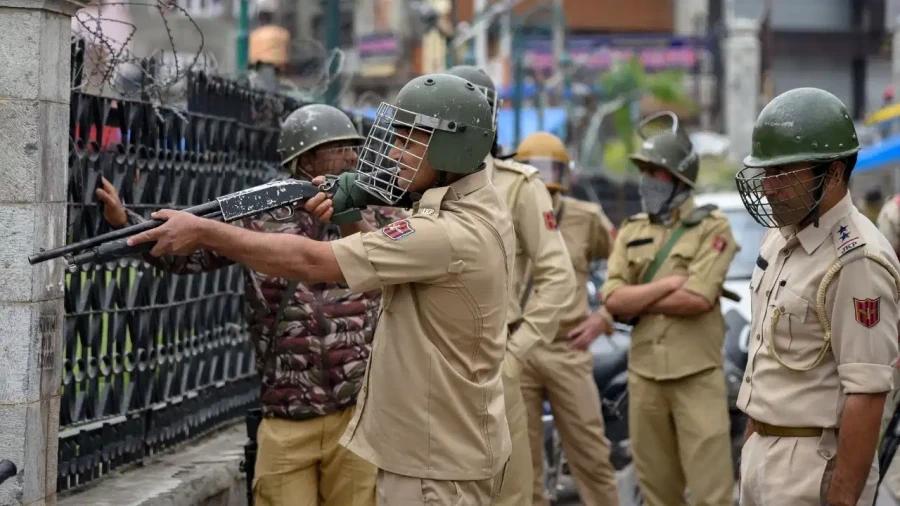
A pellet gun is typically a 12-bore pump-action shotgun. Unlike traditional firearms that fire a single bullet, the cartridges used in pellet guns contain hundreds of small metal pellets or shrapnel. When the gun is fired, these pellets disperse over a wide area. The primary objective of using these pellets is to disperse a crowd rather than cause fatal injuries. However, the nature of these metal fragments makes them inherently dangerous if not used according to strict protocols. The dispersion of hundreds of tiny metal pieces is intended to create a deterrent effect among protesters.
The Standard Operating Procedure (SOP)
The use of pellet guns is governed by a strict Standard Operating Procedure (SOP). The fundamental objective of this SOP is to ensure the use of less-lethal force during crowd control. These weapons are primarily intended for use by security forces in sensitive areas or during emergency situations where other methods have failed. Because the use of pellet guns has historically led to serious injuries, particularly to the eyes and face, the SOP outlines very specific conditions under which they can be deployed.
Rules of Engagement and Usage
The first and most important rule is that pellet guns must only be used as a last resort. This means they can only be deployed when all other efforts to persuade or warn the protesting crowd have failed, while before resorting to pellet guns, security forces are expected to use other less-lethal measures such as lathi charge, tear gas, or water cannons. If these measures prove ineffective and the crowd remains violent, posing a serious threat to life, property, or the security forces themselves, only then can pellet guns be considered.
On top of that, the use of these weapons requires the explicit permission of a competent authority. Generally, the senior officer or the incident commander present at the scene must authorize the firing. Different forces, including the CRPF, RAF, and state police, have their own operational orders and chains of command that must be followed before a single round is fired.
Targeting and Safety Distance
According to the SOP, the targeting of pellet guns is strictly regulated. Security personnel are instructed never to aim at a person's head, face, eyes, neck, or chest. The designated target area is usually below the waist, specifically towards the legs. The goal is to stop or incapacitate the individual to prevent further violence, not to cause life-threatening injuries. Firing from a very short distance is strictly prohibited because the concentration of pellets at close range Importantly increases the risk of severe injury or death, while maintaining a sufficient safe distance is a mandatory requirement for the use of these weapons.
Post-Firing Requirements
The SOP also dictates the actions to be taken after the use of pellet guns. Only the minimum necessary force should be used, and firing must stop immediately once the crowd is under control or has calmed down. If any individual is injured by the pellets, it's the responsibility of the forces to ensure that medical assistance is provided as quickly as possible, while Also, a detailed record of the incident must be maintained. This includes documenting the circumstances of the firing, the officer who gave the order, the number of rounds used, and the eventual outcome. These records are often subject to post-event reviews or formal investigations.
Controversies and Prohibitions
Human rights organizations have frequently opposed the use of pellet guns, citing numerous cases where individuals have suffered permanent loss of vision due to eye injuries. This has led to increased pressure on security forces to emphasize training, strict adherence to SOPs, and the exploration of alternative less-lethal means. There are also specific circumstances where the use of pellet guns is completely prohibited. They should never be used against peaceful protesters, as an initial response to crowd control, or when other less-lethal measures are still effective. Most importantly, they must not be used against small children, the elderly, or any individuals who don't pose an immediate and serious threat.