
- India,
- 23-Jul-2026 07:27 PM IST



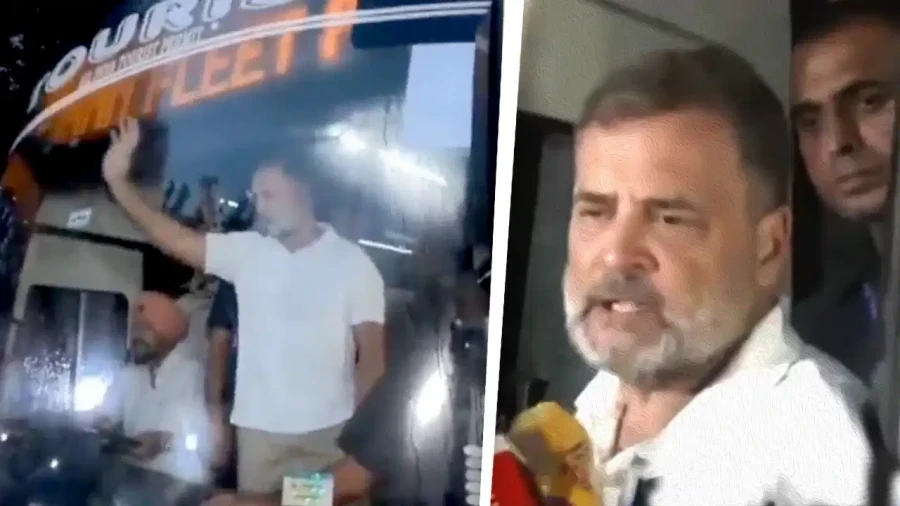
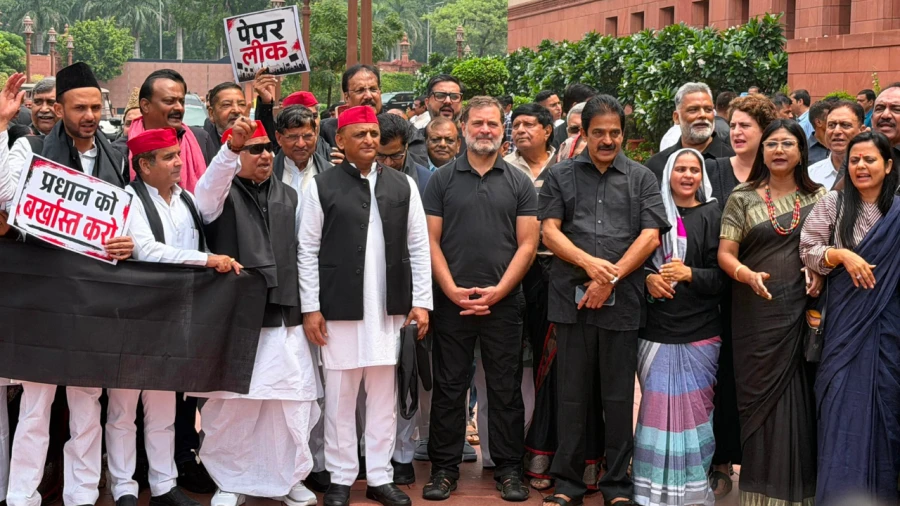
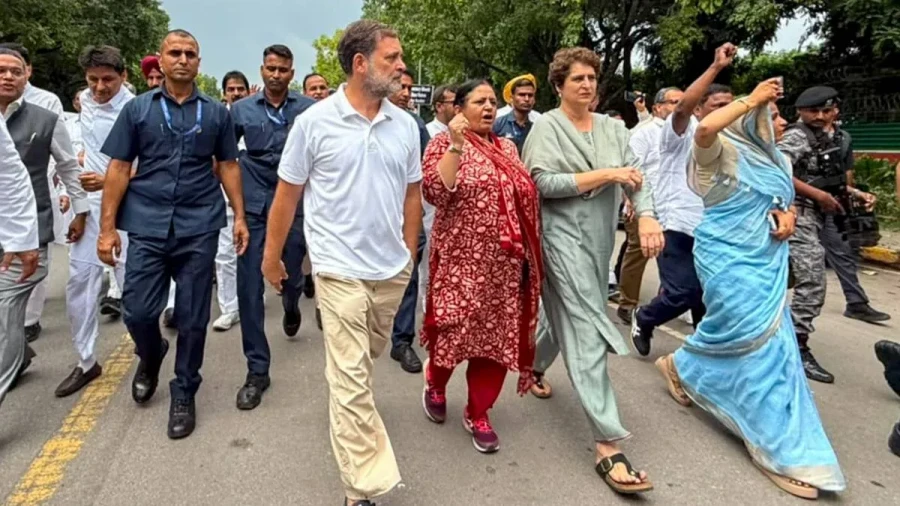
The political atmosphere in the national capital intensified as Rahul Gandhi, the Leader of the Opposition in the Lok Sabha, spearheaded a crucial meeting with members of the INDIA block and Congress party. This high-level gathering took place at his residence, where senior leaders, including Sonia Gandhi, deliberated on the ongoing deadlock in Parliament. Following the conclusion of this meeting, the opposition members decided to take their protest to the streets, initiating a march that has led to a significant increase in security measures across the area, while the Delhi Police has deployed a large number of personnel to maintain order and monitor the movement of the protesting lawmakers.
Heavy Security Presence and Strategic Movements
In anticipation of the protest march, the security apparatus around Rahul Gandhi's residence was Notably bolstered. Sources indicated that the leaders of the INDIA alliance were planning a candle march towards India Gate, although an official announcement regarding the exact destination was initially withheld. This move follows a recent incident where Rahul Gandhi, accompanied by Congress MPs, staged a sudden sit-in protest near the Prime Minister's residence. The current deployment of the Delhi Police reflects the heightened sensitivity of the situation, with officers stationed at strategic points to manage the crowd and ensure that the march remains peaceful. The presence of the police has been particularly noted outside the residence of the Leader of the Opposition, where the initial gathering took place.
Prominent Leaders in Attendance
The meeting saw participation from a wide array of influential leaders representing various constituent parties of the INDIA block. Among those present were Arvind Sawant from the Shiv Sena (UBT), Supriya Sule of the NCP (Sharad Pawar faction), and Mahua Moitra and Saugata Roy from the Trinamool Congress (TMC). Other notable attendees included Mahua Manjhi of the JMM, Misa Bharti and Sanjay Yadav from the RJD, John Brittas of the CPM, P Santhosh Kumar from the CPI, Ram Ji Lal Suman of the Samajwadi Party, and ET Mohammed Basheer from the IUML. While Samajwadi Party chief Akhilesh Yadav was unable to attend this specific meeting for undisclosed reasons, he had been part of earlier discussions held during the day. The presence of Sonia Gandhi, the Chairperson of the Congress Parliamentary Party, underscored the importance of the meeting and the unified stance of the opposition.
The NEET-UG Controversy and Parliamentary Deadlock
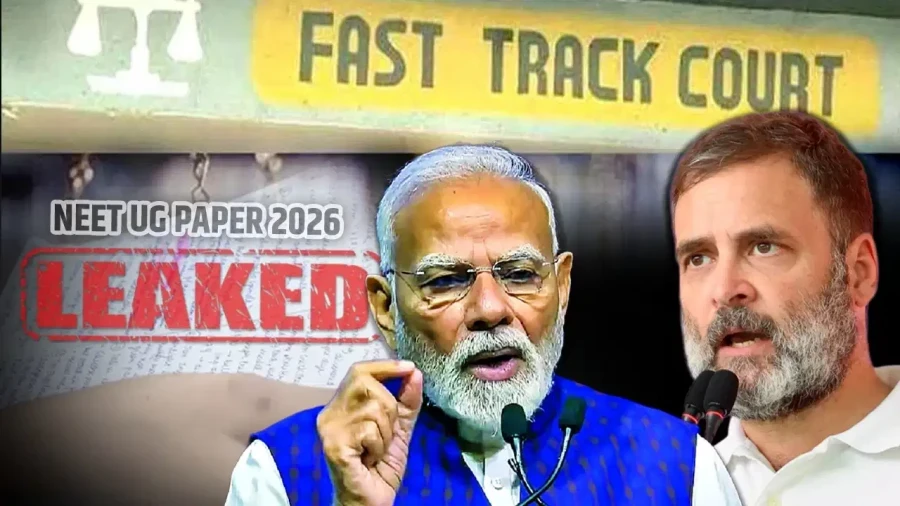
The primary catalyst for this meeting and the subsequent protest is the ongoing controversy surrounding the NEET-UG paper leak. The opposition has been vocal in its demand for a thorough discussion on the matter, specifically calling for the resignation of Education Minister Dharmendra Pradhan. In the Rajya Sabha, the opposition has been pushing for a debate under Rule 267, which allows for the suspension of the listed business of the day to discuss a matter of urgent public importance. While the central government has expressed its willingness to discuss the NEET issue and related concerns, it has urged the opposition not to set any preconditions for the debate. The deadlock in Parliament continues as both sides remain firm on their respective procedural demands.
March Towards Gandhi Smriti
Following the discussions at Rahul Gandhi's residence, the leaders began their march towards Gandhi Smriti, located on 30 January Marg. This site, which is approximately 2 kilometers away from the residence, holds significant historical value. Rahul Gandhi shared updates on social media, stating that the MPs and leaders of the INDIA alliance were proceeding towards Gandhi Smriti in a peaceful manner. The march is seen as a symbolic gesture to highlight the grievances of students affected by the paper leak and to demand accountability from the government. RJD MP Manoj Jha expressed deep concern over the current state of affairs, noting the restlessness among the youth at Jantar Mantar and across various states. Similarly, Congress MP Amarinder Singh Raja Warring emphasized the need for strategic planning, suggesting that the opposition is prepared to fight for the cause despite the heavy police presence and surveillance.