

- India,
- 20-Oct-2023 09:00 AM IST


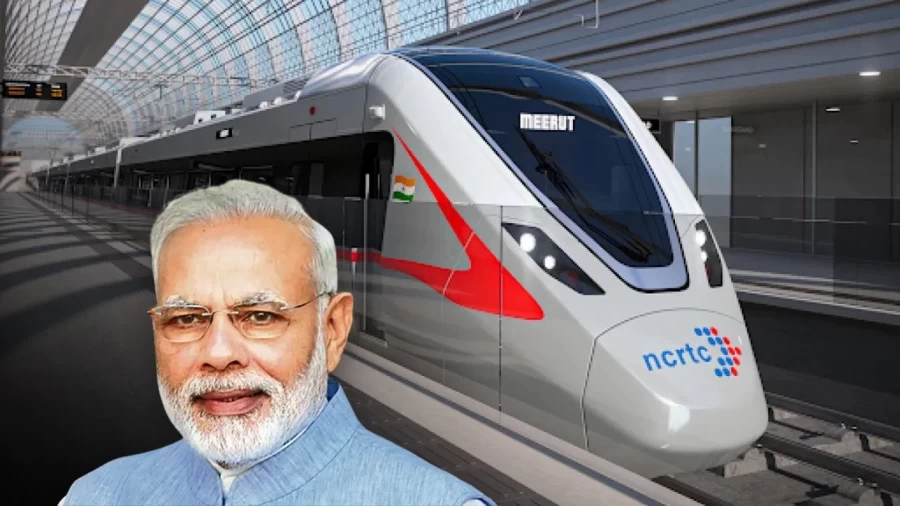
Delhi Meerut RRTS: PM Narendra Modi will flag off the country's first rapid rail NaMo Bharat from Ghaziabad on October 20 (Friday). In the first phase of the 82 km long corridor between Delhi and Meerut, this train will cover a distance of 17 km between Sahibabad and Duhai. After the inauguration on Friday, soon common people will be able to travel through it. Namo Bharat train will be seen running between Sarai Kale Khan in Delhi and Madipuram station in Meerut by 2025.
Last week, the date of inauguration was fixed after it received security clearance from the Metro Rail Safety Commissioner. At present, this rapid train will run from Sahibabad from this month. It will reach Duhai depot in 15 to 17 minutes via Ghaziabad, Guldhar. Know how different Namo Bharat is from Mumbai's Mono and Delhi-NCR Metro and what facilities will be available in it.
How different is Delhi-Meerut Rapid Rail from Mono Rail and Metro?
There are many big differences between the monorail running in Mumbai, Delhi-NCR Metro and Namo Bharat Rapid Rail. The biggest difference is speed. Now let us understand all three one by one.
Rapid Rail: More facilities along with speed
In terms of speed, Rapid is far ahead of both types of metro. Rapid Rail is designed to run at a speed of 180 kilometers an hour. If seen this way, the passenger will reach Meerut from Delhi in just one hour. Many facilities are available in the coaches of Rapid Rail. Like- free WiFi, mobile charging points, space to keep luggage, infotainment system. Entry in the metro is available through smart cards, tokens, paper with QR code and tickets generated from the app. Whereas for Rapid Rail, digital paper and paper tickets with QR codes are used.
Metro Train: Transports 40 thousand passengers an hour at a speed of 80 km.
Metro is considered a considerable upgrade compared to monorail. It can transport 40 thousand passengers in an hour. It requires more space to run than mono. It usually has 9 coaches. It can set higher speed than mono. The biggest difference between Rapid Rail and Metro is speed. For example, the Delhi-NCR metro runs at a speed of 80 kilometers per hour. Whereas Rapid Rail has been designed to run at a speed of 180 kilometers per hour.
Mono Rail: A train running for short distances in a densely populated area
Monorail is run on those routes where there is a dense population. Or there is a shortage of space. It runs over short distances. Occupies less space. It has mono in its name, which means there will be only one track for it. That means you will have to take the same train to return. Just as in the Delhi-NCR metro, two tracks run together and there are separate trains for commuting, this is not the case with monorail. If understood in simple language, it runs on one track only. It usually has 4 coaches i.e. coaches. This train can transport 10 thousand passengers from one place to another in an hour. Mono metro is running in 20 cities of Asia.
Will reach Meerut from Delhi in one hour
8 corridors have been identified for Regional Rapid Transit System (RRTS) in Delhi-NCR. Three corridors have been approved for the first phase. This includes Delhi-Meerut Corridor, Delhi-Gurugram-MNB-Alwar Corridor and Delhi-Panipat Corridor.
The country's first rapid train will run on the track of Delhi-Meerut corridor on Friday. In the first phase it will travel from Sahibabad to Duhai depot. This route will be completely ready by 2025. Through this, passengers will be able to travel from Delhi to Meerut in one hour. The cost of this project is said to be Rs 30 thousand crores.
