
- India,
- 01-Aug-2026 02:49 PM IST



A discarded SpaceX rocket stage, which has been wandering through space like a rogue object, is on a direct collision course with the lunar surface. This piece of space hardware, which became derelict after successfully delivering two moon landers into space over a year ago, is now expected to make a high-speed impact with the Moon. According to scientific projections, the collision is set to occur on Wednesday, August 5. The upper stage of the rocket is predicted to strike near the Einstein Crater, located in the western region of the Moon, while this event is anticipated to be a significant astronomical occurrence, as the sheer force of the impact will carve out a substantial new crater and send a massive plume of dust and lunar debris into the surrounding space.
High Velocity Impact and Observation Opportunities
Space tracking expert Bill Gray has provided detailed estimates regarding the mechanics of this upcoming collision. The rocket is expected to hit the lunar surface at a staggering speed of approximately 5,400 miles per hour, which translates to about 8,700 kilometers per hour. To put this into perspective, this velocity is roughly seven times the speed of sound. The impact is scheduled to take place on the sunlit side of the Moon, which provides a unique opportunity for observation. Scientists suggest that the best vantage points for witnessing the aftermath of this event may be from the eastern parts of the United States and Canada, as well as various regions across South America. However, because the impact is slated for the early night hours and the resulting flash of light may be relatively faint, direct visual observation might prove challenging for casual observers.
Scientific Significance and Debris Analysis
The collision is expected to generate a debris cloud that could extend for several kilometers into space. Experts believe that this plume of dust and rocks might remain visible through telescopes for several minutes following the impact. Benjamin Fernando, a scientist at the Los Alamos National Laboratory, has highlighted the unique conditions of the Moon that make this event scientifically valuable. Since the Moon has Importantly lower gravity than Earth and lacks an atmosphere, there are no natural processes like wind to disperse the dust quickly. Fernando noted that one of the primary reasons for scientific interest in this event is to better understand the potential threats that space debris could pose to future astronauts and lunar missions.
Physical Dimensions of the New Lunar Crater
The physical consequences of the 8,700 km/h impact are expected to be quite prominent on the lunar landscape. Estimates provided by Fernando suggest that the collision will result in a crater approximately 90 feet or 27 meters in width and about 16 feet or 5 meters in depth. While this new feature won't be visible from Earth with the naked eye, specialized spacecraft currently orbiting the Moon will be perfectly positioned to document the event. NASA's Lunar Reconnaissance Orbiter and South Korea's Danuri lunar orbiter are prepared to capture high-resolution images both before and after the impact. Interestingly, the Danuri orbiter is expected to pass within one or two miles of the rocket just two minutes before the actual collision occurs.
History and Origin of the Rogue Rocket
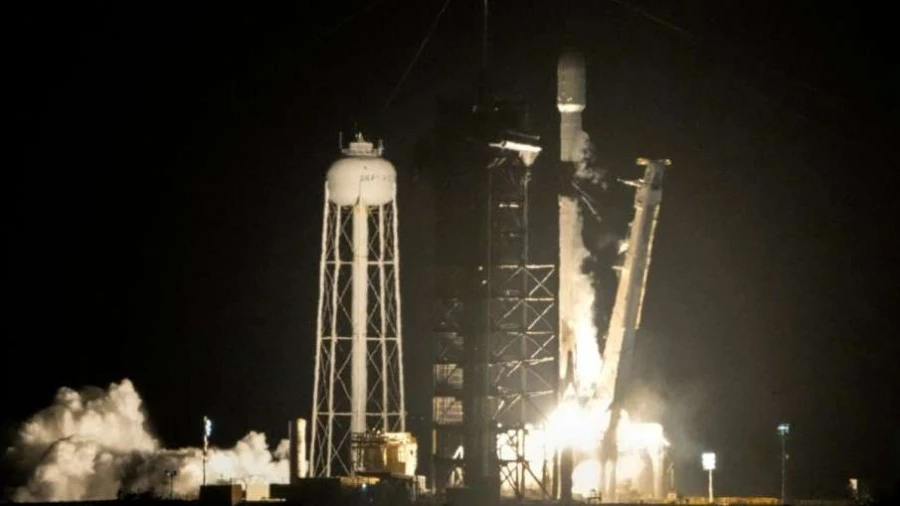
The rocket stage in question measures approximately 40 feet or 12 meters in length and weighs nearly 4,500 kilograms. Its journey began on January 15, 2025, when it was utilized to launch two private lunar landers into space. One of these was Firefly Aerospace's Blue Ghost lander, which achieved a historic milestone as the first fully successful private spacecraft lunar landing. The second lander belonged to the Japanese company iSpace, which unfortunately crashed during its attempt to land on the Moon. After completing its primary mission of deploying these landers, the rocket stage was left in an uncontrolled orbit, eventually leading to its current trajectory toward the Moon.
Context of Previous Lunar Impacts
Scientists emphasize that while natural meteorite impacts occur frequently, they're unpredictable. In contrast, the impact of man-made objects provides a controlled environment for study. This isn't the first instance of a spent rocket stage hitting the Moon. In 2022, a portion of a Chinese rocket crashed into the far side of the Moon, resulting in the formation of two distinct craters. Historically, NASA also intentionally crashed rocket stages and lunar modules into the Moon during the Apollo missions to conduct seismic studies. Plus, in 2009, as part of the LCROSS mission, NASA deliberately crashed a spacecraft and a rocket stage near the lunar South Pole to search for evidence of water ice.
Future Concerns Amidst Increasing Lunar Activity
As human and robotic activities on the Moon are set to increase in the coming years, this event serves as a reminder of the growing issue of space debris, while both the United States and China are planning to return humans to the lunar surface in the near future. On top of that, private companies like Elon Musk's SpaceX and Jeff Bezos's Blue Origin are competing to provide landers for NASA's upcoming Artemis missions, while retired astrophysicist Jonathan McDowell has pointed out that while this specific collision doesn't pose an immediate problem, such uncontrolled objects could become a major hazard once permanent lunar bases are established. He stressed the importance of not leaving rocket components in uncontrolled orbits to ensure the safety of future lunar exploration. For the scientific community, this event is more than just an accident; it's a vital opportunity to understand the safety parameters for future missions to the Moon.