
- India,
- 26-May-2026 12:13 PM IST



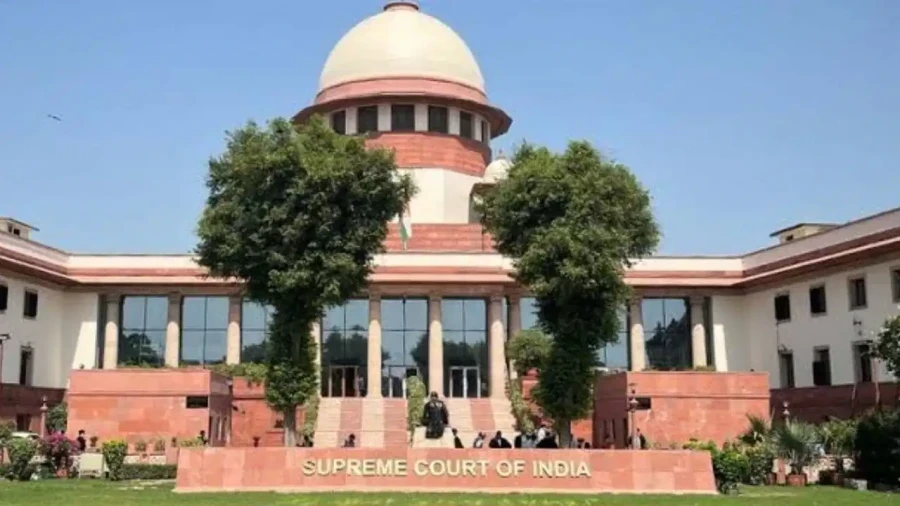
The Supreme Court of India has delivered a landmark judgment regarding dowry harassment and domestic violence cases, providing significant relief to the relatives of husbands. The apex court ruled that criminal proceedings can't be initiated against in-laws based solely on vague claims and unsubstantiated allegations. Expressing deep concern over the potential misuse of Section 498A of the Indian Penal Code (IPC), the court emphasized that this legal provision shouldn't be utilized as a weapon to settle personal scores or to harass the husband's entire family during matrimonial disputes. This decision is expected to curb the trend of filing false cases against innocent family members who are often dragged into legal battles without any direct involvement in the alleged cruelty.
The Core of the Supreme Court's Ruling
A bench comprising Justice Sanjay Karol and Justice Nongmeikapam Kotiswar Singh observed that for a trial to proceed against the husband's relatives, there must be concrete and solid evidence. The court noted that in many instances, when matrimonial relations turn sour, there is a tendency to implicate the entire family in a fit of anger or bitterness, while the justices highlighted that dragging every family member into court based on minor allegations or general claims of support for the husband is an abuse of the legal process. Consequently, the Supreme Court quashed the case filed under Section 498A and other relevant sections against the in-laws in the specific matter brought before it, setting aside a previous order by the High Court.
Background of the Case from Guna, Madhya Pradesh
The case originated from Guna in Madhya Pradesh, where a woman had filed a complaint against her husband and his relatives, while the complainant had alleged domestic violence, cruelty, and persistent demands for dowry. Initially, the matter was taken to the Gwalior Bench of the Madhya Pradesh High Court, which had refused to quash the case against the relatives, stating that there were prima facie allegations against them. However, the relatives challenged this decision in the Supreme Court, arguing that the allegations were baseless and intended to harass them. The Supreme Court, after reviewing the facts, overturned the High Court's order and completely terminated the legal proceedings against the in-laws.
Details of the Marriage and Allegations
The marriage of the complainant took place in November 2019. According to the records, the woman filed a complaint in January 2023 in Guna, Madhya Pradesh, against her husband and his relatives under IPC Section 498A, Section 34, and Sections 3 and 4 of the Dowry Prohibition Act. She alleged that at the time of the wedding, a significant amount of dowry in the form of cash, jewelry, and household items was provided. Despite this, she claimed she faced continuous harassment and further demands for dowry. Her allegations included mental harassment, being monitored through cameras, restrictions on her movement, and even threats involving a licensed gun. She also filed proceedings under the Domestic Violence Act, detailing various instances of alleged cruelty.
Legal Context and the Transition to BNS
Section 498A of the IPC was specifically designed as a stringent law to prevent cruelty (physical or mental abuse) and dowry harassment against married women by their husbands or their relatives. It's important to note that under the new legal framework, Section 498A of the IPC has been incorporated into Sections 85 and 86 of the Bharatiya Nyaya Sanhita (BNS). The Supreme Court's recent observations serve as a guideline for lower courts to exercise extreme caution, while the court stated that merely alleging that family members supported the husband, didn't intervene, or advised the woman to adjust and harmonize the relationship doesn't constitute a criminal offense. The court reiterated that unless there is specific evidence of criminal conduct, relatives shouldn't face prosecution simply because of their relationship with the husband.