
- India,
- 07-Aug-2026 08:28 AM IST



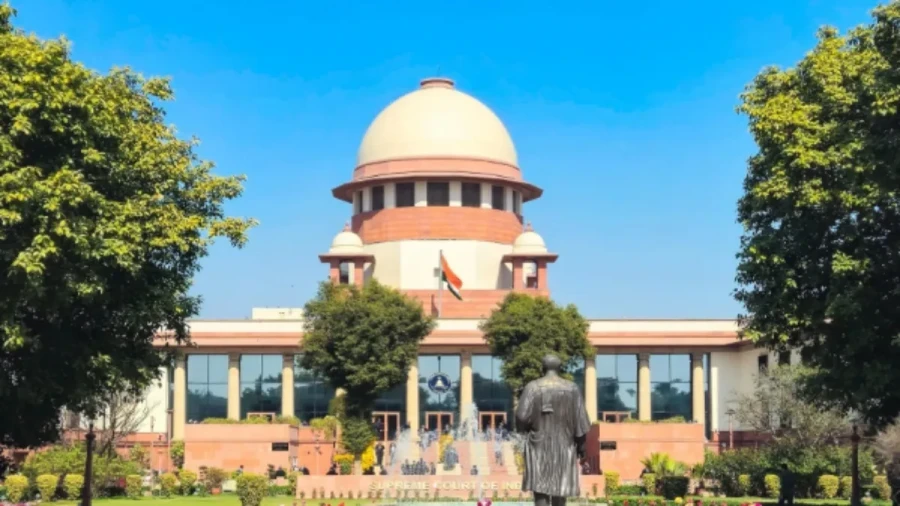
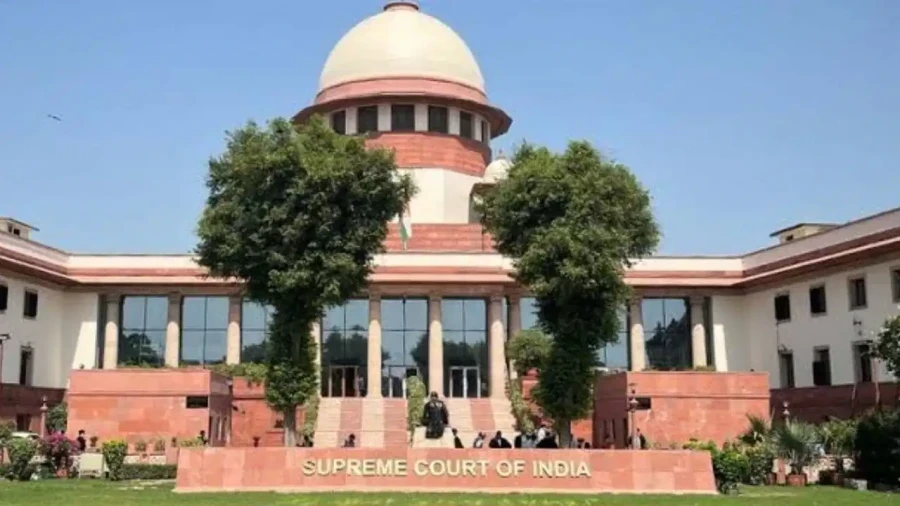
The Central Government has formally opposed the demand for an income-based sub-quota and the determination of priority within the Scheduled Castes (SC), Scheduled Tribes (ST), and Other Backward Classes (OBC) reservations in the Supreme Court. In a significant legal stand, the government emphasized that the fundamental basis for reservation in India is historical and social backwardness, rather than purely economic conditions. This response comes in light of a petition seeking directions to formulate a policy that would prioritize reservation benefits based on income levels within these categories.
The Core Argument of the Central Government
The government stated that reservation for SC, ST, and OBC communities is rooted in centuries of historical injustice and social exclusion. It argued that the economic status of an individual or a family can't be the sole criterion for determining eligibility for these reservations. The Centre clarified that the principle of the creamy layer, which is used to exclude relatively wealthy individuals from reservation benefits, doesn't apply to the Scheduled Castes and Scheduled Tribes. This distinction is crucial as it maintains the focus on social identity and the systemic barriers faced by these communities.
Constitutional Provisions and Parliamentary Authority
A major part of the government's submission focused on the constitutional framework governing the identification of these groups. Under Article 341 and Article 342 of the Constitution of India, the power to modify the lists of Scheduled Castes and Scheduled Tribes rests exclusively with the Parliament. The government asserted that any change, addition, or deletion in these lists can only be performed through a law enacted by Parliament. The courts, tribunals, or state governments don't have the authority to alter these lists or create sub-categories based on income within them.
Jurisdiction and the Role of the Judiciary
The affidavit, filed through the Department of Social Justice and Empowerment, raised concerns about the separation of powers. The government argued that the petition seeks judicial intervention in matters of policy-making, which is the prerogative of the Executive and the Legislature. It was stated that a writ of mandamus can't be issued to compel the government to create a specific policy, especially one that involves complex social and legislative considerations. The Centre maintained that the formulation of reservation policies is a sovereign function of the state and must remain within the legislative domain.
Details of the Petition
The Public Interest Litigation (PIL) was filed by Ramashankar Prajapati and Yamuna Prasad, both residents of Uttar Pradesh, while the petitioners had approached the Supreme Court seeking a mechanism to provide priority to the poorest among the SC, ST, and OBC categories. They argued for an income-based sub-quota to ensure that the benefits of reservation reach those who are economically disadvantaged within these groups, while however, the Central Government has requested the court to dismiss this petition, suggesting that it lacks a legal basis and interferes with the established constitutional process. The government has even suggested that the petition be dismissed with heavy costs to discourage such litigation.
OBC and EWS Reservations
Regarding the Other Backward Classes (OBCs) and Socially and Educationally Backward Classes (SEBCs), the government reiterated that any modification to the central list must be done through an Act of Parliament. While states and Union Territories have the right to maintain their own lists of backward classes for state-level benefits, the central list remains under the jurisdiction of the Union Parliament. The government also touched upon the EWS (Economically Weaker Sections) reservation, maintaining that the current structure of reservation is balanced and based on specific constitutional mandates that shouldn't be altered through judicial mandates as requested by the petitioners.