

- India,
- 19-May-2026 05:06 PM IST


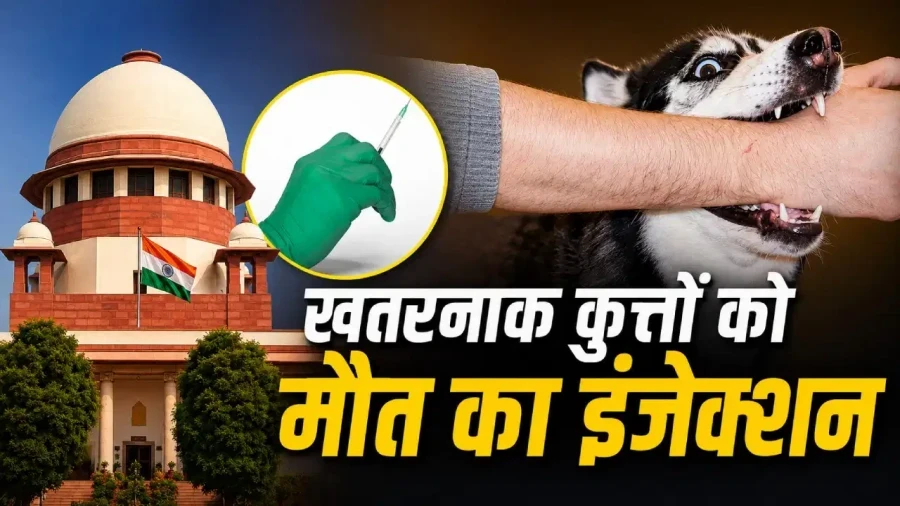
The Supreme Court of India delivered a landmark judgment on Tuesday regarding the management of stray dogs, reinforcing the constitutional right of citizens to live with dignity and without fear. A bench comprising Justice Vikram Nath, Justice Sandeep Mehta, and Justice NV Anjaria dismissed all petitions that sought the withdrawal of directions issued in November 2025 concerning the rehabilitation and sterilization of stray dogs. The court's decision underscores a critical balance between animal welfare and human safety, asserting that the protection of human life is paramount.
Article 21 and the Right to a Fear-Free Life
In its detailed judgment, the Supreme Court invoked Article 21 of the Indian Constitution, which guarantees the right to life and personal liberty. Justice Sandeep Mehta, writing for the bench, noted that Article 21 ensures every citizen the right to move freely in public spaces without the fear of physical attacks or life-threatening incidents such as dog bites. The court stated that the state can't remain a silent spectator when the safety of its citizens is at risk, while drawing from the historic Maneka Gandhi vs. Union of India (1978) case, the court reiterated that the right to life means more than mere animal existence; it encompasses living with dignity and safety.
Timeline of the Stray Dog Case
The legal journey of this case began on July 28, 2025, when the Supreme Court took suo motu cognizance of the rising incidents of rabies-related deaths caused by stray dog attacks. On August 11, the court ordered the removal of stray dogs from residential areas in Delhi-NCR to shelter homes within 8 weeks. This order faced opposition from animal rights advocates and NGOs, leading Chief Justice BR Gavai to refer the matter to a special three-judge bench. On August 23, the court directed that captured dogs must be released only after sterilization, while dangerous dogs should remain in custody. By November 2025, the court extended these directions to include the removal of stray animals from state and national highways and prohibited feeding dogs on public roads. The recent Tuesday verdict dismissed the challenges to these comprehensive guidelines.
Alarming Statistics and Euthanasia Guidelines
The court highlighted the alarming rise in dog bite incidents across the country. In Sri Ganganagar, Rajasthan, 1084 dog bite cases were recorded in a single month. Tamil Nadu reported nearly 2 lakh cases in the first four months of the year. The bench also noted incidents at the Indira Gandhi International (IGI) Airport and an attack on a German traveler in Surat as evidence of administrative failure. Consequently, the court ruled that dangerous and terminally ill stray dogs can be euthanized via lethal injection. It clarified that municipal corporations must prioritize catching, sterilizing, and vaccinating stray dogs, and those infected with rabies or exhibiting extreme aggression shouldn't be released back into public spaces.
Directives to States and NHAI
The Supreme Court issued several mandatory directives to state governments and the National Highways Authority of India (NHAI). Every district must establish at least one Animal Birth Control (ABC) center, with expansion based on population density. The court warned that failure to implement these directions would lead to contempt of court and disciplinary action against officials. The NHAI has been tasked with managing stray animals on highways using specialized transport vehicles and establishing a coordination framework, while Also, the court ensured that officials performing their duties under these guidelines would receive legal protection from FIRs or punitive actions, provided their actions are in good faith to ensure public safety.
The Darwinian Warning
In a stern observation, the Supreme Court remarked that if the stray dog menace is left unchecked, it could lead to a regression toward the Darwinian theory of evolution, where the 'survival of the fittest' would govern civic life in public spaces. Such a scenario, the court stated, is entirely incompatible with a constitutional democracy governed by the rule of law. The bench emphasized that the state has a constitutional obligation under Article 21 to protect the life and safety of its citizens, which includes creating the necessary infrastructure for effective ABC implementation and ensuring the availability of anti-rabies medications.
