
- India,
- 25-Aug-2026 07:30 AM IST



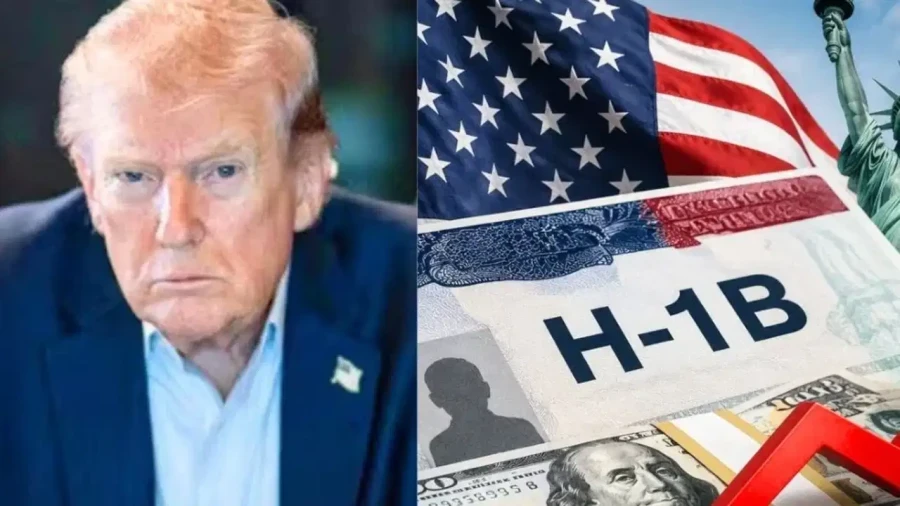
The administration of United States President Donald Trump has officially proposed a substantial new fee for H-1B visa applications, a move that's expected to have far-reaching consequences for the global tech industry and international professionals. According to a formal notice issued by the Department of Homeland Security (DHS) on Monday, the administration intends to impose a fee of 103265 dollars on H-1B visa petitions. This proposed amount is designed to be an additional charge, functioning separately from the existing application fees that employers currently pay to sponsor foreign workers.
Scope of the Proposed Fee
The Department of Homeland Security has clarified that this new financial requirement will specifically target H-1B applications that are subject to the annual statutory numerical limits. This includes the regular annual quota of 65000 visas available to highly skilled foreign workers. Also, the proposal encompasses the additional category of 20000 visas reserved for individuals who have obtained a master’s degree or a higher qualification from an accredited American university. However, the DHS noted that H-1B applications that are exempt from these annual caps won't fall under the purview of this new fee structure.
Legal Context and Administrative Goals
This proposal comes approximately one month after a federal appeals court dismissed a petition that sought to halt a previous plan. That legal challenge was directed at a district court judge's order which had vacated the Trump administration's earlier attempt to implement a 100000 dollar fee for H-1B applications. With the court's recent decision, the administration has moved forward with this updated proposal of 103265 dollars. The DHS stated that the primary objective of this fee is to recover the costs incurred by various government departments involved in the administration and processing of the visa program, while by maintaining this as a separate fee, the department aims to simplify the processes of accounting for revenue, allocating funds, and reporting financial data across government branches.
Impact on Indian Professionals and Employers
The implementation of this rule would Notably increase the financial burden on international students, foreign professionals, and the American companies that sponsor them. This development is particularly concerning for Indian nationals, who consistently represent the largest group of H-1B visa recipients. Historically, Indians account for more than 70 percent of the total H-1B visas issued by the United States. According to data from the US Citizenship and Immigration Services (USCIS), a total of 399402 H-1B petitions were approved in the year 2024. Out of these approvals, approximately 71 percent were for professionals born in India, underscoring the massive impact this fee hike could have on the Indian workforce and the broader technology sector.