
- India,
- 22-Aug-2026 12:40 PM IST



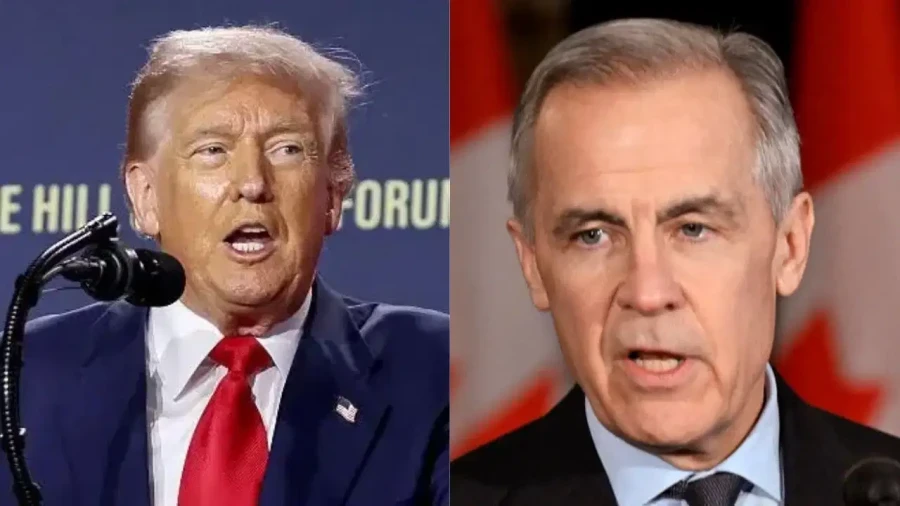
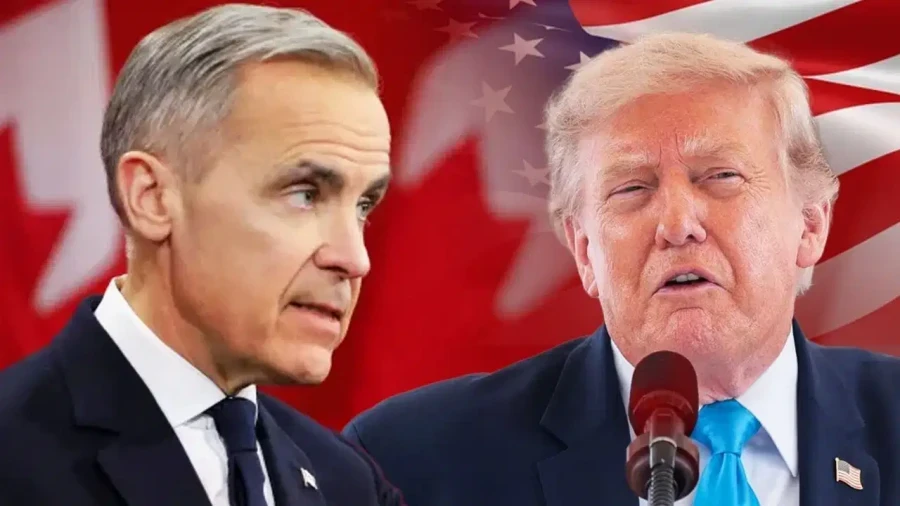
A significant trade confrontation has ignited between two of the world's closest neighbors and trading partners, while the long-standing trade agreement between the United States and Canada has effectively collapsed following a series of intense but ultimately unsuccessful negotiations. S. President Donald Trump has moved forward with a decision to impose a massive 50% tariff on Canadian goods, a move that signals a sharp departure from decades of cooperative economic policy. In a swift and firm response, Canadian Prime Minister Mark Carney has declared that his country won't back down, promising a dollar-for-dollar retaliation against the American measures, while this escalating dispute is poised to have profound implications for bilateral trade, the workforce in both nations, and the costs borne by everyday consumers.
The Midnight Deadline and Legal Framework
The breakdown occurred after three days of high-stakes discussions in Washington, which failed to produce a consensus. Following the stalemate, Prime Minister Carney took the decisive step of recalling his negotiators to Ottawa immediately. S, while dollars, starting at midnight. This conflict traces its roots back to July, when President Trump invoked Section 338 of the Tariff Act of 1930. S. President the authority to impose duties of up to 50% on imports from countries deemed to be discriminating against American trade. While Trump had initially paused the implementation for three days to allow for a diplomatic resolution, that grace period has now officially expired.
Canada's Firm Stance: America Has Changed
S. market without the burden of additional duties. However, Prime Minister Carney has now made it clear that the landscape of American trade policy has fundamentally shifted. S. is now imposing taxes even on its closest allies, Basically charging a price for access to its large consumer market. To protect Canadian workers and small-to-medium enterprises, the Canadian government has decided to take retaliatory action. S, while tariffs.
The U.S. Perspective: A Rejected Deal
The narrative from the American side offers a different perspective on the failed talks. S. Trade Representative Jamieson Greer stated that they had presented Canada with an exceptional offer that would have placed it in a superior position compared to any other exporting nation, while s. claims, the offer included reducing tariffs on Canadian automobiles from 25% to 15% and lowering duties on steel and aluminum from 50% to 25%. S. administration.
Canada's Economic Resilience and Strategy
Despite the breakdown in talks with its largest trading partner, Canada remains confident in its economic strategy. Prime Minister Carney emphasized that the country is diversifying its trade to strengthen its economy. Currently, Canada is engaged in massive infrastructure projects valued at approximately 500 billion Canadian dollars. Also, the Canadian economy is currently generating jobs at a rate four times faster than that of the United States. Economic projections also suggest that Canada will hold the second-highest growth rate among G7 nations over the next two years, indicating a strong domestic foundation despite the looming trade war.