

- India,
- 31-May-2026 06:51 PM IST


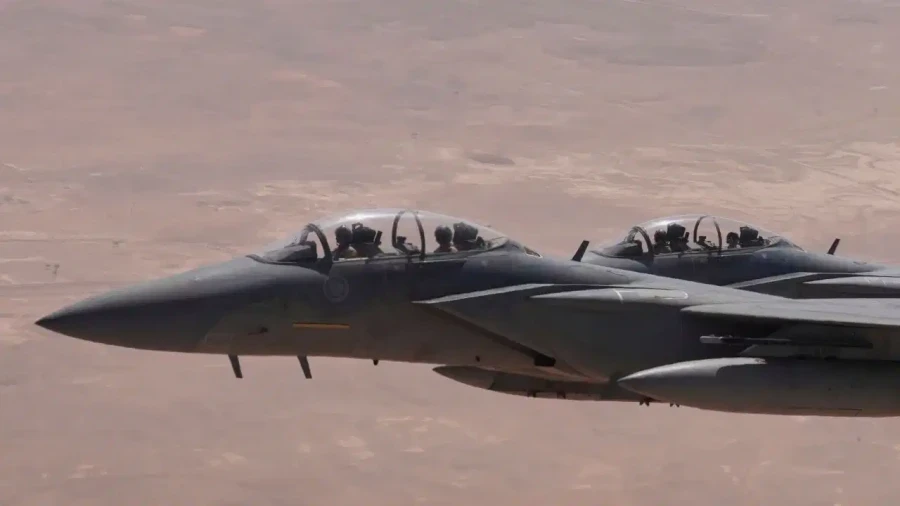
A significant development has emerged regarding the crash of a United States F-15 fighter jet in Iran last month. According to a detailed report, there are claims that the aircraft may have been the victim of a missile manufactured in China. This report has sparked intense discussions within military and diplomatic circles, as it also suggests that China has been providing substantial military assistance to Iran, including advanced radar systems, air defense mechanisms, and other critical military technologies. While the investigation into the incident is currently ongoing, there has been no official confirmation regarding these claims yet.
Details of the Incident in Southwestern Iran
The incident took place in the southwestern region of Iran, where the American F-15 fighter jet went down last month. A report by NBC News has brought forward the possibility that the aircraft was intercepted and shot down using a shoulder-fired missile of Chinese origin, while the report further elaborates on the extent of military cooperation between China and Iran, suggesting that China might have provided various forms of military aid during the conflict. This assistance is said to include sophisticated stealth aircraft technology and long-range surveillance radar systems, which are designed to enhance Iran's defensive and offensive capabilities.
Advanced Tracking and Military Equipment
American officials believe that the equipment provided by China could Importantly improve Iran's ability to track modern American fighter jets, while specifically, the report mentions that these systems could help Iran better monitor the F-15E Strike Eagle, a highly advanced aircraft in the US arsenal. During the conflict, US President Donald Trump stated that the aircraft was targeted by a shoulder-fired missile. These types of weapons are technically known as MANPADS (Man-Portable Air-Defense Systems). They're small, portable weapons that can be operated by a single individual from their shoulder. Typically, these missiles are about 7 feet in length and weigh approximately 40 pounds. They're primarily used to target aircraft flying at low altitudes, making them a significant threat in specific combat scenarios.
The 36 Hour Search and Rescue Operation
Following the crash of the aircraft, the US military launched an extensive search and rescue operation that lasted for 36 hours. The F-15 jet was carrying 2 crew members at the time of the incident. Fortunately, both individuals managed to eject safely from the aircraft using parachutes before it hit the ground. The pilot was successfully rescued within approximately 7 hours of the crash. However, locating the second crew member, who served as the weapon systems officer, proved to be more challenging and time-consuming. The pilot had to remain hidden in the Zagros mountain region of Iran for nearly 2 days before being safely extracted by rescue teams. US officials are still conducting a thorough investigation to determine the exact type of weapon used to bring down the jet.
Implications for US-China Relations
The report notes that it remains unclear exactly when China provided this military equipment to Iran, while however, if it's confirmed that Iran is indeed utilizing Chinese weaponry against American assets, it could lead to increased tension in the relationship between the United States and China. The US might view this as indirect Chinese support for Iran. This situation has come to light at a time when the Trump administration is attempting to resolve the US-Iran conflict with potential assistance from China. Earlier this month, Trump told Fox News that President Xi Jinping had assured him that China wasn't sending weapons to Iran. Trump expressed his trust in Xi's promise and appreciated the assurance at that time.
