

- India,
- 30-May-2026 05:59 PM IST


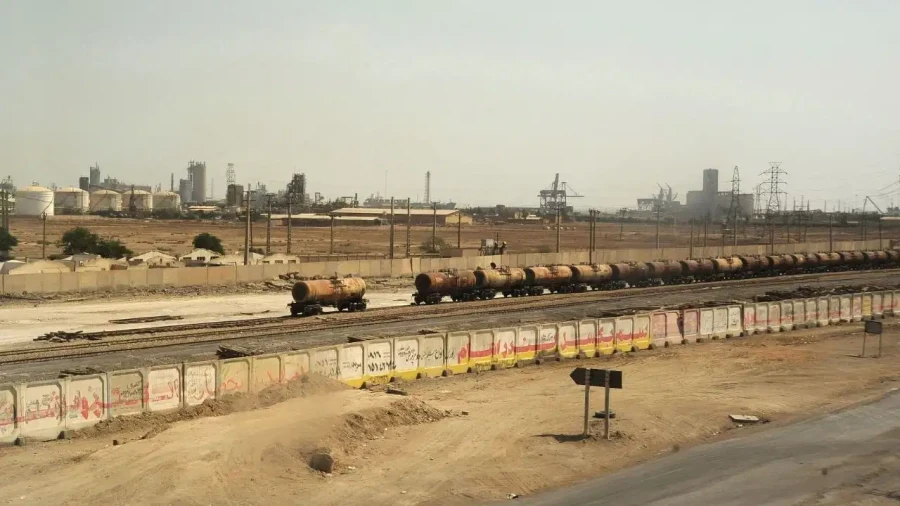
In a strategic move to counter the ongoing United States maritime blockade, Iran has Notably increased its reliance on railway networks to transport oil and Liquefied Petroleum Gas (LPG) to China and Pakistan. According to reports from the Iranian news agency Fars, the number of freight trains heading towards China has tripled approximately 50 days after the US initiated its blockade on April 13. Observers have noted long trains laden with oil tankers moving consistently towards China during night hours, signaling a shift in Iran's export logistics as it seeks to maintain its economic lifelines despite international pressure.
The Shift to Central Asian Rail Networks
Traditionally, the majority of Iran's oil exports have relied on maritime routes through the Strait of Hormuz. However, intensified US pressure has forced Tehran to seek alternative paths. In March 2026, Iran exported an average of 1840000 barrels of oil per day to Asian countries. As the sea routes become increasingly restricted, the 10400 kilometer long China-Iran railway corridor, which became operational in May 2025, has emerged as a critical component of this strategy. This corridor originates in the Chinese city of Xi'an and traverses through Kazakhstan, Kyrgyzstan, Uzbekistan, and Turkmenistan before reaching Tehran. One of the primary advantages of this route is speed; while maritime transport takes nearly a month, the rail journey is completed in about 15 days.
Increased Frequency and Infrastructure Investment
A report by Bloomberg highlights that the frequency of freight trains from Xi'an to Tehran has surged since the blockade began. Previously, only one train operated per week, but this has now increased to one train every three to four days. This development is part of a broader trend of infrastructure cooperation between China, Iran, Russia, and Central Asian nations. In 2024, the China-Kyrgyzstan-Uzbekistan railway project was launched with a massive investment of 2350000000 dollars from China. Plus, in November 2025, the first freight train from Russia reached Iran via Kazakhstan and Turkmenistan, showcasing the growing connectivity and the creation of a solid regional logistics network designed to withstand external sanctions.
Limitations of Rail as a Maritime Alternative
Despite the surge in rail activity, experts caution that this route can't fully replace the scale of maritime exports. A single train typically carries between 60000 and 70000 barrels of oil. In stark contrast, a standard oil tanker can transport over 600000 barrels, and a Very Large Crude Carrier (VLCC) can carry more than 2000000 barrels. Geographically, Iran's primary oil fields are located in the southern part of the country, while China's major refineries are situated along its eastern coast, making rail logistics complex and less efficient. While a single rail shipment of 70000 barrels could generate between 5250000 dollars and 7000000 dollars in revenue, these figures are marginal compared to the billions of dollars generated through large-scale maritime trade, suggesting that rail is a temporary relief rather than a total solution.
