

- India,
- 23-Nov-2025 06:21 PM IST


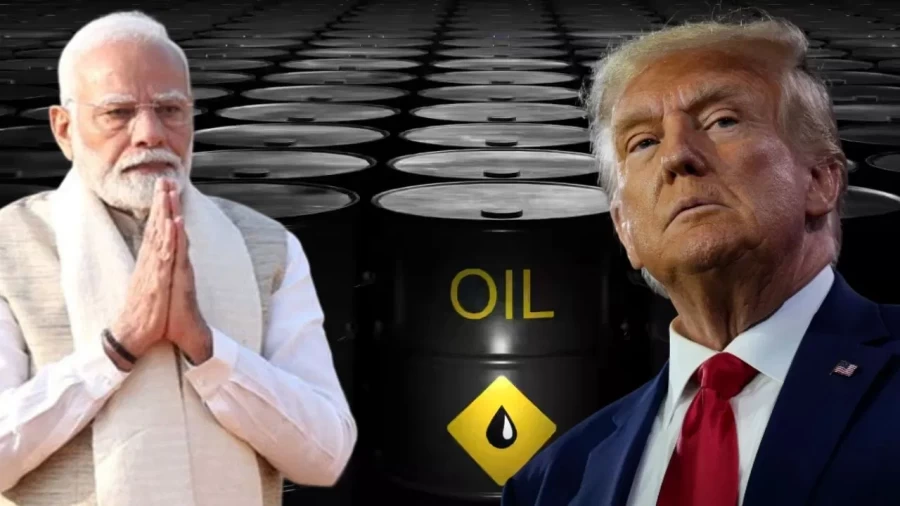
Concerns are mounting over the potential impact on India's oil supply following new US sanctions targeting Russian oil companies. Historically, India's reliance on Russian oil dramatically increased due to heavy discounts offered amidst Western sanctions and reduced European demand. This led to Russian crude oil imports soaring from just one percent of India's total imports to approximately 40 percent, while russia remained India's largest supplier in November, accounting for roughly one-third of its total imports. However, this trend is now expected to shift Notably.
Implementation of US Sanctions
The new US sanctions on Rosneft and Lukoil, along with their majority-owned subsidiaries, became fully effective on November 21. Energy market analysts anticipate a sharp decline in Russian oil imports to India in the near future, although a complete halt isn't expected. The sanctions make it nearly impossible to buy or sell crude oil from these entities, posing a fresh challenge for Indian refiners who had become accustomed to the discounted supply.
Expected Decline in Imports
India had been importing an average of 1. 7 million barrels per day of Russian oil this year, a solid figure that held strong before the sanctions. November imports were estimated at 1, while 819 million barrels per day, as refiners maximized their purchases of cheaper oil. Looking ahead, a clear decline in supply is expected in December and January. Analysts project that these imports could fall to approximately 400,000 barrels per day. This significant reduction will undoubtedly influence India's overall oil procurement. Strategy and potentially lead to a search for alternative sources.
India's Shifting Dependency
Traditionally reliant on Middle Eastern oil, India substantially increased its oil imports from Russia after the Ukraine invasion in February 2022. The availability of Russian oil at steep discounts, a direct consequence of Western sanctions and diminished European demand, proved highly beneficial for Indian refiners. This strategic shift saw Russia's share in India's total crude oil imports surge from a mere one percent to around 40 percent. Even in November, Russia maintained its position as India's largest supplier, contributing approximately one-third of the total imports.
This diversification was a critical component of India's energy security strategy. Sumit Ritolia, lead research analyst for refining and modeling at Kpler, has indicated a clear expectation of a decline in Russian crude oil flows to India in the near future, particularly in December and January, while he noted that supply had already slowed down since October 21, though he cautioned that it's too early to draw definitive conclusions given Russia's capacity for intermediaries and alternative finance management. Following the implementation of sanctions, several major Indian companies, including Reliance Industries, HPCL-Mittal Energy, and Mangalore Refinery, have temporarily halted their Russian oil imports.
Nayara Energy: An Exception
Nayara Energy, which is backed by Rosneft, stands as a notable exception in this scenario. Heavily reliant on Russian oil due to supply cuts from other sources after EU sanctions, Nayara continues its imports. Ritolia clarified that apart from Nayara's Vadinar plant, no other Indian refiner is willing to take on the risks associated with OFAC-designated entities, while buyers will require time to reorganize their contracts, supply routes, ownership structures, and payment channels to navigate the new regulatory landscape.
Significant Profits for Indian Refiners
Analysts highlight that cheap Russian oil generated substantial profits for Indian refiners over the past two years, while despite volatility in the international market, the availability of this discounted oil helped stabilize retail prices for petrol and diesel. India fulfills 88 percent of its oil requirements through imports, making the availability of affordable sources critically important. With the full implementation of the new US sanctions, India's Russian oil imports have entered a volatile and uncertain phase. Experts suggest that while Russian oil won't completely cease to flow, a decline in volume is anticipated in the near future, potentially compelling India to explore new supply avenues.
