
- India,
- 18-Jul-2026 07:51 AM IST



The military confrontation between the United States and Iran has taken a more violent turn as both nations engage in direct strikes against each other's strategic assets. The United States Central Command (CENTCOM) has officially claimed responsibility for destroying a critical surveillance tower at the Shahid Kalantari Port in Chabahar, Iran. This action marks the seventh consecutive night of American aerial operations against Iranian targets. In immediate retaliation, Iran has launched a series of counter-attacks targeting US military bases and naval assets across several countries in the Gulf region, including Qatar, Kuwait, Jordan, Oman, and Syria.
The Strategic Strike on Chabahar Port
According to reports from CENTCOM, the strike on the surveillance tower at Shahid Kalantari Port took place on July 16. US officials stated that the tower was a vital component of the Islamic Revolutionary Guard Corps (IRGC) maritime surveillance network. For years, this infrastructure had been utilized to monitor and target commercial vessels navigating through the Gulf of Oman and the strategically sensitive Strait of Hormuz, while the US military emphasized that the objective of this operation was to degrade the IRGC's ability to coordinate attacks on commercial shipping and to ensure the safety of civilian vessels in international waters. US Defense Secretary Pete Hegseth further highlighted the operation by sharing an image of the destroyed tower on the social media platform X.
Casualties and Widespread Damage in Iran
While the Iranian state news agency IRNA confirmed the destruction of the maritime control tower, it maintained that the port's docks, cargo handling equipment, and other operational structures remained intact. However, the scope of the US attacks extended far beyond Chabahar. Iranian state media, including Press TV, reported that strikes occurred from late Thursday night into Friday morning across multiple provinces, including Hormozgan, Bushehr, Sistan-Baluchestan, Khuzestan, and Lorestan. The Iranian Ministry of Health has reported a heavy human toll, stating that at least 38 people were killed and over 400 others were injured in these strikes. The deceased reportedly include women and a minor. On top of that, significant infrastructure damage was reported in Khamir County, where 6 bridges were hit, disrupting road connectivity between Bandar Abbas and surrounding areas. Specific sites damaged include two bridges near Kuhurestan village, the Shur River bridge, the Tappeh Allah Akbar area in Bandar Abbas, and the Bandar Abbas railway junction station.
Iran's Retaliatory 'Operation Lightning' and 'Operation Nasr-2'
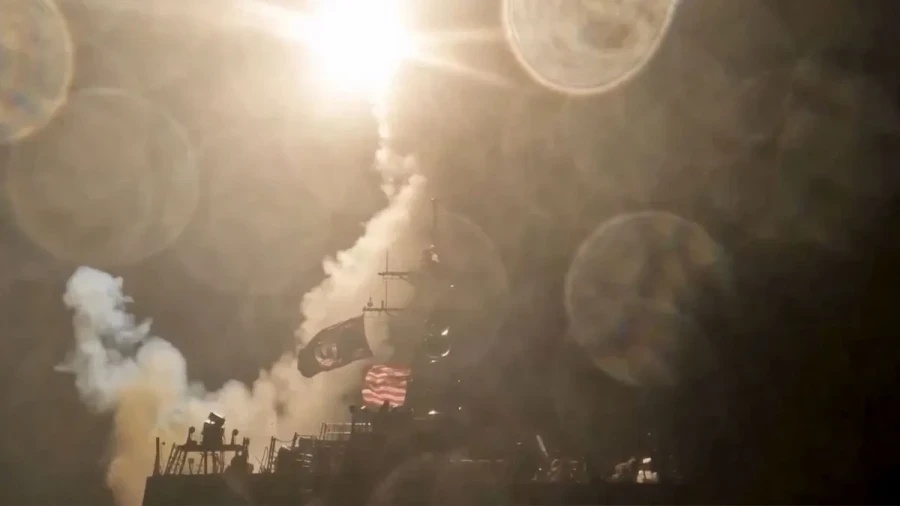
In response to the American offensive, the Iranian military and the IRGC announced the commencement of multiple retaliatory operations. Under the 13th phase of 'Operation Lightning,' the Iranian Navy claimed to have fired a shore-to-sea cruise missile at a US vessel in the northern Indian Ocean, forcing it to retreat. Simultaneously, the IRGC launched 'Operation Nasr-2,' targeting US interests across the Middle East. In the 16th phase of this operation, Iran claimed to have struck the Al Udeid Air Base in Qatar, allegedly destroying long-range radar systems and several strategic US aerial refueling aircraft. The IRGC warned that continued American aggression would be met with further escalations.
Attacks on US Bases in Kuwait, Jordan, and Oman
' In Jordan, Iran reported using ballistic missiles and drones to strike air bases hosting US refueling and fighter aircraft, while calling upon the local population to oppose the US military presence. Also, the IRGC Navy claimed to have neutralized US air control radars in the Ghanem region of Oman and maritime control radars at Salameh Rocks, while despite the heavy US strikes, Iran asserted that its navy maintains firm control over the Strait of Hormuz.
The Al-Tanf Incident and Captured Personnel Claims
' Iran claimed that the strike destroyed radar systems and helicopters and resulted in the capture of US soldiers, while however, US Central Command has categorically denied these claims, stating that no US personnel were killed or taken prisoner in Al-Tanf. As the conflict enters its second week of intensified fighting, the international community remains deeply concerned about the potential for a full-scale regional war, with Iran continuing to take advantage of Arash drones and missile systems to target US logistics and support centers in Kuwait and beyond.