
- India,
- 25-Jun-2026 05:03 PM IST



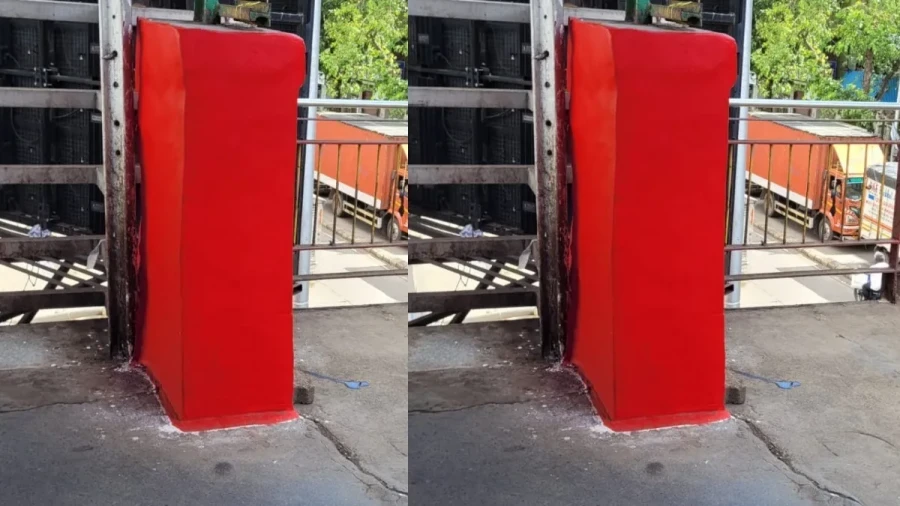
Western Railway has taken a significant step towards maintaining cleanliness at railway stations by launching an advanced pilot project based on German technology. This initiative specifically targets the persistent problem of gutkha and paan masala stains that deface public property, while the project has been inaugurated at the Matunga Road station, where a specialized German nano-coating is being tested to evaluate its effectiveness in maintaining hygiene and aesthetics. According to Western Railway officials, the results of this pilot project will determine whether this technology will be expanded to other stations across the network.
Efficiency and Cost of the Nano-Coating Project
The primary claim made by Western Railway regarding this German nano-coating is the drastic reduction in cleaning time, while currently, removing stubborn paan stains from station surfaces takes approximately 30 minutes of rigorous scrubbing. With the application of this new coating, the railway administration expects this time to drop to just 5 minutes. The total cost of this pilot project is reported to be 5 lakh rupees. By Importantly cutting down the maintenance time, the railway aims to improve the overall efficiency of its cleaning staff and ensure that stations remain presentable for passengers at all times.
Technical Details and Application Areas
The German nano-technology has been applied across a substantial area within the Matunga Road station. Approximately 3,700 square feet of surface area has been covered under this pilot phase. The coating has been strategically applied at 8 different locations within the station premises to test its durability on various materials. These locations include walls, pillars, ceilings, lifts, and various metal surfaces. The technology works by creating a protective microscopic layer on the surface. This layer prevents stains, paint, and dirt from penetrating the material. As a result, cleaning crews can easily wipe away stains using only water and standard cleaning methods, without the need for harsh chemicals or extensive labor.
Official Statement from Western Railway
Vineet Abhishek, the Chief Public Relations Officer (CPRO) of Western Railway, addressed the skepticism surrounding the project. When asked about the public's lack of confidence in such initiatives, he stated, "This is a pilot project. We've taken an initiative, and we're hopeful that it will be successful. " The official stance emphasizes that the project is a proactive measure to find a long-term solution to a recurring problem, focusing on technological intervention where traditional cleaning methods have struggled.
Critical Questions and Challenges
Despite the technological promise, several questions have been raised regarding the practical implementation and the behavior of commuters, while critics have pointed out four major concerns. First, there is a worry that people might specifically target the red-colored coated walls to spit on them. Second, questions are being asked as to why the railway administration is unable to take stricter punitive action against those who litter and spit in public spaces. Third, observers have noted that while the coated walls might remain clean, the surrounding areas often remain filthy, creating a stark and unappealing contrast, while finally, there is a debate over whether painting a small section of a wall with expensive coating can truly solve the deep-rooted problem of public spitting and lack of civic sense among commuters.