
- India,
- 22-Aug-2026 07:54 AM IST



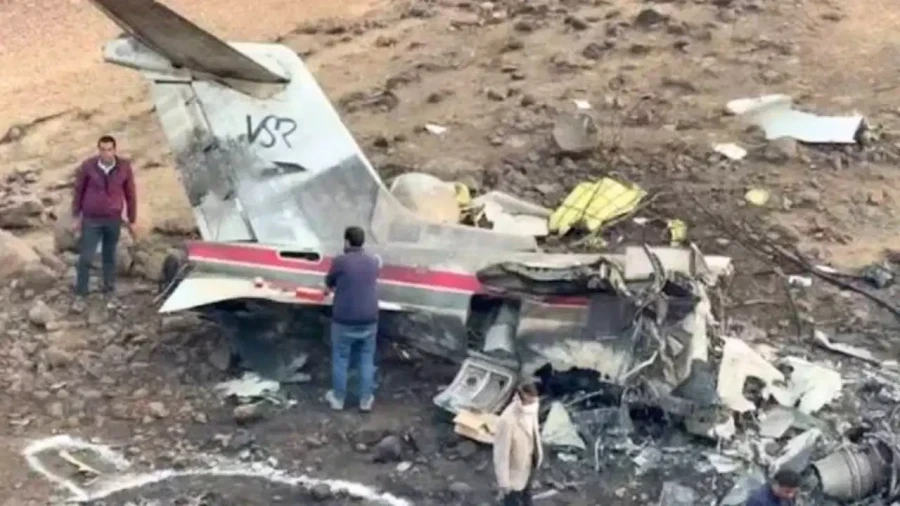
A tragic aviation accident occurred in a remote part of Alaska on Friday when a small chartered aircraft crashed during its second attempt to land at a military airport amidst thick fog. The National Transportation Safety Board (NTSB) reported that the crash resulted in the deaths of all eight individuals on board, including two pilots and six passengers. The incident took place at the Cape Newenham Long Range Radar Site Airport, located approximately 450 miles (725 kilometers) west of Anchorage. According to the NTSB, the pilots were unable to maintain visual contact with the runway due to the heavy fog and were forced to rely entirely on flight instruments during their approach.
Details of the Victims and the Mission
While the identities of the two pilots and six passengers have not been immediately released to the public, it has been confirmed that the group included two employees from the US Army Corps of Engineers. These individuals were part of a project delivery team traveling to a project site in support of the US Air Force. Lieutenant General Robert Davis, commander of the Alaskan Command, the Alaskan North American Aerospace Defense Command Region, and the Eleventh Air Force, expressed deep sorrow over the loss. He described those on board as dedicated professionals who were carrying out a vital mission under challenging conditions. Davis emphasized that this loss is deeply felt within the military family and the communities they serve.
Historical Context of the Cape Newenham Radar Site
The radar site where the crash occurred has a significant history, dating back to the 1950s. It was originally established as part of a network designed to provide early warnings of missile attacks from the Soviet Union. In the modern era, the site continues to play a critical role in national security, monitoring the skies over the coastline in the direction of Russia, North Korea, and China. The airport at this site features a gravel airstrip built on a mountain slope, which presents unique challenges for pilots. The Federal Aviation Administration (FAA) specifically advises that pilots work with GPS and other specialized instruments when attempting to land at this location. The outpost at Cape Newenham was officially closed in 1983 after the installation of a new radar system, and today, the site is primarily visited by civilian contractors who perform essential maintenance on the systems.
Weather Conditions and Visibility Challenges
Weather conditions in the area were reported to be volatile on the day of the crash. Carrie Haisley, the meteorologist in charge of the National Weather Service's Alaska Sector Operations Center, provided a timeline of the visibility changes. An automated observation system located near the airport recorded low clouds, fog, and a visibility of approximately 10 miles (16 kilometers) just minutes before the crash. However, the situation deteriorated rapidly. 40 kilometers). This sudden and drastic reduction in visibility likely played a major role in the difficulties faced by the pilots during their landing attempts.
Investigation and Official Response
The National Transportation Safety Board dispatched investigators to the crash site on Friday to begin a thorough inquiry, while mike O’Donnell, who oversaw airport safety programs and accident investigations during his 17 year tenure at the FAA, noted that investigators will focus on whether the pilots declared an emergency or if the aircraft simply disappeared from radar before the impact. They will also scrutinize the exact weather conditions at the moment of the crash. The flight was operated by Security Aviation, a charter company based in Anchorage. US Senator Lisa Murkowski of Alaska expressed her condolences online, noting that she had traveled extensively with Security Aviation and had met many of their experienced pilots. The company didn't immediately respond to requests for comment following the incident.