
- India,
- 15-May-2026 12:08 AM IST



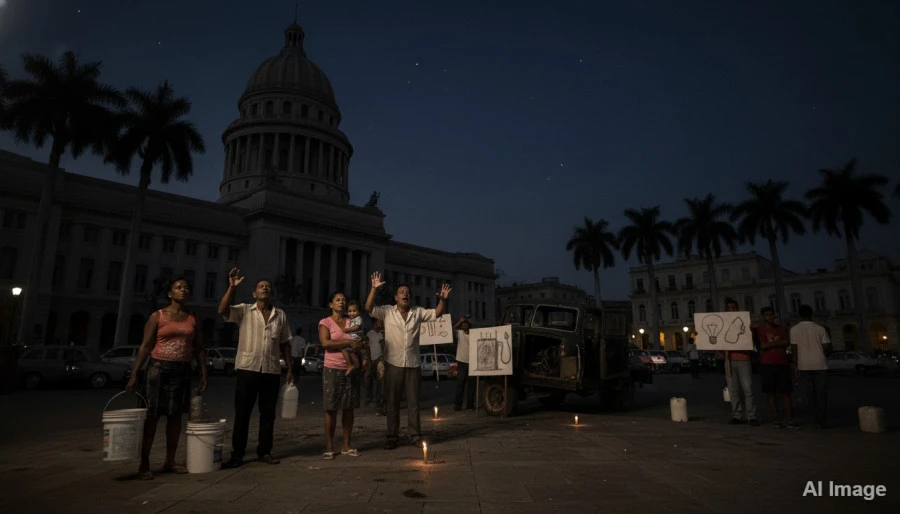
The Caribbean nation of Cuba has been plunged into total darkness as a severe energy crisis grips the country. The national stocks of essential fuels, including petrol, diesel, and fuel oil, have been completely exhausted, leaving the population to face the brunt of massive blackouts, while the situation has reached a critical point where the capital city of Havana and several other regions are experiencing power outages lasting between 20 to 22 hours every day. This unprecedented crisis has severely impacted the lives of citizens, leaving entire cities submerged in darkness and bringing daily activities to a virtual standstill.
Severe Impact of Fuel Depletion and Blackouts
The continuous and prolonged power cuts have sparked widespread anger among the Cuban people, while frustrated by the lack of electricity and the resulting hardships, citizens in several cities have taken to the streets in protest. Demonstrators have been seen shouting slogans and demanding immediate solutions to the energy crisis. The blackout isn't just a domestic issue; it has crippled the nation's economy and infrastructure. Factories are on the verge of shutting down due to the lack of power, leading to a halt in production, while Also, public transportation and other essential services are reeling under the impact of this crisis, making life extremely difficult for the common man.
Energy Minister Vicente de la O Levy's Live Address
Amidst the escalating crisis, Cuba's Minister of Energy and Mines, Vicente de la O Levy, appeared live on national television to address the nation. In a stark and honest admission, the minister stated that the country no longer possesses any reserves of diesel or fuel oil. " According to the minister, the entire national power grid is currently being sustained solely by local crude oil and natural gas production. However, due to the acute shortage of fuel, power plants are unable to operate at their full capacity, leaving the government in a state of profound uncertainty.
Disruption of Essential Services and Public Protests
The energy crisis has had a devastating effect on critical sectors such as healthcare and education. Hospitals across the country are struggling to maintain operations, which is hindering patient care and emergency services. Schools are also facing significant challenges, with children forced to study in darkness and extreme heat, while essential services that rely heavily on a stable power supply are now on the brink of collapse. The potential closure of factories not only poses an economic threat but also raises the specter of unemployment. The breakdown of public services has left the lives of ordinary citizens in a state of total disarray.
Role of US Sanctions and Supply Chain Collapse
The Cuban government has pointed to the strict economic and oil sanctions imposed by the United States as the primary cause of this energy catastrophe. In January 2026, the US administration issued warnings of action against companies and vessels involved in supplying oil to Cuba. Following this move, several major suppliers, including Mexico's Pemex, Notably reduced their oil shipments to the island nation. On top of that, Venezuela, which has been a long-term supplier of subsidized oil to Cuba, has almost entirely stopped its supplies following political changes in 2026 and increased pressure from the United States. These factors combined have led to the total collapse of Cuba's energy security.
The current energy crisis has placed Cuba at a difficult crossroads with no immediate relief in sight. The reliance on local crude oil and natural gas is insufficient to meet the nation's demands, especially as power plants can't function at full capacity. The fuel shortage has not only taken away the lights but has also paralyzed the entire national system. As people continue to protest in the streets, the government remains caught between international pressure and a lack of internal resources. The uncertainty over when the darkness covering Cuban cities will lift remains a major concern.