

- India,
- 10-Dec-2025 02:21 PM IST


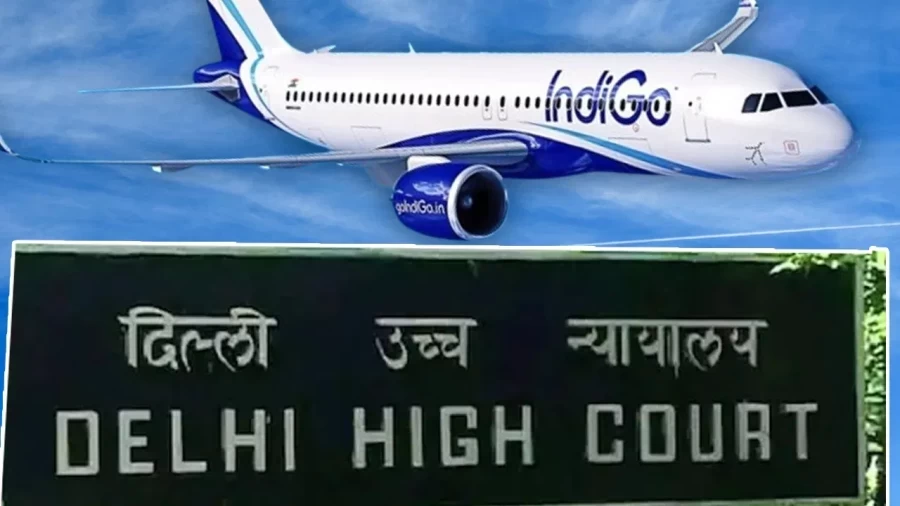
The Delhi High Court has expressed severe displeasure and strong criticism towards IndiGo Airlines and the central government following a week of widespread flight cancellations that left thousands of passengers stranded and caused significant disruption across the country's aviation sector. The court, during a hearing on Wednesday, raised serious questions regarding the inconvenience faced by travelers, the alarming surge in airfares, and the perceived inadequacy of compensation offered to affected individuals. This judicial intervention comes after the government took action by reducing IndiGo's flight operations by 10%, a measure aimed at normalizing the situation, which is now reportedly improving.
The past week witnessed an unprecedented level of disruption caused by IndiGo Airlines, impacting countless ordinary citizens. Thousands of flights were cancelled, leading to scenes of chaos and frustration at airports as passengers found themselves stranded without clear alternatives. This widespread cancellation spree brought to light systemic issues within the airline's operations and raised concerns about passenger welfare and regulatory oversight. The court's stern remarks underscore the gravity of the situation and the profound impact it had on the traveling public.
Court's Scathing Indictment
During the proceedings, the Delhi High Court delivered a scathing indictment of both the central government and IndiGo Airlines for the flight disarray, while the bench specifically questioned the steps taken to assist stranded passengers, the rationale behind the massive increase in airfares, and the sufficiency of the compensation provided. The court sought clarity on how accountability would be fixed for the airline staff involved in the disruptions, while it emphasized that the issue extends beyond mere inconvenience, encompassing significant economic losses for individuals and a broader failure of the system. Plus, the court highlighted the critical importance of adhering to pilot duty timing regulations, known as FDTL (Flight Duty Time Limitations).
Questions on Passenger Welfare and Accountability
The Delhi High Court posed several pointed questions, demanding answers from the parties involved. The bench asked why such a situation arose suddenly and what specific measures were implemented to aid passengers. It questioned the government about the arrangements made at airports to manage stranded travelers and prevent further distress. During the hearing on flight disruptions, the court also inquired about the actions taken to ensure passengers receive compensation and how the government plans to ensure airline staff act responsibly. The court reiterated that the matter involves not just inconvenience but also financial losses and a systemic failure.
Outrage Over Soaring Airfares
A significant point of contention for the Delhi High Court was the rapid and exorbitant increase in airfares. The court expressed its dismay, noting that tickets previously available for ₹5,000 had suddenly escalated to ₹30,000-35,000. The bench questioned how, in a crisis, other airlines could. Be permitted to exploit the situation by charging such inflated amounts. It specifically asked how fares could reach ₹35,000-39,000 and how other airlines could begin charging such sums, while this indicated a strong concern about potential cartelization or lack of regulatory control during a crisis.
Government's Response and Actions
In response to the court's queries, Additional Solicitor General (ASG) Chetan Sharma referenced necessary documents, asserting that the legal system was fully operational. ASG Sharma informed the Delhi High Court that the Centre had long aimed to implement FDTL. Rules, but the airline had sought extensions for the July and November phases before a single judge. He further stated that this was the first time the Ministry had intervened directly, emphasizing that they had set fare limits, which he described as a strict regulatory action in itself, while this suggests a proactive stance by the government in addressing the crisis.
Compensation and Regulatory Oversight
The Delhi High Court directed IndiGo, the government, and the Directorate General of Civil Aviation (DGCA) to ensure that passengers stranded at airports receive appropriate compensation. While expressing dissatisfaction with the incomplete petition filed, the court acknowledged the public interest involved and decided to take cognizance of the matter, while the court pressed the ASG regarding the steps taken to assist those stranded and questioned why pilot working time guidelines weren't implemented on time. The Delhi High Court observed that IndiGo failed to appoint a sufficient number of pilots in a timely manner to comply with pilot duty timing rules. ASG Chetan Sharma further informed the court that the Chief Operating Officer (COO) of IndiGo had been suspended, indicating internal accountability measures being taken. The next hearing for this critical matter is scheduled for January 22, 2026, with the court instructing parties. To file their responses and a committee report to be submitted in a sealed envelope before the next hearing.
