
- India,
- 20-Aug-2026 06:09 PM IST



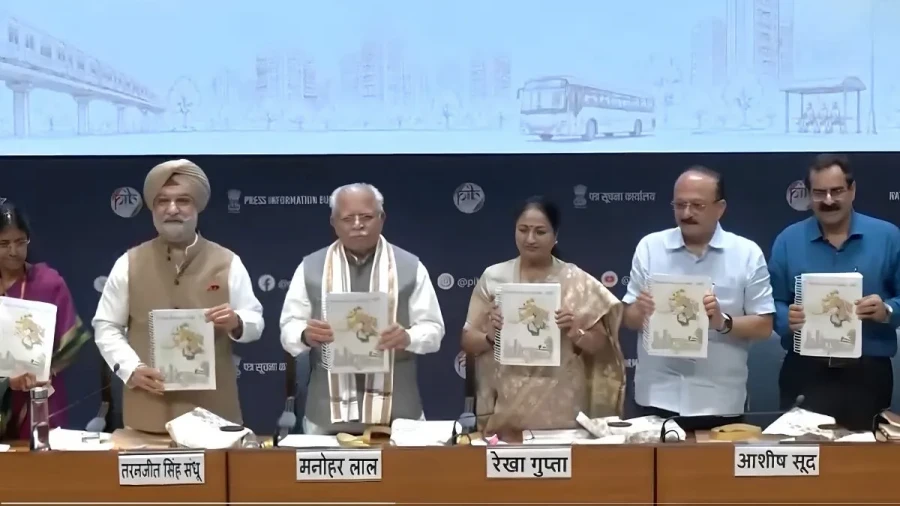
The landscape of India's capital city is set for a monumental transformation as the Central Government has officially approved the 'Delhi Master Plan 2047'. This comprehensive urban development roadmap aims to redefine Delhi into a modern, convenient, and highly connected global city. Union Minister for Housing and Urban Affairs, Manohar Lal Khattar, unveiled this visionary plan, marking a significant milestone in the city's infrastructure journey. The unveiling ceremony was attended by several high-ranking dignitaries, including Delhi Lieutenant Governor (LG) Taranjit Singh Sandhu and Delhi Chief Minister Rekha Gupta, along with various senior officials from the urban development departments.
Massive Housing Push: 40 Lakh New Flats
One of the most ambitious components of the Delhi Master Plan 2047 is the massive expansion of the housing sector. Minister Manohar Lal Khattar announced that the government plans to add approximately 30 to 40 lakh new flats across the city in the coming years. A significant portion of these new residential units will be dedicated to affordable housing, ensuring that the growing population of the capital has access to quality living spaces, while this initiative is designed to meet the surging demand for homes and provide diverse options for potential homebuyers, potentially stabilizing the real estate market in the region.
Redevelopment of 50 Year Old Flats
In addition to creating new housing stock, the Master Plan also focuses on rejuvenating existing residential areas, while the government has planned the reconstruction and redevelopment of flats that are more than 50 years old. This move is aimed at replacing dilapidated and aging structures with modern residential complexes equipped with contemporary amenities. Beyond just housing, this redevelopment will pave the way for improved urban facilities in these older neighborhoods, including better roads, organized parking spaces, and enhanced civic infrastructure.
Expanding the Metro Network to 695 Kilometers
To strengthen the public transport system, the Delhi Master Plan 2047 outlines a significant expansion of the Delhi Metro. The goal is to increase the existing metro network from approximately 416 kilometers to a total of 695 kilometers. This massive expansion is expected to provide smooth connectivity not only within Delhi but also to its surrounding regions. By increasing the reach of the metro, the government aims to reduce the pressure of private vehicles on the roads, thereby addressing traffic congestion and improving the daily commute for millions of residents.
Introduction of 6 New RRTS Routes
The plan also places a heavy emphasis on the Regional Rapid Transit System (RRTS). While one RRTS line is currently operational, the new Master Plan has reached a consensus on the development of 6 new RRTS routes. These high-speed rail corridors will enhance the travel options between Delhi and its neighboring cities, making inter-city travel faster and more convenient for the workforce and general public.
Development of Three Major Transit Hubs
Strategic development of transit infrastructure is a key pillar of the 2047 plan. Three major locations—Sarai Kale Khan, Anand Vihar, and Kashmiri Gate—have been identified to be developed as major transit hubs. The objective is to create integrated facilities that allow for smooth transitions between different modes of transport, such as the metro, RRTS, buses, and railways, ensuring a hassle-free experience for commuters.
Innovation and Research Ecosystem in Narela
Delhi is also envisioned to become a major center for education, research, and technological advancement. To achieve this, an Education Hub will be developed in Narela, spanning across 138 hectares of land. This hub will house universities, research institutes, skill development centers, and dedicated facilities for startups, while this initiative is expected to provide the youth with better opportunities for learning, research, and employment, while fostering a knowledge-based economy in the capital.
Industrial and Logistics Hubs
The Master Plan further includes the development of modern industrial and logistics centers integrated with highways, railways, and urban road networks. These centers will feature state-of-the-art warehouses, distribution centers, and freight handling facilities. By streamlining the movement of goods, these hubs will enhance the supply chain, reduce transportation costs, and provide a significant boost to businesses and the overall economy of Delhi.