
- India,
- 27-Jun-2026 09:13 PM IST



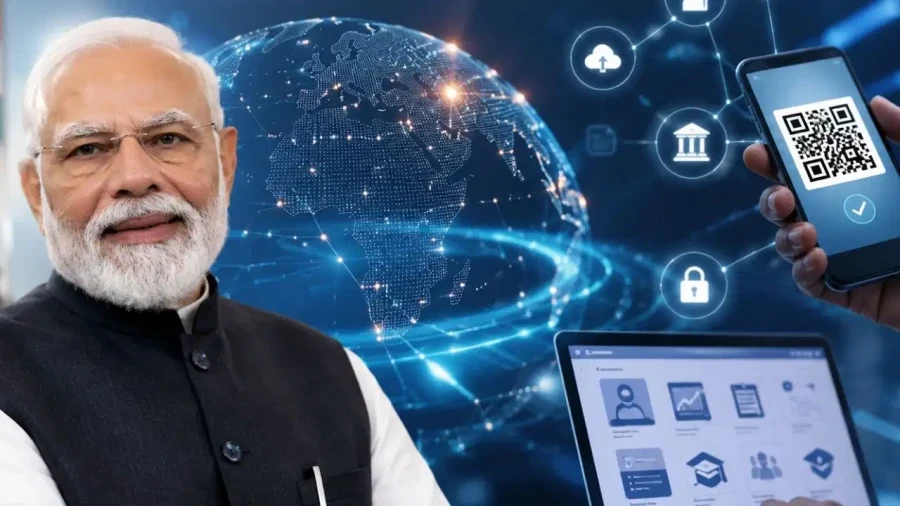
On July 1, 2026, India marks a significant milestone as the Digital India program completes 11 years of its transformative journey. Over the past decade, India has evolved from being a mere consumer of technology to becoming a global powerhouse in Digital Public Infrastructure (DPI). This evolution has fundamentally changed how the nation functions, making services more accessible and transparent for every citizen. If you've started your morning by scanning a QR code to pay for your tea, you're a participant in a massive digital revolution that has redefined the Indian landscape over the last decade.
The Global Dominance of UPI
One of the most visible success stories of this initiative is the Unified Payments Interface (UPI), while according to recent government data, India's UPI now handles approximately 49 percent of the world's total real-time digital transactions. This is a staggering figure that highlights the efficiency and scale of India's fintech ecosystem. The influence of UPI is no longer confined to Indian borders. It has gone international, with the technology being live in more than 8 countries, including the United Arab Emirates (UAE), Singapore, France, Mauritius, and Sri Lanka. This global expansion has not only strengthened India's position in the international fintech market but has also made cross-border payments Importantly easier than ever before.
Transforming Rural India through Digital Governance
The success of Digital India isn't limited to financial transactions alone. Its true impact is visible in the rural and remote areas of the country where basic services were once a challenge to access. Platforms such as Aadhaar, DigiLocker, CoWIN, e-Sanjeevani, DIKSHA, and UMANG have simplified access to health, education, agriculture, and government welfare schemes for the common citizen. These citizen-centric services have presented a new and successful model of digital governance to the world. Today, government services are reaching the phones of ordinary people directly, ensuring home delivery of governance and eliminating middle-men.
Economic Growth and the Digital Economy
From an economic perspective, technology has become a vital engine for the country's growth. Currently, the digital economy contributes about 12 to 14 percent to India's total GDP. Experts estimate that this figure could rise to 20 percent, or one-fifth of the GDP, within the next decade. The Digital India program, through its 9 distinct pillars, has not only increased digital access but has also created massive investment and employment opportunities in sectors like startups, Artificial Intelligence (AI), cloud computing, and cybersecurity. This solid digital ecosystem is attracting global attention, with 24 countries already signing Memorandums of Understanding (MoUs) to adopt India's digital model.
Foundation for Viksit Bharat 2047
Digital empowerment has now become a key part of India's global diplomacy. During its G20 presidency in 2023, India launched the India Stack Global and the Global DPI Repository. The impact of these initiatives is evident in the digital identity and data exchange agreements signed with 24 countries. As the nation moves toward the goal of Viksit Bharat 2047, the framework of Digital India is proving to be the strongest medium for technical self-reliance, inclusive growth, and the empowerment of every citizen. The journey of 11 years is a testament to how digital innovation can drive a nation's progress on the global stage.