
- India,
- 23-Jun-2026 09:24 AM IST



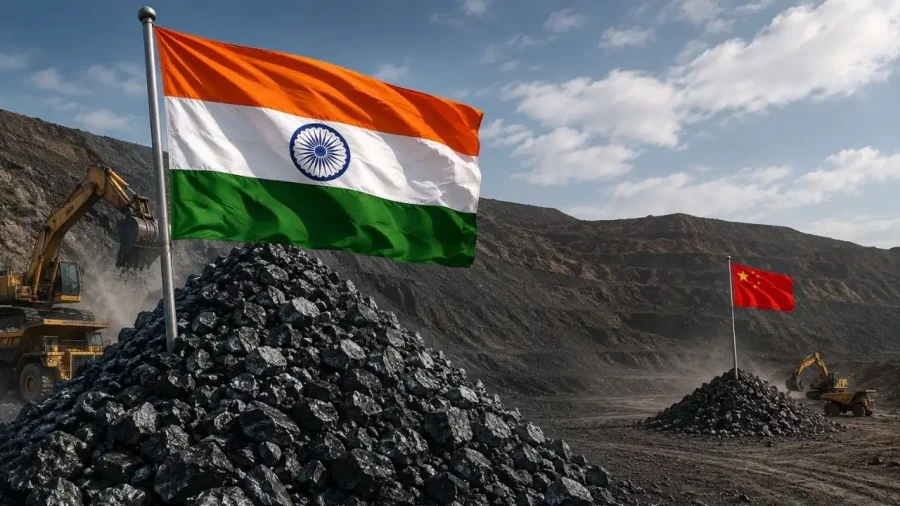
India has officially launched a comprehensive master plan to dismantle China's long-standing monopoly in the critical minerals sector, while from electric vehicles (EVs) and smartphones to wind turbines and advanced military missiles, modern technology is entirely dependent on these rare minerals. Recognizing this strategic vulnerability, India is positioning itself as a new global hub for mineral processing. This ambitious shift is backed by a massive 20 billion dollar deal with Quad nations and a dedicated domestic mission worth 34300 crore rupees, aimed at ending the dependency on the Dragon forever.
The Quad Critical Minerals Initiative Framework
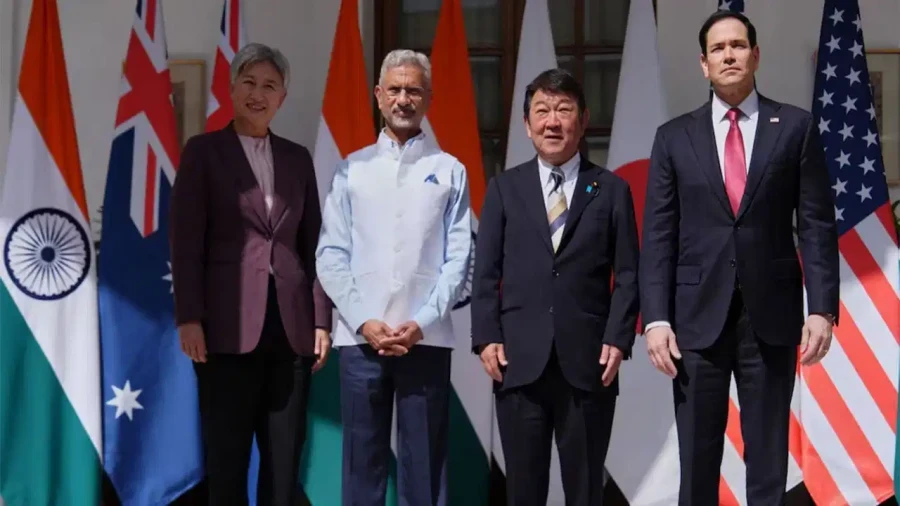
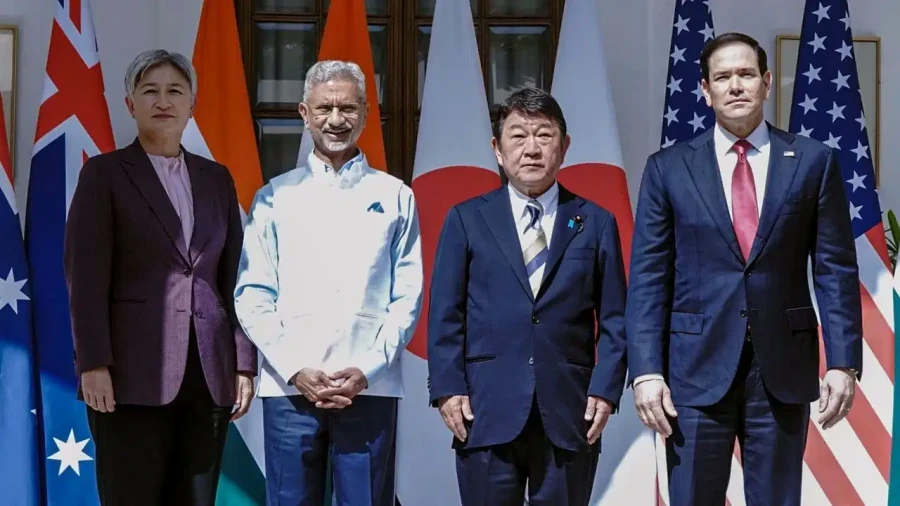
In a significant geopolitical move, the Quad nations—comprising India, the United States, Australia, and Japan—recently met in New Delhi to finalize the 20 billion dollar Quad Critical Minerals Initiative Framework. The primary objective of this heavy investment is to build a resilient infrastructure for mining, processing, and recycling. By securing the global supply chain, the initiative seeks to establish India as a formidable alternative to China. This collaboration is seen as a direct response to the current market dynamics where a single nation holds disproportionate control over essential resources.
Breaking China's Strategic Grip
The urgency of this mission stems from China's overwhelming control over the global market. Currently, China manages 80 percent of the world's refining capacity for rare minerals. Even more concerning is its 94 percent share in the production of permanent magnets, which are vital for electric vehicles and defense technologies. In 2023, China leveraged this monopoly by imposing export restrictions on these minerals. US Secretary of State Marco Rubio has stated that such critical technology can't be left to the whims of a single country's dominance. Indian External Affairs Minister S. Jaishankar has also emphasized the need to strengthen mutual cooperation across the entire supply chain, from mining to processing.
India's Global Strategic Expansion
To counter China, New Delhi has accelerated its search for mines both domestically and internationally. In January 2024, the government-owned company KABIL (Khanij Bidesh India Limited) signed its first overseas agreement for lithium blocks in Argentina to ensure a steady supply of raw materials. Plus, during the Prime Minister's visit to Japan in August 2025, a key Memorandum of Understanding (MoU) regarding critical minerals was signed. Discussions have also progressed with Australia regarding lithium and cobalt projects. Most recently, on June 1, India finalized significant talks with Myanmar concerning rare minerals, further diversifying its source of raw materials.
Overcoming the Processing Challenge
While securing raw materials is a major step, the real battle lies in processing. Official data reveals that India still imports 80 to 90 percent of its permanent magnets from China. The country's current refining capacity meets less than 25 percent of its domestic demand. Although India's coastal regions in Kerala, Odisha, Andhra Pradesh, and Tamil Nadu possess abundant Monazite sands containing these minerals, they also contain Thorium and Uranium. Consequently, these resources fall under the Atomic Energy Act, meaning private companies are prohibited from processing them, leaving the task solely to government entities. Experts suggest that India must rapidly increase its metal-to-alloy conversion capacity alongside opening new mines.
The 34300 Crore National Mission
To address these domestic hurdles, the government approved the National Critical Mineral Mission in January 2025 with an allocation of 34300 crore rupees. On top of that, the budget for the 2027 fiscal year announced the creation of a Rare Earth Corridor across four states. The Geological Survey of India (GSI) is now moving beyond traditional mining areas to explore new regions in Rajasthan, Gujarat, and Assam using modern technology. Experts believe that while no country can be 100 percent self-reliant in critical minerals, India can become a major alternative to China if it continues to invest consistently with Quad partners over the next decade. This wouldn't only strengthen India's strategic security but also make electric vehicles and electronics more affordable for consumers.