
- India,
- 26-May-2026 03:22 PM IST



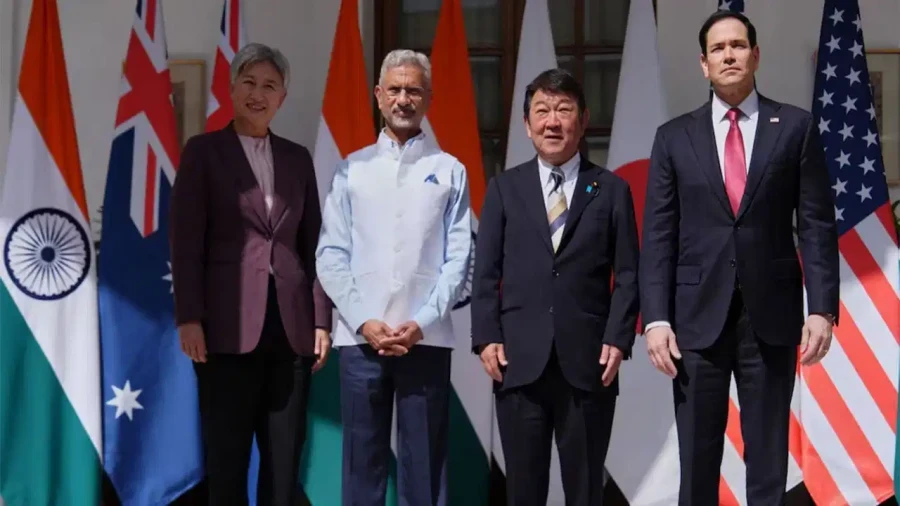
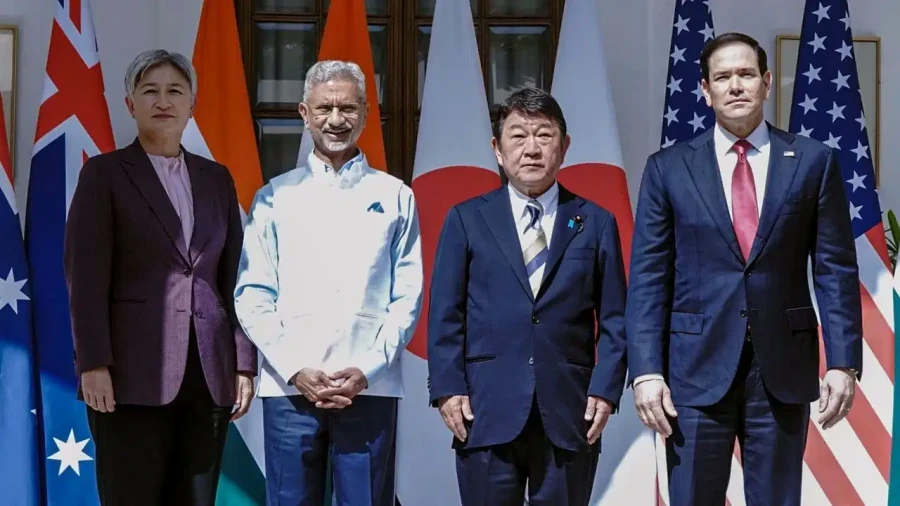
The national capital of India, New Delhi, recently hosted a high-profile meeting of the Quadrilateral Security Dialogue, commonly known as the Quad, while this significant gathering brought together the foreign ministers of India, the United States, Japan, and Australia to deliberate on the evolving security architecture of the Indo-Pacific region. The discussions culminated in three major strategic decisions aimed at bolstering regional stability, enhancing maritime domain awareness, and securing critical supply chains. These developments are widely perceived as a concerted effort to balance the growing influence of China in the Indo-Pacific waters.
High-Level Participation and Strategic Dialogue
The meeting saw the participation of key diplomatic figures from the four member nations. Representing India was External Affairs Minister S Jaishankar, while the United States was represented by Secretary of State Marco Rubio. Japan's Foreign Minister Toshimitsu Motegi and Australia's Foreign Minister Penny Wong also played pivotal roles in the deliberations. The ministers focused on a wide array of issues, including maritime cooperation, energy security, and the resilience of global supply chains. The primary objective was to ensure a free, open, and inclusive Indo-Pacific, a vision that the Quad nations have consistently championed.
Strengthening Maritime Surveillance Mechanisms
The first major decision involves the significant strengthening of maritime surveillance systems across the Indo-Pacific. Under this initiative, the four member nations have agreed to integrate their respective surveillance capabilities. This will facilitate the real-time sharing of information regarding maritime activities. By creating a unified monitoring network, the Quad aims to enhance security and transparency in the region's waters. This mechanism is expected to provide a comprehensive picture of vessel movements, thereby deterring illegal activities and ensuring that the maritime commons remain safe for international trade and navigation.
Infrastructure Development in Fiji
In a landmark move, the Quad has decided to collaborate with Fiji to upgrade its port infrastructure. This project marks the first joint regional infrastructure initiative undertaken by the Quad. Fiji holds immense strategic importance due to its geographical location, situated at the crossroads of maritime routes connecting the United States, Australia, New Zealand, and Asia, while by upgrading the port facilities in Fiji, the Quad nations aim to enhance regional connectivity and provide a viable alternative for infrastructure development in the Pacific islands. This move is seen as a strategic step to engage more deeply with Pacific island nations and support their economic and security needs.
Indo-Pacific Energy Security Initiative
The third major decision focuses on establishing a strong energy security framework within the Indo-Pacific. The goal is to strengthen the supply chains for fuel and energy to prevent shortages during times of crisis. As part of this initiative, the United States has announced that it will host the Quad Fuel Security Forum later this year. The discussions in New Delhi also touched upon the supply of fertilizers and critical minerals, which are essential for the economic stability of the region. The ministers emphasized the need for diversified and resilient supply chains that aren't dependent on a single source, thereby mitigating risks associated with geopolitical tensions.
Implications for Regional Dynamics and China
These decisions are being viewed as a strong signal to China, which has been steadily increasing its military presence and asserting territorial claims in the South China Sea. The Quad nations have frequently expressed concerns over attempts to dominate the maritime domain through coercive tactics. While China maintains that its military activities are solely for the defense of its sovereignty and security, the Quad's move to enhance surveillance and infrastructure is likely to be met with scrutiny from Beijing. China has previously characterized the Quad as an attempt to contain its rise and influence in the region.
Global Challenges and the Hormuz Strait
The meeting also addressed broader global challenges, including the impact of the conflict involving Iran on energy supplies. Australian Foreign Minister Penny Wong highlighted the potential risks to Indo-Pacific energy security if the Strait of Hormuz were to be closed. The Strait is a vital artery for global oil and gas shipments, and any disruption there could have far-reaching consequences for the economies of the Quad nations and the wider region. Consequently, the ministers reaffirmed their commitment to keeping maritime routes open, secure, and governed by international law to ensure the uninterrupted flow of energy and commerce.