
- India,
- 10-Jul-2026 08:28 AM IST



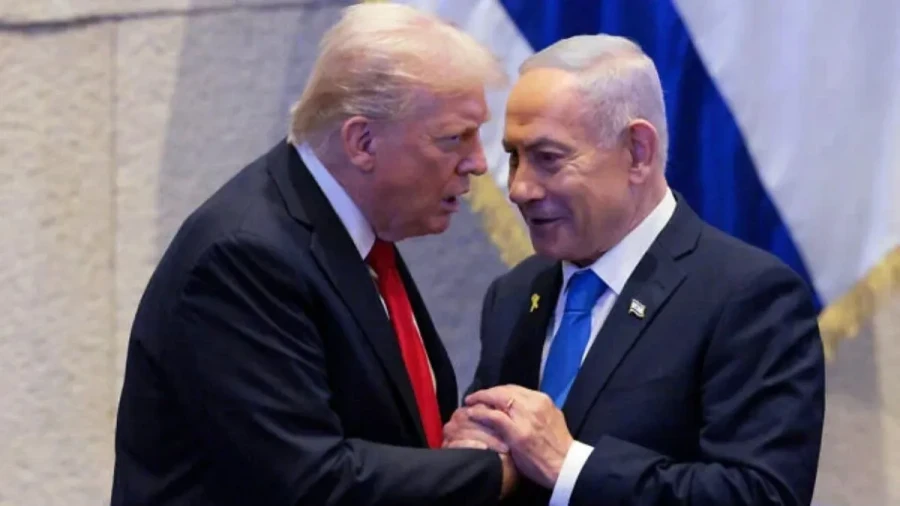
In a significant diplomatic development following renewed military tensions in the Middle East, United States President Donald Trump and Israeli Prime Minister Benjamin Netanyahu held a detailed telephonic conversation. This high-level dialogue occurred shortly after the United States conducted fresh military strikes against Iranian targets. The Prime Minister's Office of Israel confirmed the communication, stating that the two leaders engaged in a comprehensive discussion regarding the evolving situation in the Gulf countries and the broader regional security landscape.
Strategic Coordination and Regional Concerns
During the call, President Donald Trump provided Prime Minister Netanyahu with a detailed briefing on the recent American military activities and strategic maneuvers within the Gulf region. According to a statement shared by the Israeli Prime Minister's Office on the social media platform X, the conversation took place in the evening and served as a platform to establish and maintain continuous coordination between the two allied nations across various strategic sectors. The briefing was aimed at ensuring that Israel remains fully informed of US operations that impact the stability of the Middle East.
The official statement from the Israeli Prime Minister's Office further highlighted specific concerns raised by Netanyahu during the exchange. The Prime Minister emphasized the gravity of recent statements made by Turkish President Recep Tayyip Erdogan and his supporters, which Netanyahu characterized as being directed against the very existence of the State of Israel. On top of that, Netanyahu underscored the critical necessity of establishing and maintaining strong security zones along Israel's borders to safeguard the nation against potential incursions and regional threats.
IRGC Claims Missile Strike on US Base
The diplomatic exchange follows a major escalation reported by Iran's Islamic Revolutionary Guard Corps (IRGC). On Thursday, the IRGC claimed responsibility for a significant missile attack targeting the Al-Azraq Airport in northern Jordan, which serves as a base for US forces. The IRGC asserted that it launched 10 ballistic missiles at the facility, describing the site as a primary command and control center for the enemy in West Asia. This military action was framed by Tehran as a direct retaliation for the recent strikes conducted by Washington against Iranian interests.
According to a statement released by the Iranian state media outlet IRIB, the IRGC characterized this missile strike as the second phase of its retaliatory operations against what it termed as American aggression. The statement provided specific details regarding the timing of the operation, noting that at 2:20 PM, IRGC combat units successfully targeted and destroyed the command and control center and the enemy airfield at Al-Azraq in Jordan using 10 ballistic missiles. The Iranian military wing claimed that the strike was a calculated response to maintain its strategic posture in the region.
Warnings of Further Escalation
The IRGC has issued a stern warning to the United States, indicating that any further military actions by Washington will trigger additional attacks on American bases throughout the region, while the statement broadcast by IRIB made it clear that if the American military repeats its perceived acts of aggression, other US installations in the Middle East won't remain safe from heavy Iranian fire. The IRGC emphasized that Iran had previously warned of expanding its military response should the cycle of attacks continue.
In response to the missile activity, authorities in Jordan confirmed that air raid sirens were activated across various parts of the country. The Jordanian government noted that the sirens were triggered after missiles launched from Iran entered the country's airspace, causing significant alarm among the local population. The situation remains highly volatile as both the US-Israeli alliance and the Iranian military apparatus continue to monitor each other's movements with heightened vigilance.