
- India,
- 22-May-2026 09:14 AM IST



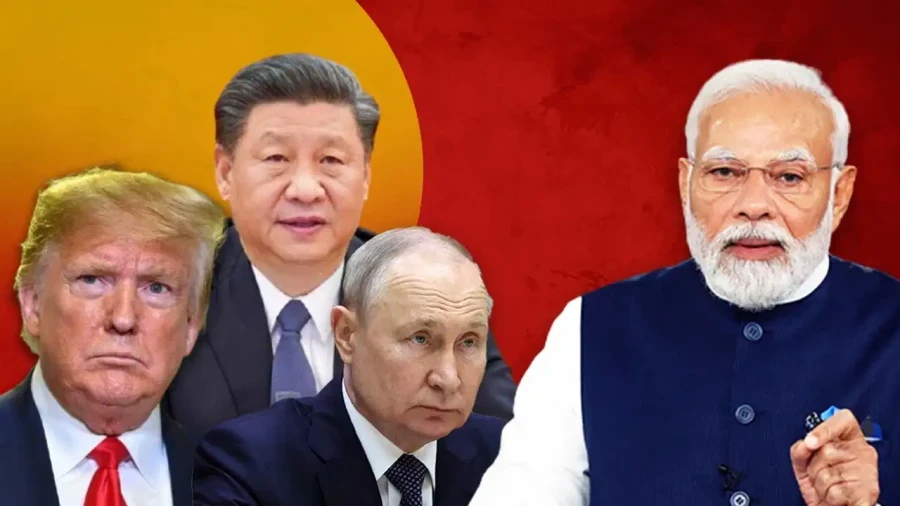
The recent high-profile visits of US President Donald Trump and Russian President Vladimir Putin to China have sparked significant global discussion. As Chinese President Xi Jinping engages with the leaders of these two powerful nations, the geopolitical spotlight is shifting towards India. The upcoming BRICS summit, scheduled to be held in New Delhi on September 12-13, 2026, is expected to see the participation of both Xi Jinping and Vladimir Putin. Amidst rising global tensions, the roles of India, Russia, China, and the United States are being scrutinized, while the fundamental question remains: which of these three nations—China, the USA, or Russia—is most essential for India's progress?
The Foundation of India's Foreign Policy
India's foreign policy is built on the principle of strategic autonomy, while this means India avoids becoming a permanent member of any single bloc, choosing instead to make decisions based on its own national interests. This path, which India has followed since the Cold War era, remains relevant in today's multipolar world, while india must maintain friendships, manage competition, and protect its independence simultaneously. The complexity of modern international relations requires a flexible policy where India can engage with multiple powers without compromising its sovereignty.
China: The Neighbor and Economic Challenge
China's importance to India is undeniable due to its status as a neighbor, while sharing a long border means that China's activities directly impact India's security and diplomacy. Events like the Galwan Valley clash have highlighted that China isn't just a trading partner but also a significant security challenge. China's dominance in the global supply chain and its presence in the Indian market—ranging from mobile phones and electronics to machinery and raw materials—can't be ignored. Plus, China's increasing influence in the Indian Ocean and its close ties with Pakistan remain major concerns for New Delhi, while india must maintain a dialogue with China while remaining vigilant on the border.
Russia: The Trusted Defense and Energy Partner
The relationship between India and Russia is rooted in deep historical trust, dating back to the Soviet era. Russia has stood by India when many Western nations maintained their distance. The defense sector remains the cornerstone of this bond, with many of India's primary military platforms, including fighter jets, submarines, and missile systems, being of Russian origin. On top of that, Russia has become a vital source of energy, providing oil and gas that offer economic relief during global crises. While Russia's economy may be smaller than that of the US or China, its role as a balancing power in international politics makes it indispensable for India's strategic depth.
The United States: Technology and Investment Hub
In recent years, the India-US partnership has strengthened rapidly. The US is one of the world's largest economies and a critical market for India's trade, investment, and IT services. Beyond trade, the partnership is defined by cooperation in cutting-edge technologies like semiconductors, artificial intelligence, cyber security, space, and defense innovation. The presence of a large and influential Indian diaspora in the US further cements this relationship. Strategically, both nations share interests in a free and open Indo-Pacific, collaborating through platforms like the Quad to ensure regional balance. For India's modernization, the US partnership is perhaps the most comprehensive.
Conclusion: The Path of Balance
Ultimately, India can't rely on just one nation. China is crucial geographically, the US is vital for future technology and economic growth, and Russia remains essential for defense and strategic stability. India's success lies in a balanced foreign policy: enhancing tech and investment ties with the US, maintaining defense and energy relations with Russia, and managing the border challenge with China through both firmness and dialogue. India's true strength lies in its own economic growth and military self-reliance, allowing it to navigate these complex relationships with confidence.