
- India,
- 19-May-2026 09:18 PM IST



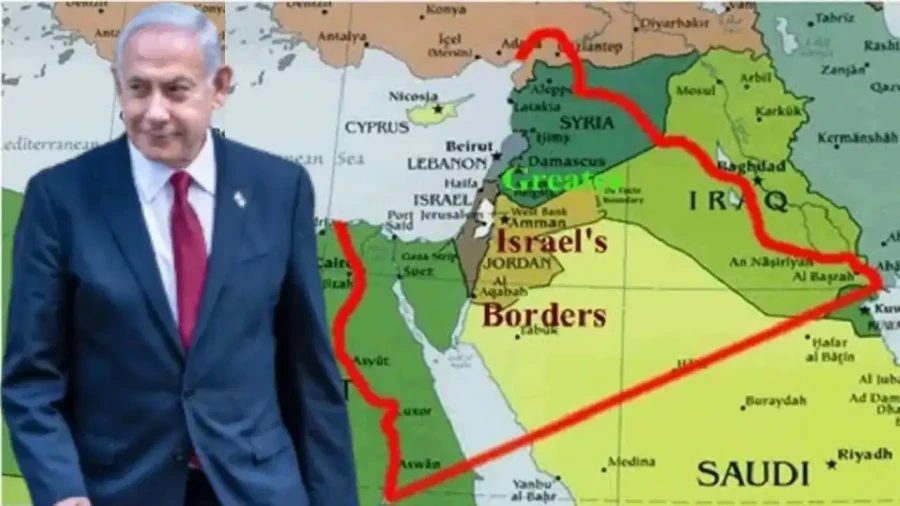
Following the unprecedented attacks by Hamas on October 7 2023, Israel has fundamentally transformed its military and strategic approach in the Middle East. According to a comprehensive report by the Financial Times, the Israeli military has seized approximately 1000 square kilometers of territory across Gaza, Lebanon, and Syria over the past three years. This significant expansion of territorial control represents nearly 5 percent of the land area defined by Israel's 1949 borders. The scale of these acquisitions has reignited intense international debate regarding the concept of Greater Israel, a vision long held by certain political factions within the country.
Strategic Expansion in Southern Lebanon
The report highlights that the largest portion of this newly controlled land is situated in Southern Lebanon, while israeli forces have advanced several kilometers deep into Lebanese territory, establishing what the government describes as a permanent security zone. The primary objective of this zone, according to Israeli officials, is to prevent Hezbollah from launching cross-border attacks and to ensure the safety of northern Israeli communities. Prime Minister Benjamin Netanyahu recently addressed this shift, stating that while enemies sought to surround Israel with a ring of fire, the nation has instead established a ring of security around itself. Plus, Israeli Defense Minister Israel Katz has indicated that the military intends to maintain control over areas extending up to the Litani River to ensure long-term stability.
The Situation in the Gaza Strip
In the Gaza Strip, the extent of Israeli military control has reached a critical point, with more than half of the territory now under the occupation of the Israeli Defense Forces. A significant development in this region is the creation of an additional buffer zone along the borders. This military restructuring has had a profound impact on the civilian population. United Nations officials have reported that approximately 20 lakh people are now forced to reside within just 40 percent of Gaza's total land area. Many villages and towns near the border have been reduced to ruins, with entire residential blocks turned into debris. Prime Minister Netanyahu has remained firm on this stance, explicitly stating that the Israeli military won't withdraw from these strategic positions in Gaza.
Military Presence in Syria
The weakening of the Bashar al-Assad government in Syria has provided an opening for Israel to strengthen its military presence in that region as well. The report indicates that Israeli forces have solidified their grip on approximately 233 square kilometers of land, stretching from Mount Hermon to various parts of Southern Syria. Israeli military operations have reportedly included raids as deep as 50 kilometers into Syrian territory. While there were initial attempts at security negotiations between Israel and Syria, these talks failed to progress. Currently, Israel maintains several military outposts within Syria, although the exact locations remain classified by both nations.
The Debate Over Greater Israel
The ongoing territorial expansion has fueled concerns among Arab nations and the international community about the long-term intentions of the Israeli government. Hardline leaders and ultra-nationalist organizations within Israel have long advocated for the expansion of national borders. Finance Minister Bezalel Smotrich has publicly suggested that the Litani River in Lebanon should serve as Israel's new northern border. Some members of parliament have even called for the permanent occupation of Southern Lebanon and the relocation of its local population. Conversely, Foreign Minister Gideon Sa'ar has attempted to downplay these concerns, asserting that Israel doesn't harbor any regional expansionist ambitions in Lebanon. However, many Arab officials remain skeptical, fearing that what were once considered radical ideas are now being integrated into official state policy.