
- India,
- 12-May-2026 10:27 PM IST



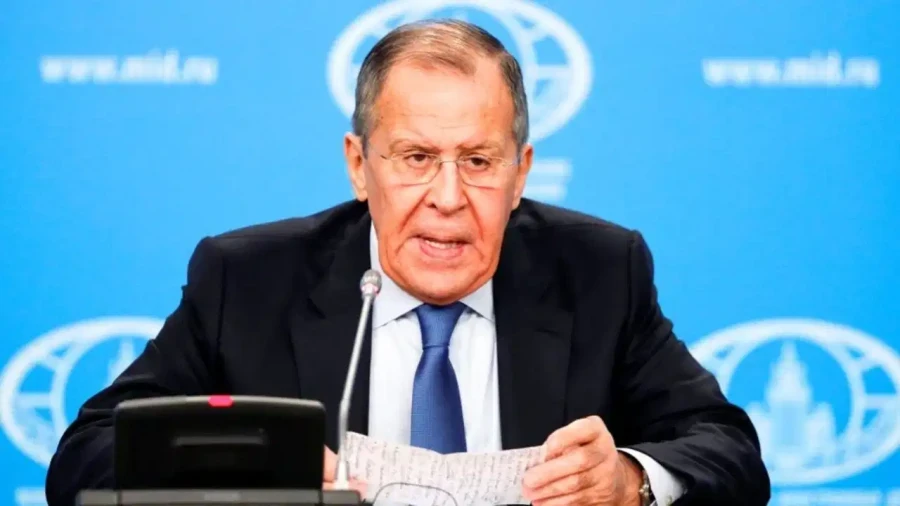
Just before the crucial BRICS Foreign Ministers' meeting, Moscow has released a significant and detailed official statement regarding Russian Foreign Minister Sergey Lavrov's upcoming visit to India. This statement isn't merely a notification of a diplomatic tour but serves as a comprehensive reflection of Russia's perspective on the rapidly evolving global political landscape. According to the Russian Foreign Ministry, Lavrov is scheduled to arrive in New Delhi on May 13 for high-level discussions with Indian External Affairs Minister S. Jaishankar. The language used in this statement is particularly noteworthy, embedded with geopolitical signals that indicate Russia's long-term strategic vision.
Russia has explicitly stated that the relationship between India and Russia remains immune to geopolitical fluctuations. This is a clear message from Moscow that despite intense Western pressure, sweeping sanctions, and heightened global tensions, the partnership between the two nations remains steadfast. Following the conflict in Ukraine, Russia has faced continuous economic sanctions from the West. In this context, India has emerged as one of the few major nations that maintained both dialogue and trade with Moscow, while consequently, Russia is now publicly positioning India as a highly reliable and indispensable strategic partner on the global stage.
Polycentric World Order and BRICS Coordination
' In simple terms, this refers to a global system where power isn't concentrated in a single country or a specific block but is distributed across various centers of influence. Russia has long been a critic of the US-centric unipolar global order and views platforms like BRICS as essential alternatives to maintain this balance. As India currently holds the BRICS presidency, Moscow views India as a pivotal hub for the Global South and multipolar diplomacy, emphasizing the need for enhanced coordination within BRICS, the UN, and the G20.
Neo-Imperialist Diktat and Financial Sovereignty
' In diplomatic parlance, this is seen as a direct critique of Western countries, particularly the United States and its allies. Russia argues that sanctions, financial pressure, and geopolitical isolation are tools used to impose the will of certain powers on sovereign nations. So, the statement stressed the necessity of securing financial channels against illegal external pressures, while this is directly linked to efforts involving alternative payment systems, local currency trade, and reducing global dependence on the US dollar. Over the past few years, India and Russia have been in constant discussions regarding Rupee-Ruble trade and alternative banking arrangements.
Energy Cooperation and Space Technology
The mention of energy cooperation and space technology in the Russian statement is also of immense significance. Russia remains one of the largest and most vital energy partners for India. Since the start of the Ukraine war, India's increased purchase of Russian crude oil has been a subject of constant debate in Western circles, while however, New Delhi has consistently maintained at every international forum that its energy security and oil purchases are strictly a matter of national interest. On top of that, the long-standing and deep-rooted cooperation in space technology will be a central theme of the visit, reflecting the technical depth of the bilateral relationship.
India's Diplomatic Balancing Act
Sergey Lavrov's visit comes at a critical juncture when New Delhi is also expected to see increased engagement with the Quad and the United States, while this situation highlights the maturity of India's foreign policy, where it simultaneously strengthens its traditional strategic diplomacy with Russia and BRICS while prioritizing coordination in the Indo-Pacific with the US. India appears active and effective on both these distinct diplomatic tracks. Ultimately, Moscow's detailed statement isn't just a formal announcement of a visit but is seen as an attempt to re-establish the India-Russia equation in a new and more solid context amidst shifting global power dynamics.