

- India,
- 28-Mar-2026 09:49 AM IST


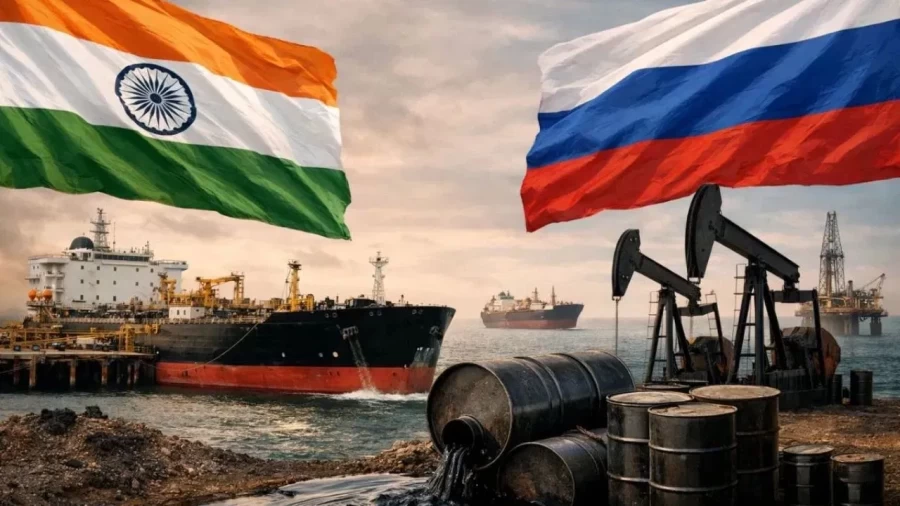
In a significant strategic shift aimed at safeguarding national energy security, India has substantially increased its crude oil imports from Russia amid the ongoing geopolitical instability in West Asia. 9 million barrels per day. 1% in February.
The surge in Russian imports comes at a critical time when the conflict involving Israel, the United States, and Iran has threatened global energy corridors, while india, which imports approximately 88% of its crude oil requirements, faced potential supply chain disruptions as traditional routes in the Middle East became increasingly volatile. The proactive measures taken by Indian refineries have ensured that domestic fuel supplies remain stable despite the international turmoil.
Disruption in the Strait of Hormuz and Impact on Gulf Supplies
The Strait of Hormuz, situated between Iran and Oman, is a vital artery for global oil trade, facilitating the passage of nearly one-fifth of the world's oil supply. Since early March, maritime traffic through this crucial waterway has faced significant disruptions due to heightened security risks, while according to Kpler data, this has led to a sharp decline in crude shipments from traditional Gulf suppliers to India. 8% in March. Similarly, shipments from Saudi Arabia and Kuwait saw a reduction of nearly 50% during the same period.
Russia Emerges as India's Primary Energy Partner
To mitigate the shortfall from the Middle East, Indian refineries rapidly recalibrated their procurement strategies toward the Russian market. Between March 1 and March 25, the volume of Russian oil arriving at Indian ports reached unprecedented levels. Industry experts note that Indian refiners have already secured approximately 60 million barrels of Russian crude for delivery through April. This strategic foresight has allowed India to maintain its refining operations without interruption, effectively replacing the lost volumes from the Gulf region and establishing Russia as the nation's largest single source of crude oil.
Strategic Planning by Indian Refineries and Commercial Reserves
India's ability to navigate this energy crisis is attributed to the solid management of commercial strategic reserves by public and private sector oil companies, while while India's total oil imports saw a net decrease of about 800,000 barrels per day compared to pre-conflict levels in January and February, the effective utilization of domestic stockpiles has cushioned the impact. Refineries have maintained high operational capacity, ensuring that the production of petrol and diesel remains consistent with domestic demand. This internal resilience has been a key factor in preventing any immediate fuel shortages across the country.
Diplomatic Maneuvering and the US Waiver for India
The current situation has also highlighted a significant diplomatic development regarding international sanctions. Previously, the United States had exerted pressure on India to limit its engagement with Russian energy markets. However, the closure of the Strait of Hormuz and the subsequent threat to global oil prices have altered Washington's stance. In light of the upcoming US elections and the need to prevent a global energy price spike, the US administration has granted India a specific waiver to continue its Russian oil purchases. This move underscores India's growing influence in the global energy landscape and its ability to prioritize national interests through independent foreign policy.
Domestic Fuel Stability and Future Supply Outlook
Despite the intensity of the conflict in West Asia, the outlook for India's domestic fuel market remains stable. Analysts from Kpler emphasize that India's oil procurement system has demonstrated remarkable flexibility. While international crude prices remain volatile, India's long-term agreements and advance purchases from Russia have provided a necessary buffer. According to government officials, there is no immediate risk to the country's fuel supply chain. The continued operation of refineries at optimal levels ensures that the domestic market is well-protected from the immediate shocks of the Middle East crisis.
