
- India,
- 22-Aug-2026 04:29 PM IST



The introduction of the Common Civil Code (UCC) bill by the state government during the monsoon session of the Rajasthan Legislative Assembly has triggered a significant wave of opposition from the minority communities in the state. Minority groups have formally opened a front against the government, labeling the bill as a direct interference in their religious matters, while simultaneously, Congress MLAs have accused the government of using this legislation as a tool for polarization to gain electoral advantages in the upcoming local body and panchayat elections.
Protests and Demonstrations in Jaipur
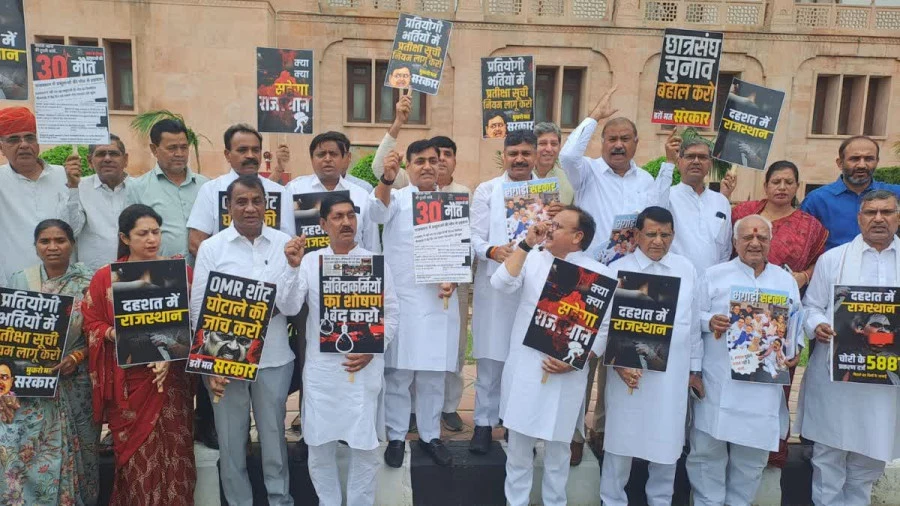
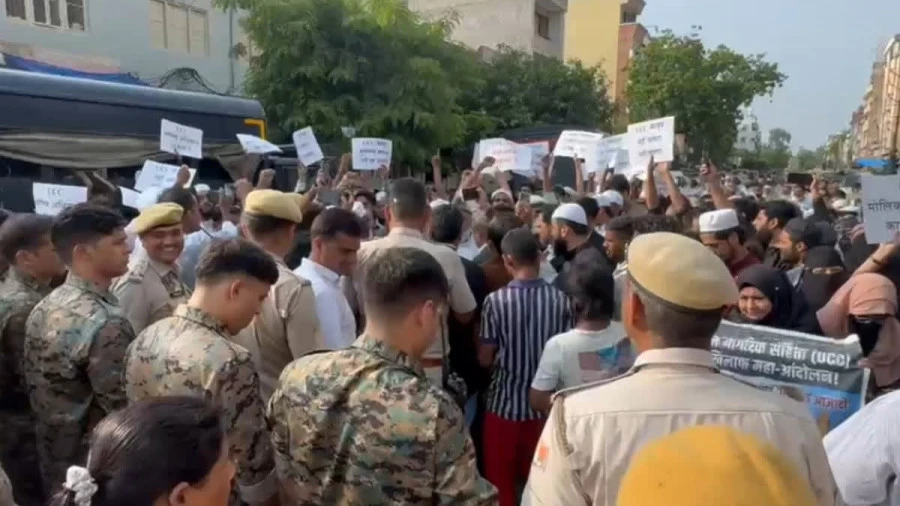
The opposition to the UCC bill manifested in large-scale demonstrations on Friday. Muslim organizations gathered in significant numbers on Moti Doongri Road to register their protest, while the atmosphere was charged as protesters raised slogans against the bill, demanding its immediate withdrawal. In addition to the street protests, a delegation representing minority communities from across the state, including border districts like Barmer, Jaisalmer, and Bikaner, reached out to political leadership, while this delegation met with former Chief Minister Ashok Gehlot to express their concerns and sought his intervention in the matter. They highlighted that the bill poses a threat to the cultural and religious fabric of their communities.
Violation of Fundamental Rights Alleged
Mohammad Nazim, the State President of Jamaat-e-Islami Hind, has been vocal about the community's grievances. He stated that while there are numerous other pressing issues related to improving the standard of living for the people, the government is introducing the Common Civil Code primarily to divert attention from these core problems. According to Nazim, the bill is a blatant violation of the fundamental rights guaranteed by the Constitution of India, while he specifically pointed to Articles 25 and 26, which grant citizens the basic right to practice and propagate their religion according to their beliefs.
Nazim emphasized that different communities in India have their own unique customs, traditions, and personal laws. He noted that Muslims lead their lives in accordance with Sharia law, and any attempt by the government to impose a uniform code is seen as an effort to snatch away their religious freedom. He warned that even if the bill is passed in the assembly, the minority community will continue its movement until the law is repealed. Plans are already in place to hold protests across all districts of Rajasthan and submit memorandums to the Governor and the Chief Minister through District Collectors to amplify the voice of the people.
Impact on Religious Minorities
The Buddhist community has also joined the chorus of opposition. Dr. Narendra Bauddh, National President of the Buddhist community, described the Common Civil Code as an attack on the interests of religious minorities. He argued that the bill aims to abolish the fundamental rights of minority groups. Dr. Bauddh highlighted that the Constitution provides minorities the right to live according to their own worship methods and culture. He expressed concern that minorities are being targeted across the country and asserted that this bill doesn't serve the interests of any minority group. He claimed the government is bringing such laws solely for the purpose of polarization and stated that the community would openly oppose the bill.
Support from the Minority Commission
In contrast to the widespread opposition, Sardar Jasbir Singh, the former Chairman of the Rajasthan Minority Commission, offered a different perspective, while he suggested that the government is bringing the UCC bill in view of the current circumstances in the state. Singh maintained that the bill wouldn't harm any community and that there would be no interference with the religious traditions or customs of any group, while he noted that since the bill has only just been introduced, a more detailed analysis can only be provided after reviewing the complete draft. However, he expressed hope that the UCC law wouldn't lead to discrimination against any section of society.
Political Criticism and Constitutional Concerns
The Congress party's minority department has also taken a firm stand against the bill. MD Chopdar, Chairman of the Congress Minority Department, stated that the violation of religious freedom and constitutional rights in the name of equality is unacceptable. He recalled that the BJP government in the state had previously introduced the anti-conversion law and the Disturbed Area Bill, and now it's using the UCC to distract the public from fundamental issues. Chopdar also took a swipe at the government's 'One State One Election' claim, pointing out that it's unable to conduct even local body and panchayat elections simultaneously. He declared that the party would take to the streets to protest against this law.
Exclusion of Tribals and Targeting of Minorities
Congress MLA Rafiq Khan raised several critical points regarding the bill's structure. He questioned the necessity of the bill, asking if there were deficiencies in the Constitution that required such a move. Khan pointed out that a significant portion of the UCC bill, specifically 4-5 points, focuses on live-in relationships. He highlighted a major discrepancy, noting that while tribals have been excluded from the Common Civil Code, other minority communities are being targeted. He mentioned that Sikhism, tribal groups, and the Muslim community all have their own distinct beliefs and traditions, and questioned why the government wants to interfere in these religious matters.
Rafiq Khan further argued that the Constitution grants everyone the right to worship in their own way, and the state government shouldn't attempt to divide people in the name of castes or religions, while he stated that the bill would be discussed in detail in the house but claimed that its primary purpose was to create religious polarization amidst the ongoing local body and panchayat elections. He concluded by saying that people are already struggling with issues like inflation and unemployment, and they will firmly oppose this law.
Meeting with Former CM Ashok Gehlot
The unrest among the minority communities was further highlighted when a delegation met former Chief Minister Ashok Gehlot on Friday night. The delegation discussed the UCC law and also raised concerns about the demolition of religious sites in border districts like Barmer, Jaisalmer, and Bikaner. They urged Gehlot to intervene and protect their rights. In response, the former Chief Minister assured the delegation that he would raise his voice strongly both inside and outside the assembly and would support their movement against the bill.