
- India,
- 13-May-2026 09:36 AM IST



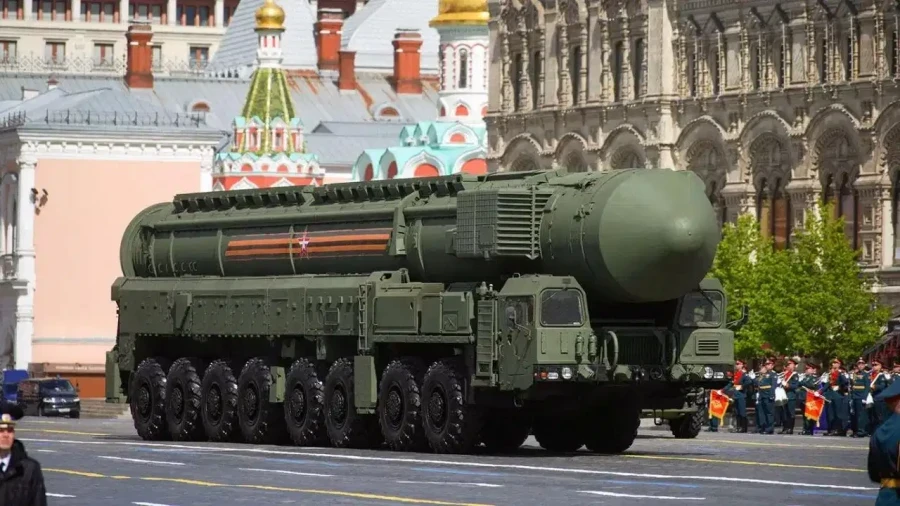
Russian President Vladimir Putin has made a significant announcement that could potentially disrupt the global balance of missile power. Russia has successfully conducted a test of its new nuclear-capable 'Sarmat' missile, a strategic weapon system that's scheduled to be deployed for combat duty by the end of this year. President Putin has claimed that the operational range of this missile could be extended to exceed 35,000 kilometers. If these claims are validated, it would establish the Sarmat as the longest-range missile in the world, capable of reaching any target across the globe. Currently, the missile's range is stated to be 18,000 kilometers, which is already the highest recorded range for any existing missile system.
Technological Advancements and Strategic Systems
Following the successful test of the Sarmat system, Vladimir Putin provided updates on other high-priority military projects. He noted that the development of the Poseidon and Burevestnik systems is now in its final stages. On top of that, the President mentioned the possibility of equipping the Oreshnik system with nuclear warheads. These developments are framed within the context of Russia's strategic response to international treaty changes. Specifically, Russia maintains that the United States' withdrawal from the Anti-Ballistic Missile (ABM) Treaty forced Moscow to reconsider its strategic security measures. The deployment of the Sarmat is seen as a critical component of Russia's efforts to ensure its national security and maintain a strategic deterrent in an evolving global landscape, which could seriously affect the global missile balance.
Deployment Plans and Military Readiness
According to a report by Karakayev, the Commander of the Strategic Missile Forces, the successful launch of the Sarmat paves the way for the deployment of its first regiment by the end of the current year. The Sarmat system is designed to replace and Notably improve upon its predecessor, the Voyevoda missile system, while the new system boasts several critical advantages over the older model, particularly in terms of its strike range, throw-weight capacity, and its sophisticated ability to penetrate enemy missile defense systems. The Russian military emphasizes that the Sarmat's advanced technology allows it to bypass modern defense shields, making it a formidable asset in Russia's strategic arsenal and a key part of its nuclear triad.
Western Analysis and Historical Challenges
Despite the bold claims from the Kremlin, Western security analysts have expressed skepticism regarding the actual capabilities of Russia's new generation of nuclear weapons. Many experts suggest that President Putin may be exaggerating the performance metrics of these systems as part of the modernization program he first announced in 2018. Analysts point out that the Sarmat program has faced significant setbacks in the past. For instance, Western experts highlighted an incident in September 2024 where a test resulted in a massive crater within the launch silo, suggesting a catastrophic failure during that particular trial. While Russia continues to push forward with its deployment schedule, international observers remain focused on whether the system can meet the high performance standards claimed by the Russian leadership and overcome its historical technical hurdles.
Russia's Sarmat ICBM test was declared a success, with Putin claiming a range exceeding 35,000 km, which would cover any point on Earth via either polar trajectory. Moscow says the missile enters combat duty before year's end.
— 🚨Global Alert (@trendingnews911) May 12, 2026
The last Sarmat test, in April 2022, ended in a… pic.twitter.com/gl9ApmgVbX