

- India,
- 22-Jul-2025 01:28 PM IST


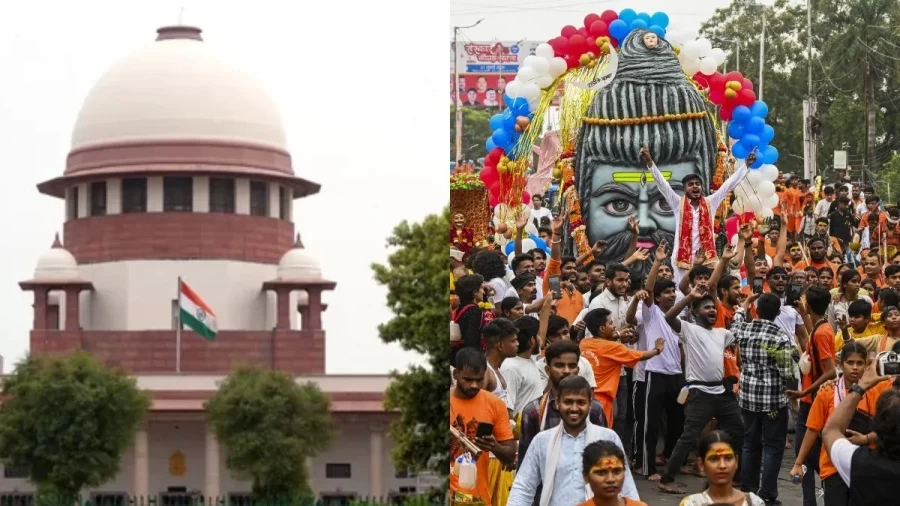
Kanwar Yatra 2025: The Supreme Court on Tuesday upheld the Uttar Pradesh government's order directing shops and dhabas along the Kanwar Yatra route to install QR codes. The decision not only raised questions of food safety and transparency, but also sparked debate on sensitive issues such as privacy and religious discrimination. The court did not give any relief to the petitioners and clarified that it would be mandatory for all hotel and dhaba owners to display licenses and registration certificates under statutory rules.
Purpose of QR code order
The Uttar Pradesh and Uttarakhand governments had ordered eateries, dhabas and shops located on the route to install QR codes during the Kanwar Yatra in the month of Sawan. The name, religion and other information of the shop owners were available when these QR codes were scanned. The government argued that the step was taken to provide information to pilgrims about food safety and hygiene of shops. According to the government, this arrangement helps travelers to make informed decisions and ensures compliance with food standards.
Petitioners' objections
Delhi University professor Apoorvanand Jha, social activist Aakar Patel, TMC MP Mahua Moitra and NGO 'Association for Protection of Civil Rights' had filed a petition in the Supreme Court against this order. The petitioners claimed that revealing the personal information of shopkeepers, especially their religion, through QR code is a violation of the right to privacy. They also argued that the order could promote discrimination on religious grounds and harm social harmony. The petitioners called it a contempt of the Supreme Court's 2024 decision, which prohibited shopkeepers from being forced to make their identity public.
Current decision of the Supreme Court
The Supreme Court said in its decision, "We have been told that today is the last day of the Kanwar Yatra. It is likely to end in the near future. Therefore, at this time we only order that all the concerned hotel owners display the license and registration certificate as per the statutory requirements." The court upheld the order of the Uttar Pradesh government, overruling the petitioners' objections and ending the petition. The court also clarified that it is not considering other disputed issues at this time.
Last year's decision and its context
Last year, the Supreme Court had stayed the order of the Uttar Pradesh, Uttarakhand and Madhya Pradesh governments, which directed shopkeepers on the Kanwar Yatra route to make their and their employees' names public. The court had then said that shopkeepers would only have to tell what food they are selling and not reveal their identity. The petitioners said that the new order of QR code is an attempt to implement the same discriminatory policy in digital form.
Conclusion and future questions
While this decision of the Supreme Court has strengthened the government's claim to promote food safety and transparency, on the other hand it has further intensified the debate on issues like privacy and religious discrimination. This decision can become a precedent for such policy decisions in the future. Do measures like QR codes actually increase transparency or do they inadvertently fuel social tensions? This question is likely to be discussed in greater detail in the times to come.
