
- India,
- 23-Aug-2026 08:00 AM IST



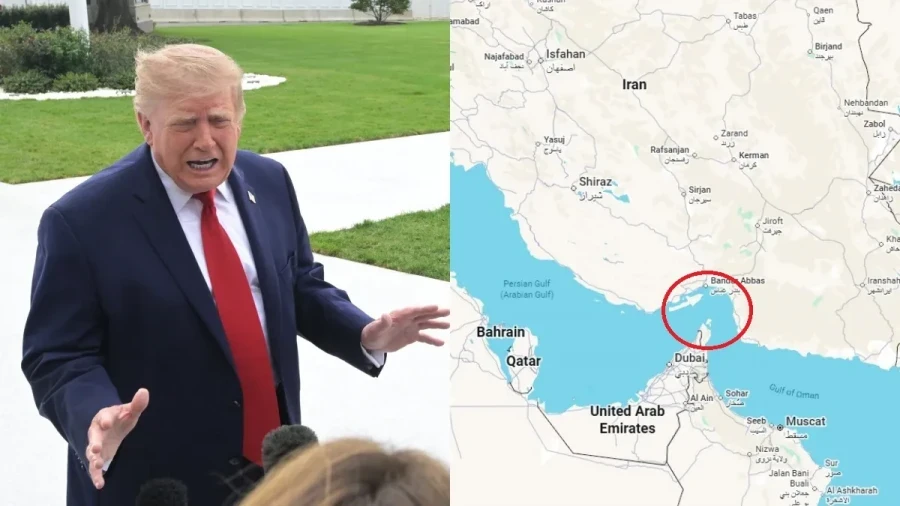
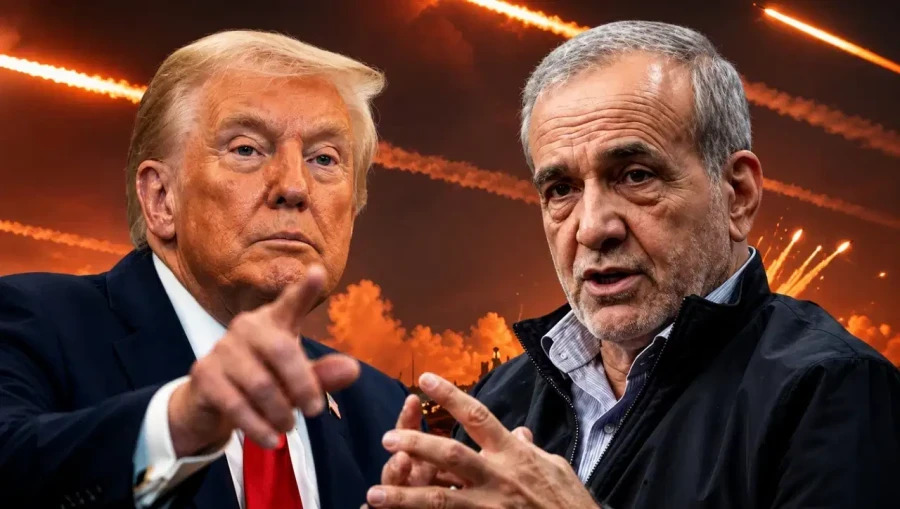
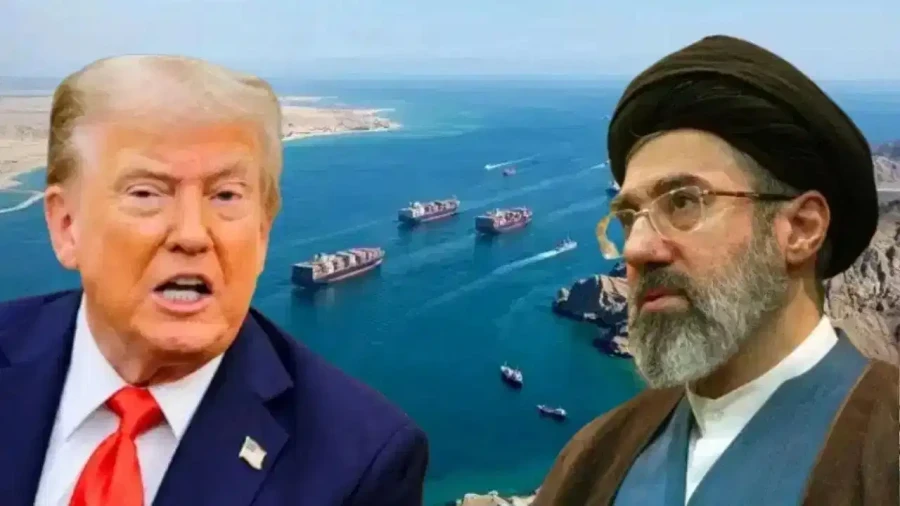
The geopolitical friction between the United States and Iran has reached a new flashpoint over the strategic Strait of Hormuz. S. President Donald Trump shared a provocative post on the social media platform Truth Social on Sunday, while in the post, Trump shared an image that labeled the Strait of Hormuz, one of the world's most vital maritime corridors, as a New US Territory. This move has drawn a sharp and defiant reaction from Tehran, which continues to assert its control over the waterway and rejects any American claims of jurisdiction.
Trump's Repeated Claims and Social Media Activity
This isn't the first time Donald Trump has made such a claim regarding the Strait of Hormuz. On August 18, he shared the same image on social media, asserting a new American jurisdiction over the region. These repeated assertions have been consistently rejected by Iranian authorities. The latest post on Sunday has further fueled concerns about a potential escalation in the already strained relationship between Washington and Tehran, as both nations refuse to back down from their respective positions.
Prior to these social media posts, Trump had voiced similar intentions during a public address. On August 14, while speaking at a police academy in Long Island, he made a significant statement regarding the waterway. During his speech, he declared that he would soon officially designate the Strait of Hormuz as a United States territory. This strategic waterway is globally recognized as a critical route for the transportation of massive quantities of oil and other liquid fuels, making any claim of ownership a matter of intense international concern and potential conflict.
Iran's Firm Stance on Waterway Closure
In response to the American claims, Iran has maintained a rigid and uncompromising position. Iranian officials have made it clear that the Strait of Hormuz is currently closed and will remain so until there is a fundamental shift in Washington's approach, while mohsen Rezaei, the Secretary of Iran's Supreme National Security Council, stated unequivocally that the strait is closed and there are no immediate plans to reopen it. He emphasized that the reopening of the passage is strictly contingent upon the United States changing its attitude and fulfilling its international commitments.
Rezaei further elaborated that the solution to the current standoff can't be achieved through mere words or diplomatic negotiations. He insisted that the United States must take concrete actions to rectify the situation. According to the Iranian leadership, the responsibility lies entirely with Washington to demonstrate a change in policy through its deeds rather than its rhetoric. Until such actions are taken, Iran intends to keep the strategic passage restricted, citing the need for the US to honor its promises.
Maritime Traffic and Alternative Routes
Despite Iran's official declaration that the strait is closed, data suggests that maritime activity in the region has actually seen a notable uptick in recent days. According to figures from British maritime trade monitoring agencies, the number of vessels passing through the area has increased Notably, while last week, approximately 200 ships were recorded crossing the Strait of Hormuz. This follows a trend of rising traffic, with about 150 ships passing through the previous week and roughly 40 ships recorded two weeks prior to that.
The movement of these vessels appears to be utilizing alternative paths to bypass Iranian restrictions. Data from the maritime intelligence firm Kpler indicates that over the past two weeks, more than 80 percent of the liquid cargo passing through the region has used routes supported by the United States and authorized by the International Maritime Organization. Specifically, many vessels are navigating through Omani waters or utilizing unidentified routes to maintain the flow of essential goods across the globe.
Potential Iran-Oman Agreement
Amidst the heightened tension, there are reports of diplomatic discussions regarding the management of the waterway. Mohsen Rezaei mentioned that an agreement has been reached between Iran and Oman to establish a middle route through the Strait of Hormuz. This proposed middle path is intended to facilitate movement while addressing the security concerns of the involved parties. However, it's important to note that a formal joint statement regarding this agreement has not yet been released to the public. The situation remains fluid as both nations navigate the complexities of maritime sovereignty and international trade pressure.