

- India,
- 07-Apr-2026 09:30 AM IST


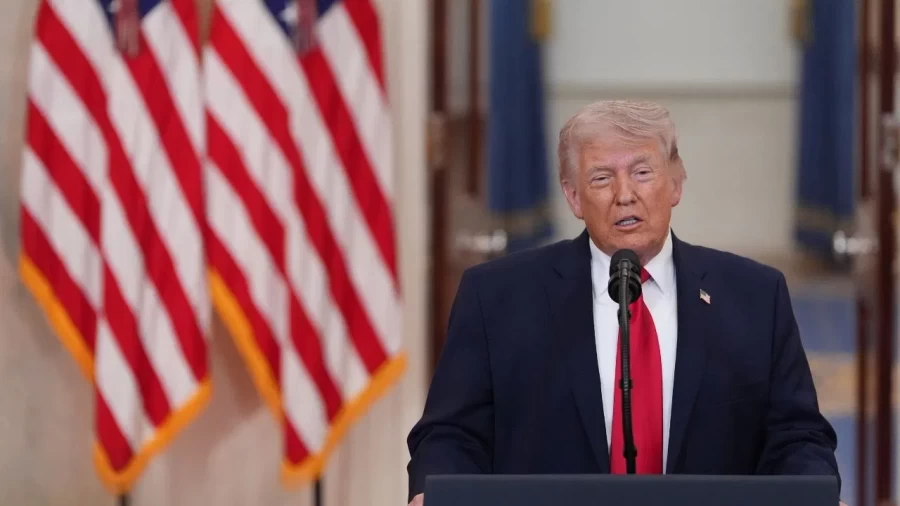
US President Donald Trump issued a stern warning to Iran during a White House press briefing on Monday, escalating tensions between the two nations. The President indicated that the United States is prepared to take decisive military action if Iran doesn't agree to reopen the strategic Strait of Hormuz. Trump suggested that the scale of the response could lead to significant destruction within a single day, targeting key national assets.
The briefing highlighted a shift in rhetoric, with the President explicitly mentioning civilian and economic infrastructure as potential targets, while according to officials, the administration views the closure of the Strait of Hormuz as a direct provocation that warrants a solid military response to ensure global maritime security and energy flow.
Targeting Strategic and Civilian Infrastructure
During the briefing, President Trump outlined specific categories of infrastructure that could face American strikes. These include Iran's gas fields, water treatment plants, bridges, and other essential civilian facilities. Trump argued that targeting these sectors would be a necessary consequence if the maritime blockade continues. He emphasized that the objective would be to neutralize Iran's ability to maintain its current stance by impacting its core operational capabilities.
Claims of Support from Iranian Citizens
Addressing questions about the humanitarian impact of targeting civilian infrastructure, President Trump claimed that the Iranian people are prepared to endure such hardships in pursuit of freedom, while he asserted that his administration has received messages from individuals within Iran encouraging the continuation of military pressure. Trump stated that even those living in areas near potential strike zones are calling for action, viewing it as a path toward eventual liberation from the current regime.
Dismissal of Geneva Convention Concerns
When questioned by the New York Times regarding the legality of targeting civilian sites and potential violations of the Geneva Convention, the President initially expressed a lack of concern for international legal constraints, while he dismissed the notion that such strikes would constitute war crimes under the circumstances. However, he later tempered his remarks by stating he hoped that strikes on civilian infrastructure wouldn't ultimately be necessary, while maintaining that all options remain on the table.
The Tuesday Night Deadline
The President has set a specific timeframe for Iran to comply with the demand to reopen the waterway. Trump stated that if Iran doesn't agree to reopen the Strait of Hormuz by 8:00 PM ET on Tuesday, the threatened military consequences would become a likely reality. The Strait of Hormuz is a critical chokepoint for global oil shipments, and the ongoing dispute has raised significant concerns regarding international trade stability and regional security.
Q: “Why would Iranians want you to blow up their infrastructure, to cut off their power? Wouldn't that be punishing Iranians for the actions of the regime?”
— Chief Nerd (@TheChiefNerd) April 6, 2026
TRUMP: “They would be willing to suffer that in order to have freedom.” pic.twitter.com/DAZP6991Yt
